Primary market guide · Warsaw · Updated April 2026

New build apartments
in Warsaw.

A practical guide for foreign buyers who want to understand Warsaw's primary market, compare developer projects properly and avoid the most common mistakes — from project selection through handover to first rental income.

Focus: Developer apartments · off-plan · stan deweloperski · handover · finishing PCC tax: usually exempt on standard developer sales Also read: Total costs · Renovation guide · Legal coordination

For many foreign buyers, new-build apartments in Warsaw are the cleanest entry point into the market. The product is newer, the legal structure is typically more standardised than a complex resale transaction, and buyers can secure units in locations where the city is still visibly improving block by block. The primary market also carries a meaningful tax advantage: standard developer sales of residential apartments are exempt from the 2% PCC civil law transaction tax that applies to every secondary market purchase.

That does not mean every developer project is automatically a strong buy. Buying off-plan or from a developer in Warsaw means understanding the project stage, reviewing the legal documentation, evaluating the real handover standard, sequencing payments correctly and planning the finishing phase that follows before the apartment generates any income. This guide covers all of it — so foreign buyers can evaluate primary market apartments as professionals rather than as optimistic first-timers.

PCC tax on developer sale
Usually zero
VAT embedded in price instead — 8% on residential ≤150 m²
Delivery standard (typical)
Stan deweloperski
Shell condition — fit-out required before use
Fit-out cost (medium std.)
2,200–3,000 PLN/m²
Must be included in total capital model
Buyer payment protection
Rachunek powierniczy
Escrow account required under Polish developer law
Market logic

Why many buyers start with new-build apartments in Warsaw

For overseas buyers, the appeal is not only "newness". It is predictability, a cleaner legal path and a more standardised transaction structure than many resale deals.

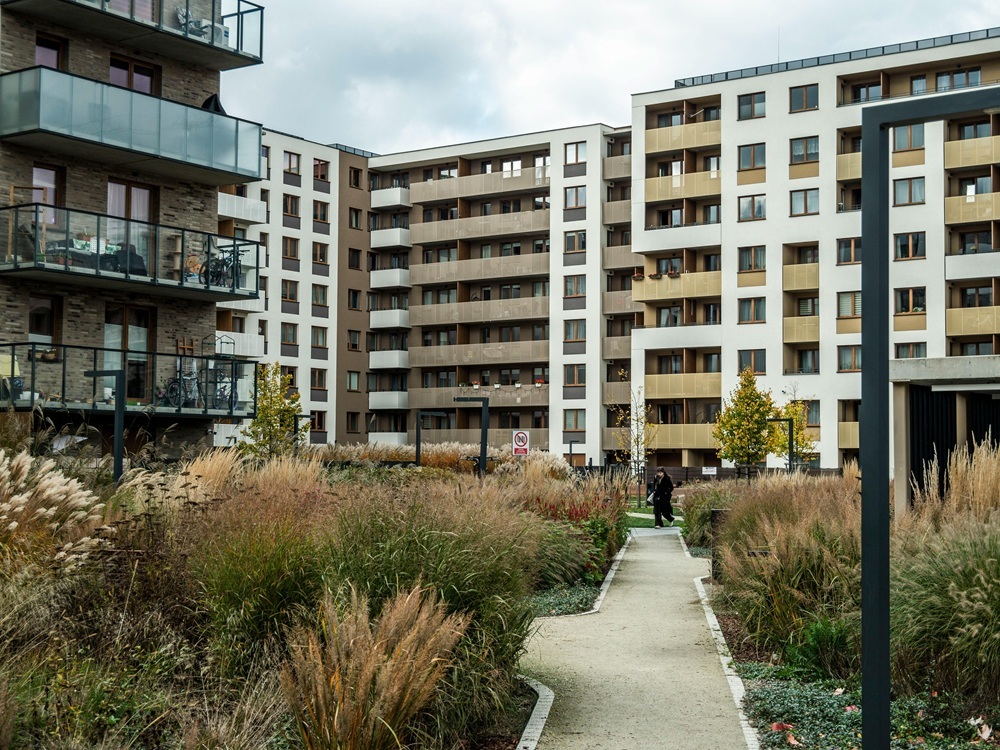
Modern Warsaw residential development — new-build apartments on the primary market Modern residential stock — why buyers look first at Warsaw's primary market

New-build apartments attract foreign buyers for several practical reasons beyond the obvious appeal of new construction. Buildings are technically current, common areas are coherent from day one, and in many cases the unit sits in a location — Wola, Praga Południe, newer Mokotów clusters — where public transport, retail and urban infrastructure continue to improve year by year. Buying early in a developing area locks in entry pricing that is structurally different from what the same location will command in five years.

For foreign buyers specifically, another major advantage is transaction structure. A developer sale follows a defined legal path: reservation agreement, developer agreement before a notary, scheduled payments to an escrow account, handover on project completion, land register update. It is easier to plan around than a secondary market transaction where the seller may have an unusual ownership structure, outstanding mortgage, or building management complications.

The PCC exemption is a material financial advantage that is often underweighted in the initial comparison between primary and secondary market. On an 800,000 PLN developer apartment, zero PCC versus 16,000 PLN on a comparable resale unit is a difference that directly affects total capital deployed — and therefore affects the yield calculation. For foreign buyers already paying advisory and legal fees, eliminating PCC from the cost stack is genuinely significant.

That said, the primary market has its own risks. Not every project with impressive visualisations is a compelling investment. The most common mistakes — committing to a project based on marketing rather than location analysis, underestimating the finishing budget, or choosing a poorly oriented unit within an otherwise acceptable building — are all avoidable with proper project-level filtering. The right question is not "is this a new apartment?" It is: which developer, which unit, which stage, which location, and what will this apartment cost to operate once it is genuinely ready?

01 · Tax advantage

No PCC on standard developer sales

The 2% civil law transaction tax that applies to every secondary market purchase does not apply to standard residential developer sales. On a 900,000 PLN purchase, that is 18,000 PLN saved before any other calculation begins.

02 · Technical standard

Newer buildings, cleaner base for fit-out

No hidden electrical wiring, no aged plumbing, no pre-war substrate surprises. A developer shell provides a clean, predictable platform for finishing — with fewer contingency events than a secondary market renovation of comparable size.

03 · Location upside

Entry pricing in improving districts

Many Warsaw primary market projects sit in districts where public infrastructure, metro access and urban amenities are still actively improving — meaning the buyer locks in at pre-appreciation pricing and holds through the upside cycle.
Delivery standard

Stan deweloperski — what you actually receive from a Warsaw developer

This is the most consistently misunderstood aspect of buying new-build property in Poland — and the one that most directly affects total capital required.

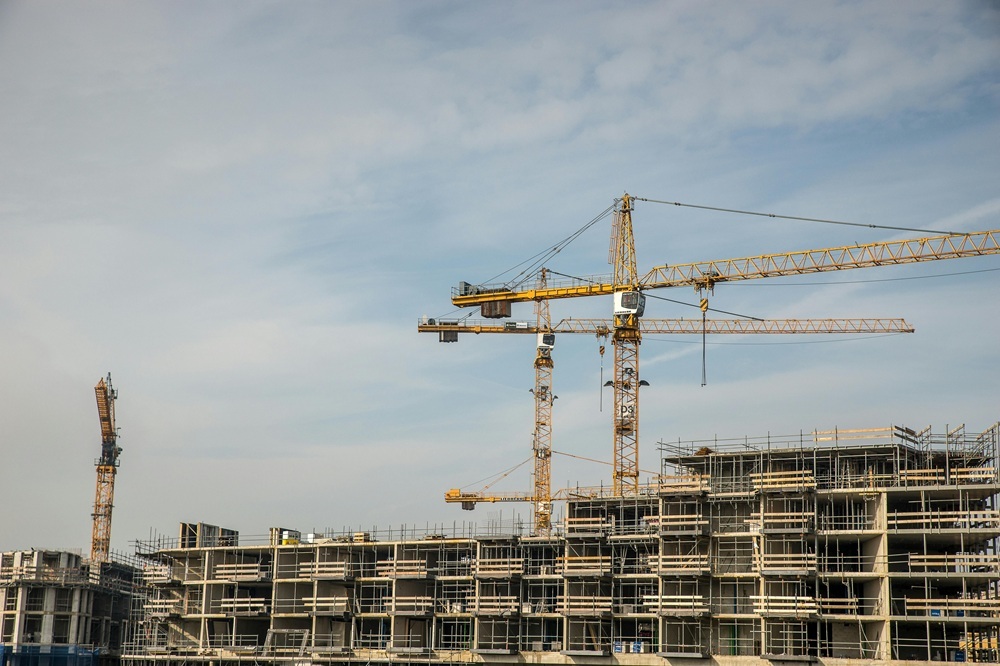
Warsaw developer apartment project — modern residential building in primary market
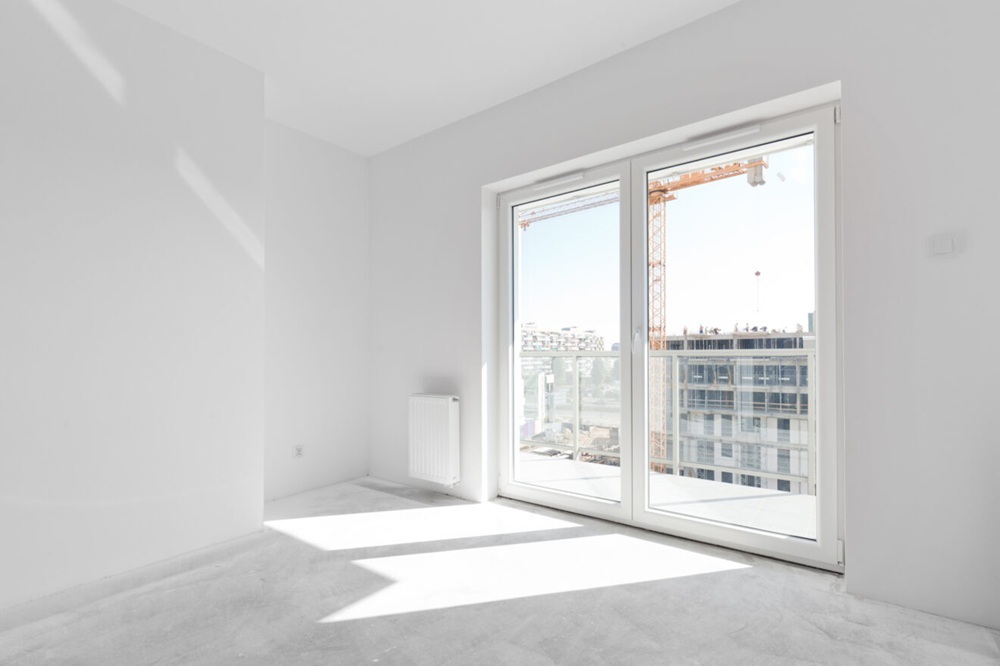
Stan deweloperski — Warsaw apartment in developer shell condition before fit-out

Most Warsaw developer apartments are not delivered as finished homes. They are handed over in stan deweloperski — developer shell condition. The apartment is legally complete and structurally finished: plastered walls, screed floors, windows and external doors installed, basic electrical points and plumbing stubs in position. What it is not is habitable in any practical sense.

There is no bathroom finish. No kitchen. No internal doors. No floor finishes — laminate, tiles or wood — laid over the screed. No built-in wardrobes, no lighting fixtures, no joinery of any kind. The exact scope of what is and is not included varies between projects — which is why reading the specification carefully is not optional.

For foreign buyers, this has a direct implication for capital planning. The purchase price of a developer apartment is not the total entry cost — it is the first instalment of the total entry cost. The finishing budget required to turn the shell into a lettable or liveable apartment at medium standard typically runs 2,200–3,000 PLN/m². On a 55 m² apartment, that is 121,000–165,000 PLN in additional capital that must be deployed before the first tenant can be placed.

That finishing capital must be budgeted, sourced and coordinated. It is not a detail to be figured out after signing. For investors comparing a developer apartment against a finished resale unit, the true comparison is developer purchase price plus realistic finishing cost versus resale price — not headline prices alone.

The practical rule for total capital planning

Never evaluate a Warsaw new-build apartment on purchase price alone. The correct comparison is: purchase price + realistic fit-out cost + void period during finishing + advisory and legal costs. Only once that full capital number is established does the yield and return calculation become meaningful. Our renovation and finishing guide and total cost guide cover both stages in full.

Buying path

The developer buying process — what each stage actually means

The primary market follows a structured sequence. Understanding each stage before entering it is what separates controlled purchases from reactive ones.

Documents and process for buying a new-build developer apartment in Warsaw Project choice, documentation review and transaction structure matter as much as the apartment itself
01

Project shortlisting — district, developer, stage

The starting point is not a portal search filtered by price and m². It is narrowing the market by district quality, developer credibility, project construction stage, intended use (rental, owner-occupier, capital growth) and micro-location within the district. The best apartment for one brief can be entirely wrong for another.

02

Developer package and specification review

Before taking any reservation step, the full developer package should be reviewed: project legal standing (building permit and occupancy status), the delivery specification (exact stan deweloperski scope), unit plan quality, orientation, floor level, noise exposure, storage allocation, parking and the broader statutory compliance of the offering under Polish developer protection law.

03

Reservation agreement

Many projects use a reservation agreement to take the unit off the market before the formal developer agreement is executed. Reservation agreements are typically not notarised but carry a fee and timeline commitment. They should be reviewed as carefully as any binding document — because by the point of reservation, the buyer has committed to a specific unit at a specific price.

04

Developer agreement (umowa deweloperska) — notarised

The formal developer agreement is executed before a notary and is the legally binding contract for the purchase. Payments under this agreement are typically made to a protected escrow account (rachunek powierniczy) rather than directly to the developer — a statutory protection under Polish developer law that reduces the buyer's exposure to developer default. This is the most important document in the transaction and must be reviewed by a Polish lawyer before signing.

05

Construction and delivery period

Between agreement and handover, the buyer's role is to monitor milestone payments per the agreed schedule, stay informed of construction progress and ensure the post-handover plan — finishing contractor selection, material sourcing, coordination logistics — is in place before the keys are received. Receiving keys unprepared adds weeks to the void period.

06

Handover inspection and defect documentation

The handover is not a formality. It is the moment to conduct a systematic inspection of the apartment against the agreed specification — documenting every visible defect, measuring against plan, confirming installations are in the agreed positions, and formally recording any deviations in writing. Defects not recorded at handover are harder to claim against after the deed is signed.

07

Transfer deed (akt notarialny przeniesienia) and land register

The final ownership transfer is executed before a notary. After signing, the notary files a land register update — typically completed within 1–4 weeks. The transfer deed triggers any remaining payment obligations and formally closes the developer transaction. From this point the buyer is the legal owner and the fitting-out phase begins.

08

Fit-out and rental activation

For investors, this is where the real execution phase begins. The shell must be transformed into a finished apartment — bathroom, kitchen, floors, doors, lighting, joinery — before a tenant can be placed. Without local supervision, this stage can add months to the void period. Our renovation coordination service manages this stage for foreign buyers remotely.

Why coordinated foreign buyer support matters on the primary market

For overseas buyers, the developer process is most effective when treated as one managed flow from project selection through to post-handover activation — not as a series of disconnected stages where the buyer re-engages from scratch at each point. Legal coordination, finishing planning and rental setup are all more efficient when they run in parallel with the construction period rather than starting after the keys are handed over.

Decision quality

Advantages and risks of the Warsaw primary market — an honest assessment

Primary market buying in Warsaw is genuinely attractive for the right buyer profile. It also has specific risks that buyers must filter for — not trust marketing to filter for them.

What consistently works well

  • No PCC — saving 2% on every standard developer sale versus the secondary market
  • Newer building standard — current insulation, energy efficiency, electrical capacity, lift specification
  • Cleaner technical base for fit-out — no hidden age-related scope in the walls and floors
  • Statutory buyer protections — escrow accounts and DFG reduce developer default risk materially
  • Location upside — many strong primary market locations are in districts where further infrastructure improvement is still ahead
  • Off-plan pricing — early reservation on a credible project frequently secures pricing below what the same unit trades at on completion

What buyers need to watch carefully

  • Delivery timeline risk — off-plan projects can be delayed; builds planned for 2025 can slip to 2026–2027
  • Marketing visuals versus reality — CGI renderings consistently overstate the finished product quality and views
  • Unit quality within the project — not every apartment in a good development is a good unit; orientation, floor, layout and noise exposure vary significantly
  • Finishing costs underestimated — stan deweloperski means 2,200–4,500+ PLN/m² of additional capital before income begins
  • Micro-location weaker than the project address suggests — checking the immediate 500m radius on foot is non-optional
  • Post-handover void period — the gap between legal ownership and first rental income is longer than most buyers plan for
Risk area Why it matters What to check before committing
Project delivery stage Off-plan risk increases as completion date recedes — delays are common, not exceptional Construction progress vs planned timeline, developer's track record on prior projects, contractual delay penalty provisions
Unit quality within project A strong project does not guarantee a strong specific unit — internal variation is significant Floor level, orientation (south vs north), noise sources (street, lift shaft, ventilation), layout efficiency and storage
True delivery standard Stan deweloperski varies between projects — the specification detail determines the fit-out cost Full written specification of what is included — not what the developer presentation implies
Micro-location reality CG visualisations never show the construction site across the street or the industrial unit 200m away In-person street-level visit at different times of day, surrounding planning pipeline, metro proximity measured by walk time not map distance
Total capital including fit-out The purchase price is not the investment cost — fit-out, void period and acquisition fees complete the picture Realistic fit-out budget at the intended specification tier, timeline from handover to first rental income, total capital deployed before yield calculations are valid
Location

Where new-build apartments in Warsaw are most compelling

Primary market demand is not distributed evenly across Warsaw's 18 districts. Some locations consistently produce stronger investment cases than others for this product type.

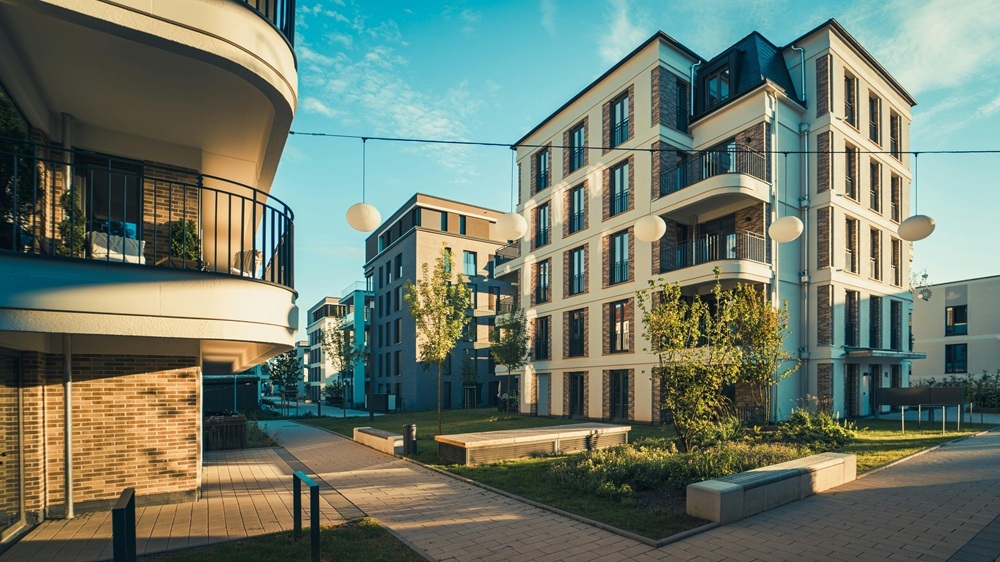
Modern Warsaw urban environment — location quality for new-build apartment investment Location quality always matters more than project quality — even on the primary market
District · M2 line

Wola — strongest overall primary market district

Warsaw's most active developer district. The Rondo Daszyńskiego CBD cluster, four M2 metro stations and over 700,000 m² of Class A office create the deepest professional tenant market in Warsaw. East Wola near the metro commands 18,500–20,500 PLN/m². Supply is high — unit selection discipline is essential. Best for investors targeting corporate professionals and yield.

District · M1 line

Mokotów — stronger residential quality, constrained new supply

Fewer new-build opportunities than Wola, but higher residential quality and deeper tenant stability. New developments in Mokotów sit within an established expat and family market. The best new-build projects here trade at 20,000–22,000 PLN/m². Strong for investors targeting families and long-term professional tenants.

District · M1 + M2

Śródmieście — prestige and capital preservation

Select near-central new projects in Śródmieście — particularly those with Powiśle or Nowy Świat adjacency — offer the strongest prestige positioning. Entry pricing is highest in Warsaw. Yield is not the primary case here: liquidity, resale floor and premium tenant profile are. Not every Śródmieście project deserves its price.

District · M2 + M3 pipeline

Praga Południe — appreciation play with new supply upside

The planned M3 metro line connecting Stadion Narodowy to Gocław makes this Warsaw's most infrastructure-forward appreciation story. Primary market pricing sits materially below left-bank equivalents — 13,000–17,000 PLN/m² in most new projects. Best suited for buyers with a 5–10 year horizon who can accept lower current yield in exchange for structural price growth as metro access materialises.

For a full district comparison including pricing, yields, metro access and buyer profiles across all major Warsaw investment districts, see our best districts guide.

Buyer fit

When a new-build apartment is the right choice — and when it is not

Primary market apartments are not "better" by default. They are better for specific buyer profiles, specific strategies and specific time horizons.

New-build is typically the stronger fit if:

  • you want a standardised, statutory-protected transaction structure
  • you prefer a newer building with current technical specification and energy performance
  • you are comfortable planning and funding the finishing phase after handover as a separate project stage
  • the PCC exemption materially improves the total capital comparison against specific resale alternatives you are evaluating
  • you are targeting a district where the strongest rental demand concentrates in modern stock — Wola, newer Mokotów clusters, Praga Południe near metro
  • you have a 5–10 year horizon and want to lock in pricing at current infrastructure proximity before further improvement

Resale may be the stronger fit if:

  • you want an apartment that is immediately habitable or rentable without a fitting-out phase
  • you are targeting Żoliborz, established Mokotów or central Praga — where the pre-war secondary market carries a genuine premium over new stock that buyers pay willingly
  • the finishing timeline would create an unacceptable void period relative to your income requirements
  • you want architectural character — high ceilings, original parquet, period features — that developer construction cannot replicate
  • your financial model is built around current rental income rather than a capital growth thesis that includes a fitting-out period
The most important evaluation step

Before comparing a specific new-build apartment against a specific resale unit, build the full capital model for each: purchase price + acquisition costs + realistic finishing cost + void period value for the new-build; purchase price + acquisition costs + any renovation required for the resale. The total capital number — not the headline purchase price — is what determines whether the investment makes sense at the yield being targeted.

FAQ

Frequently asked questions about buying new-build apartments in Warsaw

The questions that matter most — answered directly with practical detail rather than general reassurance.

Do buyers pay PCC when purchasing a new-build apartment in Warsaw?

No — standard developer sales of residential apartments are exempt from the 2% PCC civil law transaction tax. Instead, VAT is embedded in the developer's price: 8% for residential units with usable floor area up to 150 m², 23% for storage units and parking spaces. This is a meaningful structural advantage over secondary market purchases, where PCC applies to the full transaction price in addition to other costs. Confirm the VAT status of any specific unit with your legal adviser before signing, as unusual configurations can affect the applicable rate.

What exactly is stan deweloperski and how much does fit-out cost?

Stan deweloperski is the standard delivery condition for most Warsaw developer apartments: walls plastered, screed floors laid, windows and external doors installed, basic electrical points and plumbing stubs in place — but no bathroom finish, no kitchen, no internal doors, no floor finishes, no joinery of any kind. It is a legal completion but not a habitable apartment. Fit-out cost at medium standard runs approximately 2,200–3,000 PLN/m²; investor grade 1,800–2,200 PLN/m²; premium owner-occupier 3,000–4,500+ PLN/m². For a 55 m² apartment at medium standard, budget approximately 121,000–165,000 PLN for fit-out before the apartment can be rented. Full detail in our renovation and finishing guide.

Can foreign buyers purchase new-build apartments in Warsaw?

Yes. EU and EEA citizens can purchase any Warsaw apartment without a government permit. Non-EU nationals — including UK, US, UAE, Israeli and other non-EEA buyers — can also purchase residential apartments in multi-unit buildings without a Ministry of Interior permit. The purchase is completed through a Polish notarial deed, which must be executed in Poland or via an apostilled power of attorney if the buyer cannot attend in person. Our legal coordination service manages this process for remote buyers.

Is buying off-plan in Warsaw riskier than buying a completed unit?

Off-plan purchases carry delivery risk — the apartment does not yet exist and delays of 3–12 months are not uncommon. However, Polish law provides meaningful statutory protections: payment escrow accounts (rachunek powierniczy) mean buyer funds are protected rather than going directly to the developer; the Deweloperski Fundusz Gwarancyjny provides additional guarantee coverage for newer projects. The risk is real but manageable when developer track record, project stage and contractual provisions are reviewed properly before commitment. The gap between off-plan and completed-unit risk is smaller in Poland than in many other European markets precisely because of this statutory framework.

Is a new-build apartment always a better investment than a resale unit?

No — and the question is often framed incorrectly. The comparison depends on total capital deployed (including fit-out for the new-build), time to first income, target tenant profile and holding period. A well-selected resale apartment in Żoliborz or Mokotów with pre-war character and immediate rental readiness can produce a better net return over 5 years than a new-build in the same district at a comparable headline price but with 3 months of fitting-out ahead of it. The right answer is determined by modelling both options fully, not by assuming product type determines quality.

Can Warsaw Investor Care help with project selection and post-handover coordination?

Yes — both. On the selection side, we help narrow the market to projects that match the buyer's brief, review developer packages, advise on unit selection within shortlisted projects, coordinate legal review of the developer agreement and manage the transaction through to handover. After handover, we coordinate fit-out through our renovation management service, manage contractor selection and supervision, and activate the apartment for rental once the fit-out is complete. The goal is for the buyer to receive a finished, tenant-placed, income-generating apartment — not just a set of keys to a shell.

Next step

Looking at new-build apartments in Warsaw?

The strongest results come from selecting the right project and unit, reviewing the documentation properly and having the post-handover plan in place before the keys are received.

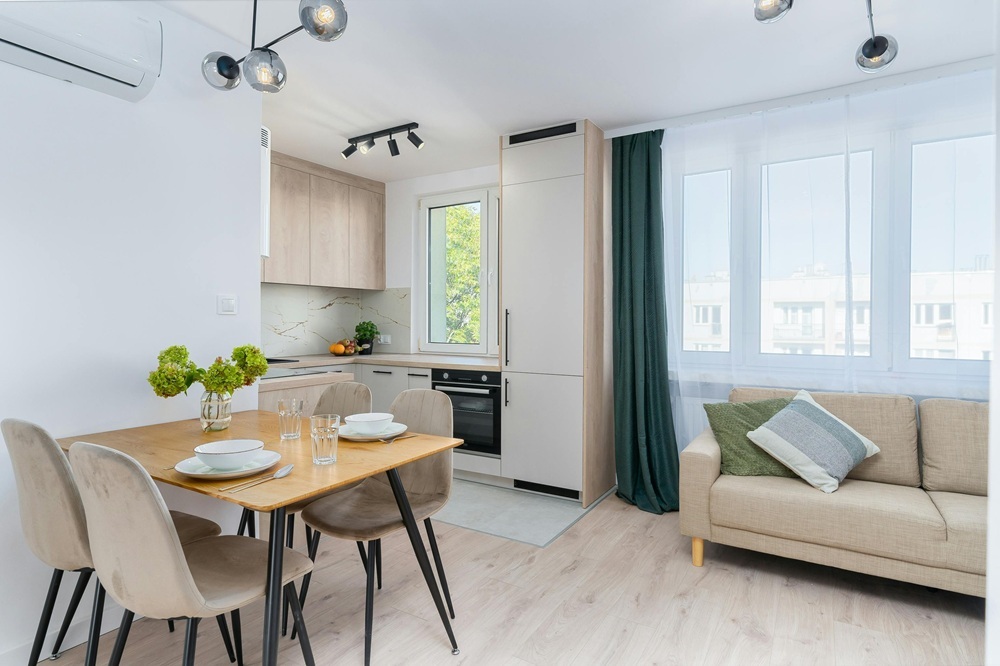
Finished new-build apartment interior in Warsaw — premium residential result from primary market investment

Let's find the right developer project for your brief.

We help foreign buyers narrow the Warsaw primary market to projects that match their strategy — then manage the transaction, legal coordination, fit-out and rental activation from a single point of contact.

Project selection & developer review
Unit analysis & negotiation
Legal coordination & signing
Post-handover fit-out management
Rental activation

Related guides & services

Guide

Best Districts in Warsaw

Full district comparison — prices, yields, metro access and buyer profiles to choose where before choosing what.

Guide

Total Cost of Buying in Warsaw

Every acquisition cost itemised — PCC, notary, agent fees and fit-out budget for accurate total capital planning.

Service

Renovation & Finishing

Stan deweloperski to rental-ready — budget tiers, room-by-room costs and remote management for foreign buyers.

Service

Legal Coordination

Developer agreement review, notarial signing preparation and POA logistics — the legal layer of every primary market purchase.

District

Wola Property Guide

Warsaw's most active primary market district — full pricing, micro-location analysis and supply pressure context.

Legal

Can Foreigners Buy in Poland?

Permit rules, legal process and notarial deed — the complete legal guide for non-Polish buyers.

© 2026 Warsaw Investor Care. All rights reserved.

This page is for informational and marketing purposes only. All market data, pricing, tax and cost figures are indicative and may not reflect any specific transaction. PCC exemption status and VAT rates should be verified for specific transactions with a qualified Polish tax adviser. This content does not constitute legal, tax or financial advice.