Polish Notary, Lawyer or Buyer’s Agent: Who Does What?
Three professionals can appear in one Warsaw purchase—but they do not protect the same thing. Understand who formalises the deed, who advises the buyer on legal risk and who searches, compares and negotiates around your brief.
You do not choose one of the three. You give each one the correct job.
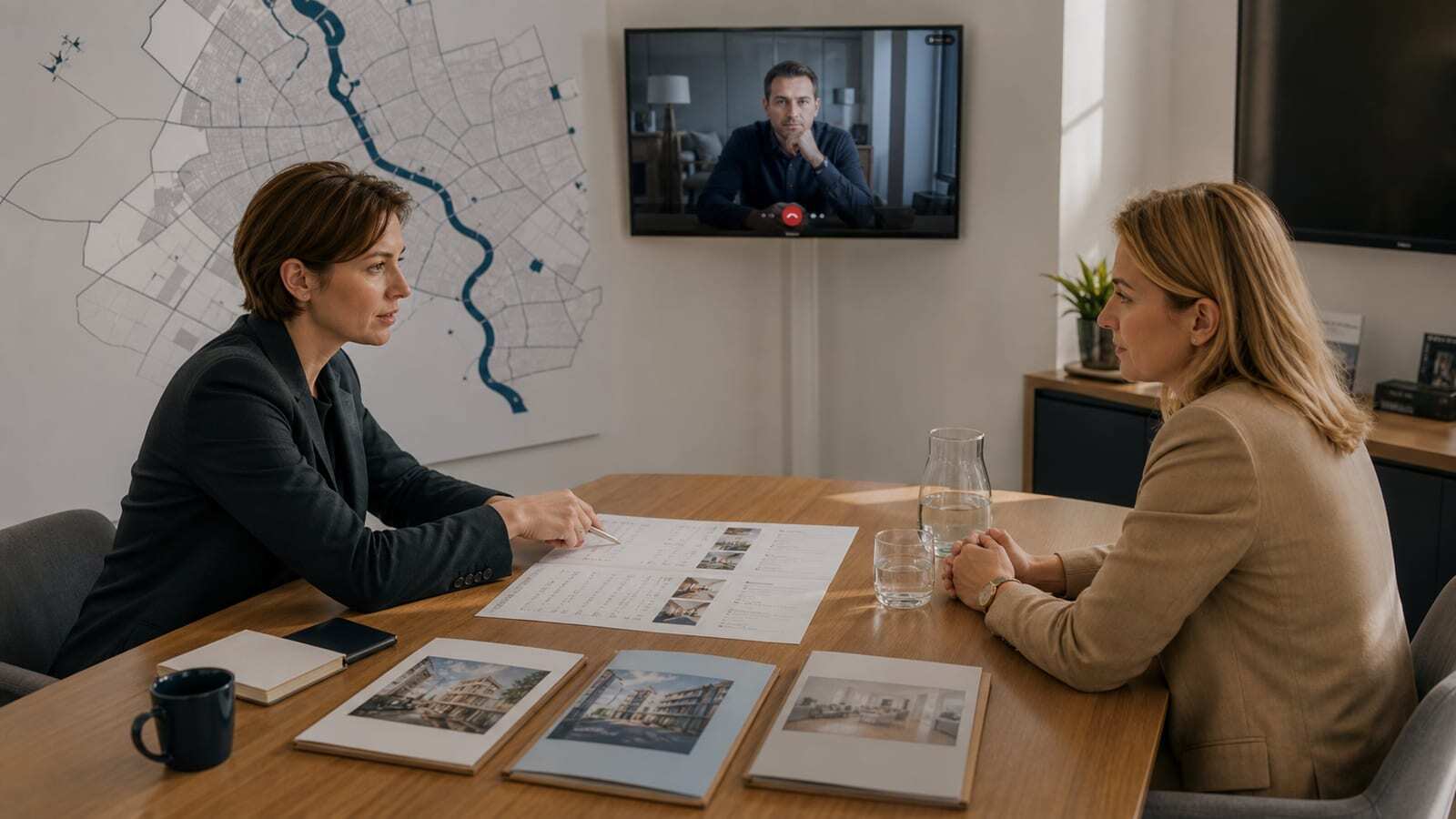
A Polish notary is essential when ownership is transferred in notarial-deed form. A buyer's lawyer is not legally mandatory in every ordinary purchase, but provides independent legal advice and document review for the client who appointed them. A buyer's agent is also optional, but can control the market search, viewing evidence, commercial comparison, negotiation and execution around the buyer's brief.
Does not become the buyer’s private negotiator. The statutory duty extends to the rights and legitimate interests of all parties and other affected persons.
The notary is a person of public trust whose lawful acts have the character of official documents. For a property transfer, the notary controls the notarial form, declarations and statutory steps—but serves the legal act, not one side's commercial strategy.
The notary explains and performs the act in Polish, with sworn interpreting where required; negotiation and buyer-only advice should already be complete.
The notary’s statutory lane
Under the current Notarial Law, the notary prepares notarial deeds, may hold documents or funds in the legally permitted form, and submits land-register applications connected with the act. Documents should be understandable and transparent; the notary must provide necessary explanations and refuse an act contrary to law.
Article 80 also requires the notary to safeguard the rights and legitimate interests of the parties and other persons for whom the act may have legal effects. That is broader than one buyer's mandate. It is precisely why the notary should not be described as the foreign buyer's personal lawyer.
Confirms identity, capacity, representation and formal documents.
Records the agreed transaction in the required official form.
Calculates or collects specified taxes and court charges where applicable.
Includes and submits the relevant KW application.
What the notary normally does not do
Search the market, inspect the apartment, decide whether the price is sensible, investigate tenant demand or negotiate the offer for one side.
Language is a formal issue
Notarial acts are performed in Polish. Article 2 permits use of a foreign language through the notary's proven competence or a sworn translator. Book the correct arrangement before the signing date.
Timing matters
Sending documents two hours before the appointment is not a buyer-protection strategy. The deed should be reviewed and commercial issues resolved before the closing slot.
Role 02 · Buyer-specific legal protection
What an independent buyer’s lawyer adds
The lawyer's client is the buyer who appointed them. The task is not merely to confirm that a deed can be signed, but to explain whether the legal position, documents, contractual risk and proposed protections are acceptable for that buyer.
Legal due diligence connects the live KW with acquisition history, seller authority, contracts, building records and transaction conditions.
A legal opinion should answer buyer decisions
The Act on Legal Advisers states that legal assistance is intended to protect the legal interests of the entity for whom it is performed and imposes professional confidentiality. The Law on the Bar likewise defines advocacy around the provision of legal assistance.
In a property file, the useful output is not “looks fine.” It is a written, property-specific explanation of the right being acquired, the entries and documents reviewed, unresolved risks, contractual protections, required conditions and actions before payment or signing.
Verifies ownership, authority, mortgages, claims, easements and restrictions.
Reviews the acquisition history and source documents relevant to the title.
Checks reservation, preliminary, developer and transfer documents within scope.
Structures conditions for finance, mortgage release, vacant possession and remote authority.
Explains what is proven, what remains open and who must confirm the next issue.
Important distinction
The official EKW portal lets anyone view a known register number free of charge. Reading the entries is only the start; legal analysis connects them to the specific transaction and evidence.
Conflict check
Confirm who appointed the lawyer and whether that lawyer also advises the seller, developer or another party. “The developer has lawyers” does not mean the buyer has independent advice.
Not every specialist question is legal
A lawyer may coordinate the issue, but valuation, structural condition, mortgage approval and tax residence can require a valuer, inspector, lender or tax adviser.
“The notary can make a lawful sale happen. The lawyer can tell you what the legal file means. Neither one searches the whole Warsaw market to decide whether this was the right apartment for your brief.”
The gap filled by independent buyer representation
Role 03 · Commercial decision and execution
What an independent buyer’s agent controls
The buyer's agent starts with the client, not with a listing. The written brief turns budget, intended use, district, building standard, tenant profile, risk tolerance and post-purchase plan into a search and negotiation process.
A buyer-side viewing is evidence collection: layout, light, noise, common areas, surroundings, visible condition and questions for the legal and technical file.
The engagement defines the commercial duty
The current Real Estate Management Act defines real-estate brokerage as paid activities aimed at another person's property transaction. It states that the scope is determined by a written or electronic brokerage agreement and requires professional liability insurance, with the current insurance document attached to the agreement.
For WIC, the buyer-side scope is deliberately broader than forwarding listings. We search developers, agencies and private owners across Warsaw, compare total acquisition logic, coordinate evidence and bring in the correct specialist before the buyer loses leverage.
Builds a measurable brief before opening the shortlist.
Filters the whole accessible Warsaw market instead of one agency's inventory.
Compares price, location, building, condition, rent logic and total capital required.
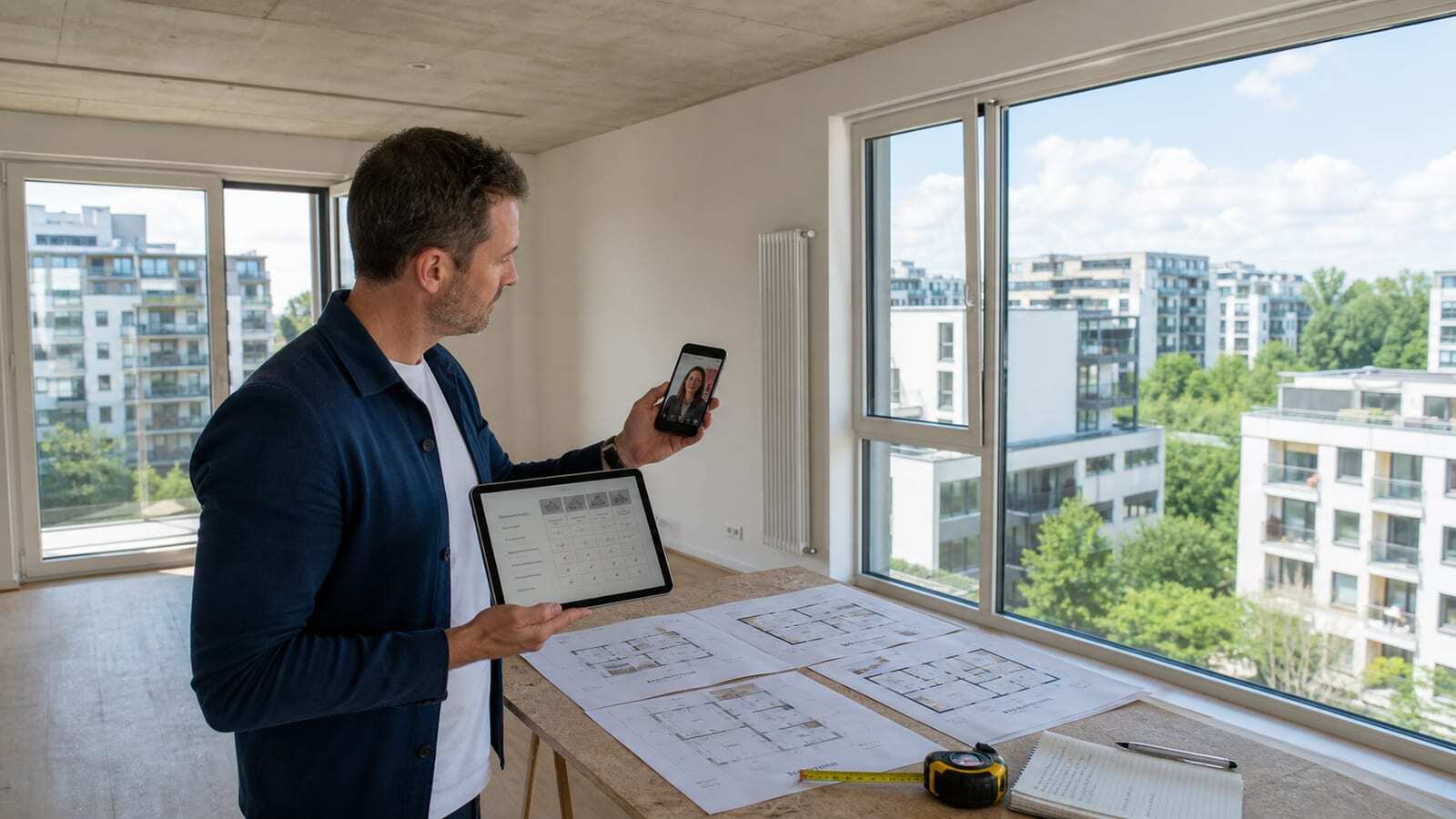
Organises viewings and local follow-up for a buyer who lives abroad.
Negotiates price and commercial terms only in the buyer's agreed interest.
Keeps the legal, notarial, technical, finance and handover stages connected.
WIC independence model
We do not have properties of our own to clear. Every option is sourced because it fits the buyer's brief—not because it has been sitting on somebody else's books.
Disclosure still matters
Ask every intermediary who appointed them, what they are paid, by whom and whether any developer or seller relationship applies to the specific property.
Buyer’s agent is not a magic title
Quality comes from the written scope, market access, evidence, conflicts disclosure, insurance and real execution—not from the label alone.
One purchase · clear ownership
Who leads each stage of a Warsaw acquisition?
The model below is deliberately practical. The lead can change with the transaction, but every issue must have one named owner, one deliverable and a deadline before the next irreversible commitment.
Commercial terms are strongest before the reservation or deposit removes the buyer's ability to walk away.
01
Buyer brief and total budget
Buyer’s agent leads
Define use, location, property type, total capital, funding, timeline, risk tolerance and post-purchase plan before search activity.
Support: mortgage adviser for finance feasibility; tax adviser where structure or residence matters.
02
Whole-market search and viewings
Buyer’s agent leads
Search developers, agencies and owners; record viewing evidence; compare the property against the agreed brief rather than sales presentation.
Support: technical inspector for property-specific condition where appropriate.
Record condition, keys and meters; coordinate insurance, utilities, finishing, furnishing and long-term rental readiness.
Support: lawyer or notary follows outstanding registration and legal undertakings within scope.
Buying from abroad
Remote purchase adds a document chain—not a reason to improvise
A properly structured power of attorney can make remote completion possible, but its form, scope, authentication, translation and acceptance must be settled before the timetable becomes urgent.
The Polish lawyer and closing notary should approve the power-of-attorney wording before it is signed and authenticated abroad.
Remote division of responsibility
The buyer's agent supplies local market access, viewing evidence and continuous execution.
The buyer's lawyer defines and reviews the legal scope of the authority and purchase protections.
The intended Polish notary confirms the form acceptable for the notarial transaction.
A sworn translator supplies certified Polish translation or interpreting where required.
The buyer follows the correct apostille or legalisation route for the document's country and type.
It authenticates the origin of a public document under the applicable international route. It does not fix the wrong powers, form, names or transaction description.
One local coordinator
A remote buyer should not have to chase the seller, lawyer, notary, interpreter, bank, inspector and contractor independently from another country.
Avoid role confusion
Six expensive assumptions
Most problems in this area are not caused by the absence of professionals. They arise because the buyer assumed somebody was doing a job that was never actually included in that person's role.
Assumption
“The notary is my lawyer.”
Correction: the notary has statutory duties around the act and all affected interests. A buyer lawyer works under the buyer's own legal mandate.
Assumption
“The seller’s agent found it, so they represent me too.”
Correction: confirm the written appointment, payer and conflicts. Access to a listing is not proof of a buyer-side duty.
Assumption
“A clean-looking KW proves everything.”
Correction: title review can also require pending filings, source documents, seller authority, building records, occupancy and contract conditions.
Assumption
“A lawyer tells me whether the apartment is a good investment.”
Correction: legal acceptability, market price, tenant demand, technical condition and strategy are different professional questions.
Assumption
“A buyer’s agent can give every specialist opinion.”
Correction: the buyer's agent coordinates the acquisition but should not replace regulated legal, tax, notarial, credit or technical conclusions.
Assumption
“Remote purchase means sending a generic POA.”
Correction: the authority must match the exact Polish transaction, then follow the accepted authentication and translation route.
Direct answers
Notary, lawyer and buyer’s agent FAQ
These answers describe the normal role division. The exact engagement, property, parties and legal issues can change the team required for a specific purchase.
Do I legally need a lawyer to buy an apartment in Poland?
A separate buyer lawyer is not legally mandatory in every ordinary apartment purchase, but the ownership transfer must use the legally required notarial form. Independent legal review is particularly valuable for a foreign buyer, remote purchase, developer contract, mortgage payoff, unusual title, company acquisition or non-EEA permit question.
If a Polish notary checks legality, why would I use my own lawyer?
Because the roles differ. The notary must protect the proper legal conduct of the act and the legitimate interests of all affected parties. Your lawyer advises your legal position, reviews the wider file, negotiates legal protections and reports unresolved buyer risks before signing.
Can the seller or developer choose the notary?
A notary may be proposed by the seller or developer, but the buyer should receive the draft and cost information early enough for independent review. The appointment does not turn that notary into the seller's private advocate.
What is the difference between a listing agent and a buyer’s agent?
A listing agent is engaged around property the seller wants to market. A genuine buyer's agent begins with the buyer's written brief and searches across available sources. Always confirm the engagement, payer, scope and any commercial relationship for the particular property.
Does Warsaw Investor Care have apartments of its own to sell?
No. WIC searches developers, agencies and private owners around the buyer's budget, use and decision criteria. We do not maintain an inventory that must be cleared.
Is Warsaw Investor Care a law firm?
No. WIC provides independent buyer-side property search, analysis and transaction coordination. Property-specific legal opinions are provided by appointed qualified lawyers; notarial acts are performed by the notary.
Who negotiates the property price?
Under WIC's buyer-side model, the buyer's representative leads commercial negotiation around the agreed brief. The lawyer supports legal conditions and risk allocation; the notary records the final agreed declarations rather than negotiating one side's price strategy.
Who should prepare a power of attorney for a remote purchase?
The legal wording should be prepared or reviewed for the buyer and approved in advance by the intended Polish notary. It then follows the correct execution, apostille or legalisation, and sworn-translation route for the relevant country and document.
Who checks the physical condition of the apartment?
A qualified technical inspector or relevant construction specialist should handle the technical assessment. The buyer's agent coordinates access and turns findings into the purchase decision or negotiation; the lawyer addresses legal consequences where needed.
Official legal sources
We link directly to public Polish sources so the role descriptions are verifiable. Property-specific conclusions still belong to the appointed professionals.
You should not have to manage six Polish professionals from abroad.
WIC starts with your brief, searches the wider Warsaw market, coordinates independent review and keeps negotiation, notarial completion, handover and post-purchase execution connected.
No WIC inventory to clearBuyer-side searchSpecialist legal conclusionsRemote-ready execution
Editorial note: updated 20 August 2026. This page provides general educational information, not an individual legal opinion, tax advice, credit decision, valuation, technical survey or promise of investment performance. The exact engagement, conflicts, insurance, documents and responsibility of every professional should be confirmed in writing for the specific transaction. Editorial images illustrate professional roles and do not depict a specific WIC client or property offered for sale.
Private buyer consultation
Tell us what you want to buy in Warsaw.
We review your buying plans and normally reply by email within one business day. Before any work begins, we agree the scope and fee with you in writing.