1. en
  2. de
  3. fr
  4. iw
Buyer protection · Warsaw · Legally reviewed 19 August 2026

15 red flags when buying
property in Warsaw.

A source-led due diligence guide for international buyers: land-register warnings, seller authority, unclear property rights, risky contracts, tenants, alterations, developer documents, foreign-purchaser rules, payment security and agency conflicts.

Scope: resale and developer purchases Method: warning, evidence, remedy and stop condition Sources: Polish legislation, ministries, courts and Warsaw public registers
Quick answer
What should make a foreign buyer pause before purchasing a Warsaw apartment?

The most serious signals are: a notation or warning in the land and mortgage register, a seller whose authority is not proven, a mismatch between the listing and the legal right being sold, pressure to pay before documents are reviewed, unclear tenants or occupants, undocumented alterations, missing developer information, an unresolved permit or power-of-attorney route, changed payment instructions and an intermediary whose role is not transparent. None proves fraud by itself. It means the buyer should pause, obtain evidence and change the contract or payment structure before proceeding.

Quick facts · Warsaw due diligence
Land register structure Four sections
Mortgage shown in Section IV Material, not automatically fatal
Developer reservation fee Maximum 1% when the Act applies
Existing lease after sale Usually continues with buyer as landlord
Foreign buyer permit Property and buyer specific
Legal review date 19 August 2026

A useful red-flag guide is not a list of frightening words. It is a decision system. The question is not merely whether a mortgage, tenant, power of attorney or pending court application exists. The real questions are what that fact changes, which evidence resolves it, what must be written into the contract and whether the buyer can still exit without losing money.

Polish property transactions combine several layers: the public land and mortgage register, title-source documents, civil and family-law authority, building and administrative records, the physical apartment, the payment mechanism and, for some foreign buyers, the permit regime. A notarial deed is essential for transferring ownership, but safe buying starts earlier. The evidence should be assembled before the buyer pays a meaningful reservation amount or accepts a deadline that cannot realistically be met.

This guide separates official legal rules from buyer-side practice. Primary sources include the current Land and Mortgage Register Act, the Civil Code, the Developer Act, the Notarial Law, official MSWiA guidance for foreign purchasers and public verification systems maintained by the Ministry of Justice, GUNB and the City of Warsaw.

Core warning set
15 red flags
Title, authority, contract, building, payment and representation
Land register
I · II · III · IV
Property, ownership, claims and mortgages
Decision outcomes
Proceed · condition · pause
A risk becomes manageable only when evidence and contract structure align
Official review
August 2026
Links lead to current government or statutory sources
Decision framework

A red flag is a request for evidence, not a verdict

The same fact can be routine, manageable or unacceptable depending on the documents and payment sequence.

Experienced due diligence distinguishes between a missing document, a legal inconsistency and a transaction-control failure. Missing evidence can often be supplied. An inconsistency may require a court entry, creditor document, spouse confirmation or redesigned contract. A payment-control failure is more urgent because money can leave the buyer before the underlying risk is resolved.

Amber · verify

Evidence is incomplete

The seller may have a valid explanation, but the buyer does not yet have enough documentation to rely on it.

Red · condition

Rights or obligations do not align

The transaction may continue only after a corrective document, condition precedent or revised deed structure is agreed.

Stop · do not fund

Money is requested before control exists

Pause where the recipient, authority, title, release mechanism or return conditions cannot be independently verified.

The four-question test

For every warning, ask the same four questions

What is wrong? State the inconsistency precisely rather than describing the property as generally risky.
What proves it? Identify the official record, deed, certificate, consent or technical document required.
Who fixes it? Allocate responsibility, cost and deadline to the seller, developer, creditor or buyer.
What if it fails? Write the buyer exit, refund and payment consequence into the contract before money moves.
Important distinction

A clean-looking document is not enough. Confirm that it concerns the correct apartment, parking right, parties and date, and that no later filing, corporate change, marriage-property issue or lease has altered the position.

Red flags 01 to 03

Start with the land and mortgage register, but do not stop there

The register is the central public record of legal status, yet a safe review includes pending entries and source documents.

Land and mortgage register warning before a Warsaw property purchase
Official basis: Land and Mortgage Register Act, consolidated text published 6 August 2026

The official Electronic Land and Mortgage Register portal allows a buyer who knows the register number to inspect the content. The current Act explains the core structure. Section I describes the property and rights connected with ownership. Section II identifies ownership or perpetual usufruct. Section III records rights, restrictions, claims and warnings other than mortgages. Section IV contains mortgages.

The register benefits from statutory presumptions and, in defined circumstances, public-faith protection. That protection has limits. A person acting in bad faith is not protected, and Article 8 gives special significance to a notation of an application, appeal, cassation complaint or warning of inconsistency. That is why a buyer must inspect not only the owner name and mortgage balance but also every notation and pending matter visible on the day of signing.

Red flag 01

A notation, warning or unexplained pending application

The visible entry may no longer tell the whole story. Obtain the filing, court correspondence and legal explanation before relying on the register.

Red flag 02

The seller or property data do not match the deal

Differences in owner, marital status, address, floor area, unit description or connected rights require reconciliation with title-source documents.

Red flag 03

A mortgage or Section III burden has no documented exit route

A mortgage, easement, enforcement entry, claim or restriction may be manageable, but only when its effect and release mechanism are known.

Additional check

The apartment has no separate register

This can occur with a cooperative ownership right. It is not automatically invalid, but the buyer needs a different evidence package and financing and permit analysis.

What to request

  • the full current register and all visible pending-entry information
  • the deed, inheritance document, court ruling or other basis of acquisition
  • documents explaining every Section III and Section IV entry
  • creditor certificates stating payoff amount, account and release conditions
  • evidence for parking, storage, access and shares connected with the apartment

When to pause

  • the seller refuses to provide the register number before payment
  • a notation is dismissed as administrative without the underlying filing
  • the creditor amount or release promise is verbal
  • the preliminary contract ignores a known claim or enforcement entry
  • the deed description does not match what was marketed
A mortgage is not automatically a failed transaction

A financed resale can be purchased safely when the creditor documentation, payoff allocation, release obligation and deadlines are coordinated in the contract and notarial deed. The unsafe version is a payment made on the assumption that the seller will arrange the release later.

Red flags 04 and 05

Confirm who can sell and who must consent

The person showing the apartment is not necessarily the person legally authorised to transfer it.

Verifying seller identity and authority before handing over Warsaw apartment keys

Authority review begins with the owner shown in the register or the holder of the relevant cooperative right, but it does not end there. The acquisition history, marital-property position, inheritance chain, corporate representation and any power of attorney can affect who must appear or consent.

For a company seller or developer, the official KRS search provides current and full registry information. Match the company name, KRS number and representation rules to the people signing. For a private seller, compare identity data with title documents and clarify whether the property forms part of personal or marital common property. Article 37 of the Family and Guardianship Code makes spouse consent relevant to specified transactions involving common real estate. It does not mean that every married seller automatically needs a second signature; the property regime and acquisition history matter.

Remote or represented sales require particular care. Under the Civil Code, a power of attorney must follow the special form required for the transaction, and an act outside authority may depend on later confirmation. A foreign document may also require notarisation, apostille or legalisation and sworn translation before it can be used in Poland.

Red flag 04

The signer is not clearly connected to the registered owner

An agent, relative, employee or broker cannot replace proof of title and authority. Ask for the complete legal chain before accepting a signature.

Red flag 05

Spouse, inheritance, corporate or POA issues are left for closing day

Late discovery can invalidate deadlines, require new documents or make remote signing impossible on the planned date.

Private seller

Identity and acquisition history

Verify the title document, personal data, marital regime where relevant and any inheritance or division documents.

Company seller

Current KRS representation

Check who can bind the company, whether signatures must be joint and whether special corporate approvals are needed.

Representative

Transaction-specific authority

Review scope, form, validity, revocation risk, foreign formalities and the exact acts the representative may perform.

Do not rely on possession of keys

Keys prove practical access, not ownership or authority. The same rule applies to a signed agency agreement, a utility bill or a statement that the actual owner is abroad. None replaces title and representation documents.

Red flags 06 and 07

Make sure the legal package matches the listing

Apartment, parking, storage, garden, terrace and access can be held under different legal structures.

A listing is a marketing description, not a legal inventory. A parking space may be a separate non-residential unit, a share with an exclusive-use arrangement, a connected right, a lease or only an informal allocation. A storage room can be part of the apartment, an appurtenant room, a separate unit or a common area assigned for use. A garden can be ownership, exclusive use of common land or a contractual arrangement. These differences affect transferability, financing, fees and, for some foreign buyers, the MSWiA permit analysis.

The same discipline applies to floor area and layout. Confirm which measurement controls the price, whether a developer can adjust the final area, and whether the actual apartment corresponds with the deed, register, inventory and available plan. A beautifully finished room does not become part of the acquired legal right merely because it is accessible from the apartment.

Red flag 06

Parking, storage or garden is “included” but not legally described

Require the exact title, register reference, share, exclusive-use agreement or lease and confirm that it transfers with the apartment.

Red flag 07

Access, area or boundaries depend on informal practice

Private-road access, cellar use, roof terrace, attic or added room should be supported by documents rather than neighbour custom.

Advertised element Questions to resolve Why it matters
Parking Separate unit, land share, connected right, lease or use allocation? Transfer form, financing, charges and possible foreign-purchaser permit analysis.
Storage Part of unit, appurtenant room, separate unit or common area? Whether it legally transfers and whether it can be used or sold independently.
Garden or terrace Ownership, exclusive use, common area or contract only? Control, maintenance duties and limits on alterations.
Access road Public access, ownership share, easement or agreement? Legal and practical access, especially for houses and land-based rights.
Floor area Which document and measurement method controls the price? Final price, resale description and dispute risk.
Foreign-buyer interaction

A self-contained residential unit can fall within a statutory permit exemption, while separate land, a house, a land share, certain parking structures or property in a border zone may require a different analysis. Do not assume that the apartment and every accompanying right have the same permit status. Use the official MSWiA guidance as a starting point.

Red flags 08 and 09

Reservation and preliminary contracts decide who carries the risk

Price is only one term. Deadlines, evidence, refunds, conditions and default rules determine whether the buyer is protected.

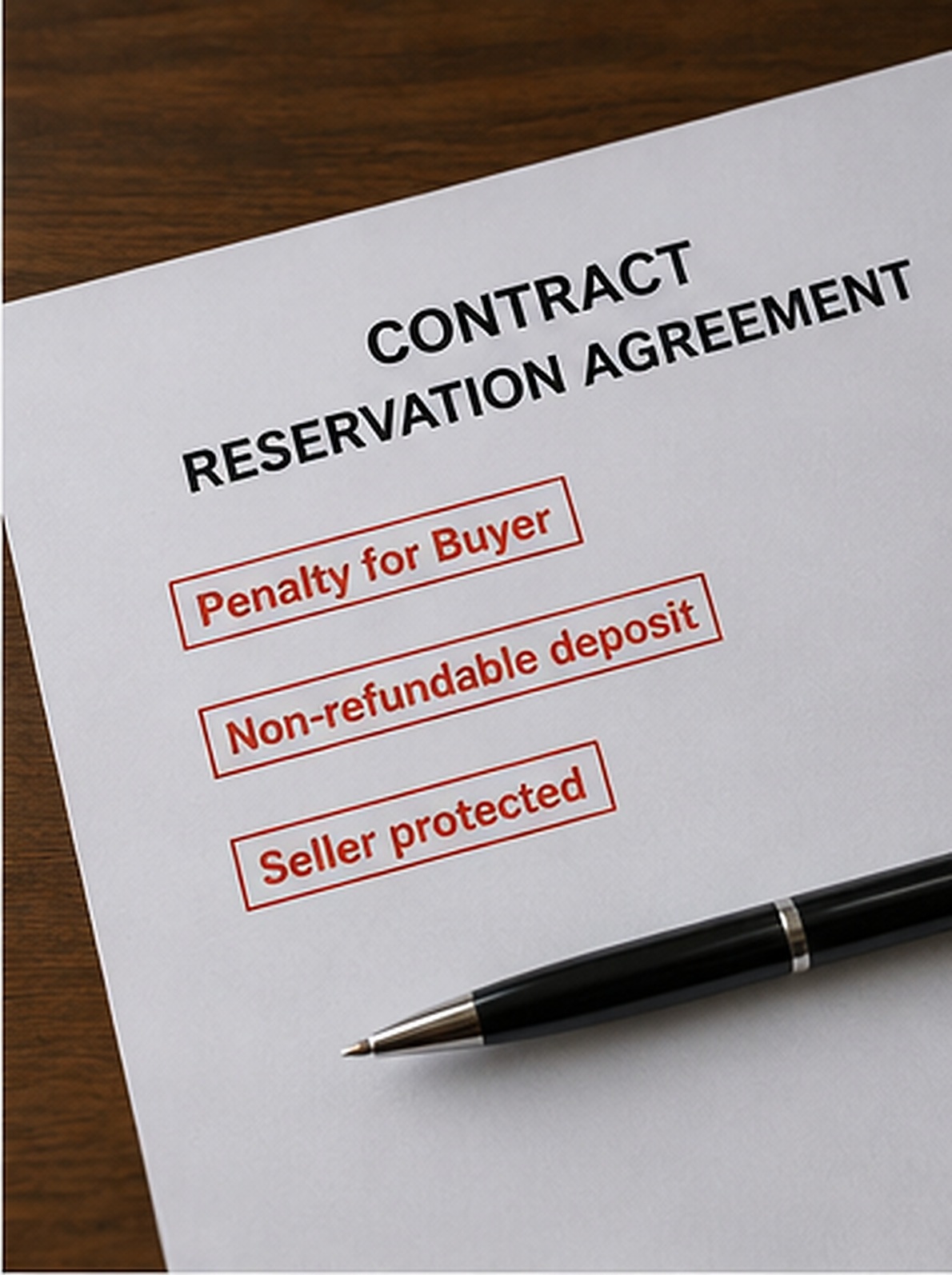
Risky reservation agreement clauses for a Warsaw apartment buyer

A reservation form can look simple while creating a meaningful payment obligation and a very short timetable. Before signing, identify who receives the money, whether the recipient owns or controls the property, what documents must be delivered, what happens if title or permit review fails, whether financing is a condition, and exactly when the amount is returned or retained.

Polish terminology matters. Zadatek and zaliczka do not have the same default consequences. Article 394 of the Civil Code provides a statutory framework for earnest money where the contract does not state otherwise, including consequences for non-performance. The contract can shape the outcome, so translating both words simply as “deposit” hides a material difference.

For transactions covered by the Developer Act, the developer must provide the prospectus and attachments before the developer agreement or a preceding reservation agreement. The Act caps the reservation fee at one percent of the apartment or house price stated in the prospectus and provides statutory refund rules in specified situations. That framework should not be copied blindly into an ordinary secondary-market transaction where a different legal basis applies.

Red flag 08

Money is due before the buyer receives the core evidence

A contract should not force the buyer to fund first and discover title, tenancy, permit or building problems later.

Red flag 09

The buyer has strict penalties while the seller keeps broad discretion

Watch for one-sided extensions, vague seller deliverables, short buyer deadlines, weak refund language and no consequence for missing documents.

Conditions worth making explicit

  • satisfactory legal and technical review
  • foreign-purchaser permit result where relevant
  • financing or source-of-funds timetable where agreed
  • document delivery by a fixed date
  • mortgage payoff and release mechanism
  • vacant possession and removal of occupants

Contract mechanics to define

  • whether payment is zadatek, zaliczka or another fee
  • recipient and protected bank account
  • objective refund triggers and deadline
  • which party chooses the notary and when
  • inventory, furniture and connected rights
  • what survives termination and who bears costs
Pressure is not evidence

“Another buyer is ready” may be true, but it does not replace a register review, seller-authority check or clear refund clause. A genuinely competitive property still needs a transaction structure that prevents an avoidable loss.

Red flags 10 and 11

Vacant possession, tenants and arrears must be documented

An empty viewing does not prove that the apartment will be legally and physically empty at handover.

Unpaid building or community charges as a warning in a Warsaw apartment purchase

Ask who lives in the apartment, on what basis and when they will leave. A tenant, family member, borrower or former partner may not be visible during a viewing. If a tenancy exists, inspect the full agreement, amendments, deposit, payment history and any termination notices. Under Article 678 of the Civil Code, a buyer generally enters the existing lease in place of the seller. The sale itself is therefore not a reliable vacant-possession strategy.

Administrative or cooperative certificates also matter. A certificate concerning charges and arrears is not the same thing as title, and seller debt does not automatically become buyer debt merely because the apartment is sold. Still, missing or inconsistent information may expose disputes, litigation, enforcement risk, unapproved works, unusually high charges or a seller who cannot complete the promised settlement. Review the applicable structure under the Act on Ownership of Premises or the Housing Cooperatives Act.

Red flag 10

Vacant possession is promised but not contractually controlled

The handover date, occupant removal, keys, meters, lease deposit and consequence of delay should be explicit.

Red flag 11

Community, cooperative or utility information is missing

Request current certificates and relevant resolutions rather than relying on the seller statement that everything is paid.

Occupancy

Who has possession?

Identify residents, tenants and other users, their legal basis and the steps required for vacant handover.

Building finances

What is due or planned?

Check monthly charges, arrears, renovation fund, major resolutions, planned assessments and pending disputes.

Handover

What transfers on the day?

Define keys, access devices, meter readings, furniture inventory, documents, tenant deposit and condition record.

Registration and possession are different questions

Administrative address registration is not ownership, but a buyer still needs a practical and contractual plan for every person occupying the premises. Do not confuse a statement about registration with proof of vacant possession.

Red flags 12 and 13

Compare the apartment you see with the apartment approved on paper

Layout changes, installations and building condition can create legal, technical and financial exposure.

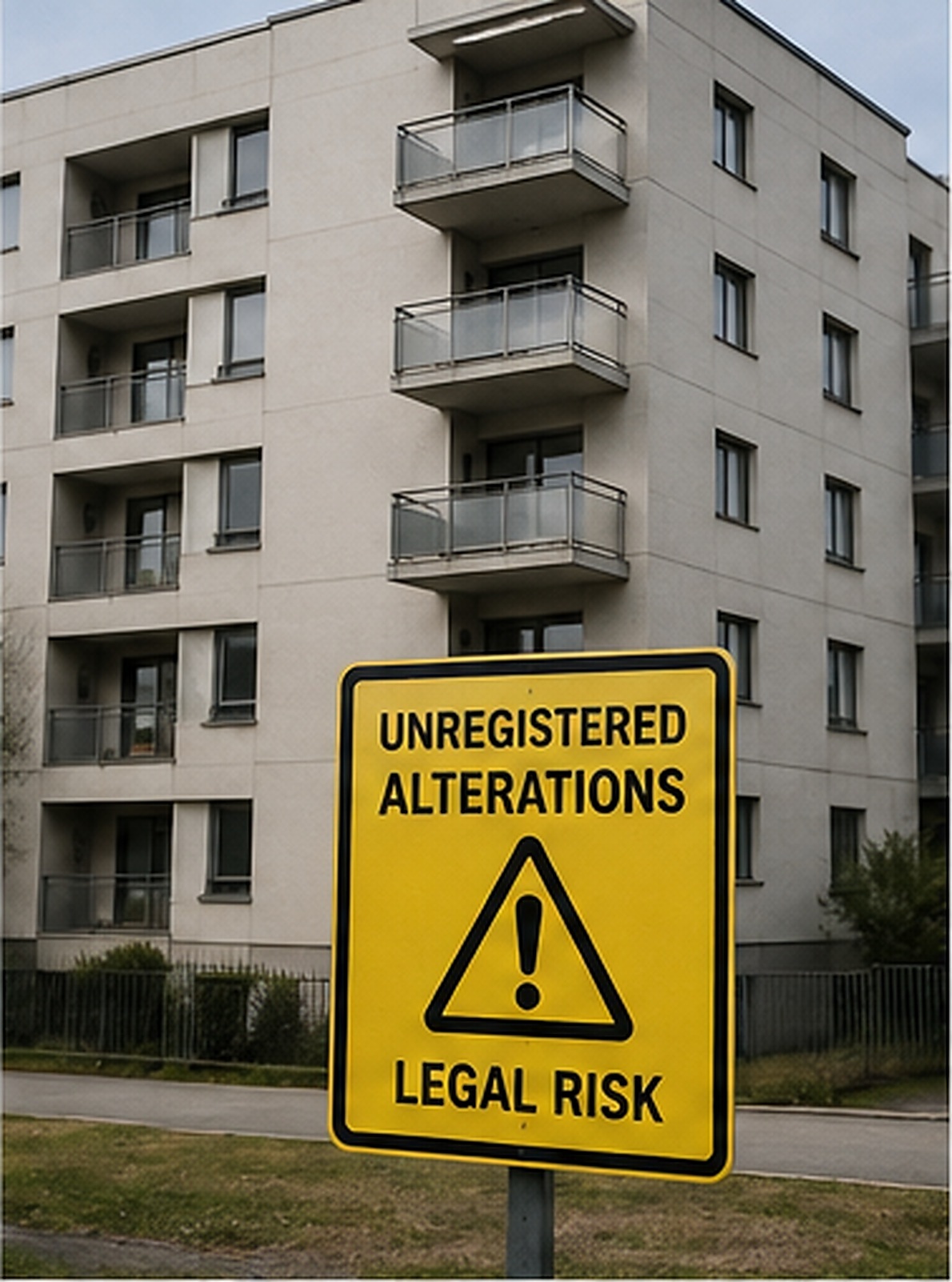
Unregistered apartment alterations and legal risk in Warsaw

Not every moved internal wall is illegal and not every renovation requires a building permit. The correct question is what work was done, whether it affected structural elements, common property, fire safety, installations, ventilation, wet-room location or the use of the premises, and which approvals, notifications or consents applied. Compare the current layout with the available plan and ask for design, consent, notification or completion documents where the scope makes them relevant.

The current Building Law is the statutory starting point. The public GUNB RWDZ search can help identify building-permit applications, decisions and notifications, but its public dataset is not a complete historical file for every building and should not be treated as the sole proof that no issue exists. For the surrounding area, use the City of Warsaw architecture maps and local-plan portal to investigate adopted and developing planning documents.

The seller must also provide the energy performance certificate in the circumstances described by the official Ministry guidance. The certificate is not a technical inspection and does not prove that installations are sound. It is one document in a broader building review.

Red flag 12

The actual layout or use does not match the available records

Added rooms, enclosed balconies, moved kitchens, divided units or commercial use can require deeper building and community review.

Red flag 13

Serious defects or future building costs are dismissed as cosmetic

Moisture, ventilation, electrical capacity, structure, façade, roof, lifts and planned common works can dominate the post-purchase budget.

Apartment-level evidence

  • available plan and area documents
  • scope and date of renovations
  • approvals or notifications where applicable
  • installation and appliance information
  • energy performance certificate
  • independent technical inspection report

Building and surroundings

  • community or cooperative resolutions
  • renovation fund and planned major works
  • known claims, defects and insurance events
  • building permits and notifications where relevant
  • local plan and planned neighbouring development
  • heritage status or conservation constraints where relevant
Public registers are evidence tools, not complete due diligence

GUNB, Warsaw planning maps and heritage maps can reveal important facts, but absence of an online result does not prove that no historical approval, dispute or restriction exists. Use the address, plot number and building documents together.

Developer purchase

New construction has different red flags, not fewer of them

The prospectus, escrow structure, land status, permits, standard and delivery rules must work as one package.

Missing developer and property documents before buying a new Warsaw apartment

Buying from a developer replaces some resale risks with project and delivery risks. The Developer Act requires a developer beginning sales to prepare a prospectus, and the prospectus with attachments must be delivered free of charge on a durable medium before the developer agreement or a preceding reservation agreement. Read it together with the draft contracts, land register, building permit information, payment schedule and handover standard.

Do not treat the marketing brochure as the controlling specification. Check the developer entity in the official KRS, confirm who owns or controls the land, identify the housing escrow account, understand the Developer Guarantee Fund framework, and review what happens if the final area, completion date, materials or common areas change.

The statutory one-percent reservation-fee cap and refund protections apply within the covered developer framework. Their existence does not remove the need to review the reservation period, mortgage decision timetable, permit route, documents promised before the developer agreement and the treatment of separately priced parking or storage.

Developer red flag A

The prospectus, attachments or draft agreement arrive after payment

The statutory information package should be available before the covered reservation or developer agreement is signed.

Developer red flag B

Marketing promises are absent from the binding documents

Views, materials, amenities, rental assumptions, parking and completion dates need contractual support, not a sales presentation.

Developer red flag C

Escrow, land or permit explanations are vague

Identify the account, project stage, land-register position, permit status and the conditions for each payment tranche.

Developer red flag D

The change clauses are broad but buyer remedies are narrow

Review area tolerance, substitution of materials, completion extensions, defect procedure, withdrawal rights and refund timing.

Developer document order

Information first, reservation second, funding only through the verified structure

The safest sequence is to identify the exact developer entity and property, receive the statutory and contractual package, review material risks, verify the payment account, and only then sign and transfer the amount required by the applicable agreement.

Cross-border risk

Permit and power-of-attorney assumptions must be resolved early

Nationality alone does not answer the question. Property type, location and connected rights matter.

The official MSWiA guidance sets out the general permit framework and statutory exemptions for foreign purchasers. A self-contained residential unit outside a border zone may fall within an exemption, but separate land, a house, unusual ownership rights, a share connected with parking or another property component can change the analysis. United Kingdom buyers have been subject to the general post-Brexit framework since 1 January 2021 unless an exemption applies.

Resolve the permit route before accepting a contract deadline. If a permit is required, the transaction timetable and document package should reflect it. If an exemption is relied upon, record the property facts and legal basis supporting that conclusion. A sales agent statement that “foreigners never need a permit for apartments” is too broad to use as transaction advice.

Remote purchase adds a second control layer. A power of attorney for a real-estate deed must be prepared in the form required by Polish law. The Polish notary or lawyer should approve the exact text before it is signed abroad. Country-specific notarisation, apostille or legalisation, sworn translation, original delivery and bank compliance requirements can affect whether the planned signing date is realistic.

Foreign-buyer red flag

The permit answer is based only on nationality or the word “apartment”

Review the entire legal package, including parking, storage, land shares, location and buyer structure.

Remote-purchase red flag

The buyer is told to notarise a generic power of attorney immediately

Approve wording, scope, form and foreign-document route in Poland before paying for execution abroad.

01

Classify the buyer

Nationality, residence, marital status, purchase vehicle and whether one or more buyers will acquire the rights.

02

Classify every property right

Apartment, land, house, parking, storage, road share, perpetual usufruct and location.

03

Confirm permit or exemption route

Do this before the contract sets a completion date or makes the reservation payment non-refundable.

04

Approve the document chain

Power of attorney, notarisation, apostille or legalisation, sworn translation, originals and Polish notarial requirements.

Remote does not mean informal

Video calls, scans and electronic signatures can support coordination, but they do not automatically replace the form required for the relevant deed or power of attorney. Build the formal document route before scheduling closing.

Red flag 14

Never let payment move faster than verification

Title can be correct and the transaction can still fail through an unsafe recipient, account or release sequence.

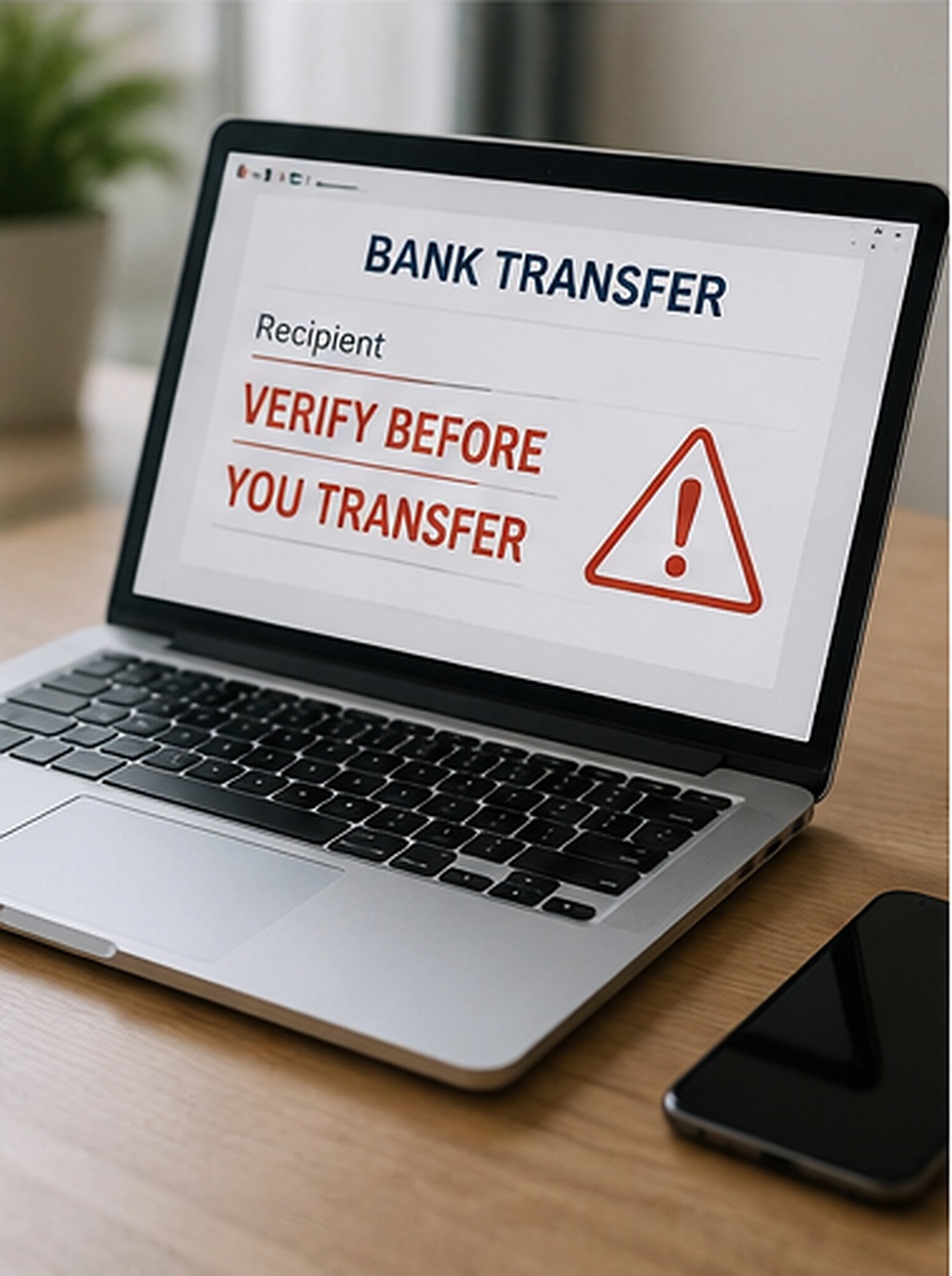
Verifying bank transfer details before purchasing property in Warsaw

Before each transfer, match the recipient, bank account, amount, currency, value date and payment purpose to the signed transaction documents. Independently confirm any change in instructions through a trusted channel already known to the buyer. An email or instant message announcing a new account should never be the sole basis for moving the purchase price.

The payment sequence must also reflect legal risk. Where a mortgage is being repaid, part of the price may need to go directly to the creditor under current written instructions, with the remainder released to the seller under the deed. In other transactions, payment may occur before, during or after signing depending on the agreed protections. The safest answer is therefore transaction-specific rather than a universal instruction to pay one party at one moment.

Article 108 of the Notarial Law allows a notary, in connection with a notarial act, to accept money for delivery to the indicated person and record the deposit in a protocol. A notarial deposit can be useful where the agreed conditions fit that mechanism, but it is optional, must be arranged in advance and should not be described as mandatory for every purchase.

Red flag 14

Payment instructions change late or cannot be independently verified

Pause the transfer, verify through known contacts and make sure the signed documents support the recipient and account.

Release risk

The seller receives funds before the buyer controls the known title issue

Mortgage discharge, document delivery, vacant possession or another condition needs a written and enforceable sequence.

Recipient

Who is legally entitled?

Seller, creditor, developer escrow account, notarial deposit or another expressly documented recipient.

Timing

What happens first?

Signing, title filing, mortgage payoff, release documents, handover and any retained amount.

Bank execution

Can the transfer clear?

Daily limits, PLN funding, compliance review, reference wording, cut-off time and proof of payment.

Stop condition

Do not transfer the purchase price to an agent, relative, new company, foreign account or “temporary” recipient unless the legal basis and payment effect are expressly documented and independently reviewed.

Red flag 15

Know who the intermediary represents and who pays them

Access to an apartment is not the same service as independent buyer representation.

Reviewing an agency agreement and potential conflict of interest in a Warsaw property transaction

Polish real-estate transactions can involve a seller agent, buyer agent, listing portal, developer sales office, referral partner and legal or technical specialists. Their roles may overlap, but their incentives are not identical. Ask in writing who engaged the intermediary, whose interests they undertake to represent, who pays their remuneration, whether they receive referral fees and whether the property was selected from the full market or from a limited inventory.

A conflict is not automatically disqualifying when it is transparent and appropriately managed. The red flag is undisclosed or contradictory positioning, such as an intermediary being paid by the seller while promising exclusive buyer loyalty, discouraging independent review, or presenting only its own listings as a whole-market search.

Red flag 15

The intermediary will not state who they represent and how they are paid

Require the service scope, remuneration, referral relationships and disclosure of any dual role before relying on advice.

Behavioural warning

Independent checks are framed as unnecessary or hostile

A sound transaction can withstand document requests, technical inspection and buyer-selected professional review.

Questions to ask

  • Who signed the agency agreement with you?
  • Who pays your fee and when is it earned?
  • Do you receive developer or referral remuneration?
  • Are you searching the full market or selected supply?
  • Will you disclose material information received from the seller?
  • Can the buyer appoint an independent lawyer and inspector?

What buyer-side independence should mean

  • a written brief owned by the buyer
  • property comparison beyond one listing source
  • document requests driven by buyer risk
  • negotiation separated from seller marketing
  • clear coordination with notary, lawyer and inspector
  • transparent fees and referral relationships
Transparency is the test

The buyer does not need every professional to have identical incentives. The buyer needs to know each role, fee, limitation and responsibility before treating information as independent advice.

Reference table

All 15 red flags at a glance

A compact decision table for shortlisting, contract review and pre-closing verification.

No. Red flag Why it matters Minimum response Level
01 Notation, warning or pending filing in the land register The visible entry may not reflect the current legal position. Obtain the filing and court documents; explain the legal effect before commitment. Red
02 Owner or property data does not match the transaction The wrong person, unit or right may be described. Reconcile register, deed, identity and property documents. Red
03 Mortgage, claim or restriction has no documented exit Payment may not produce clean or intended title. Secure creditor or rights-holder documents and write the release sequence. Red
04 Signer is not clearly linked to the owner Keys, agency role or family connection does not prove authority. Verify title, identity, KRS or inheritance chain. Stop
05 Spouse, company or POA authority is unresolved The signature may be ineffective or closing impossible. Confirm consent, representation and required document form. Red
06 Parking, storage or garden is not legally described The buyer may not acquire what the listing implies. Identify the exact right, register and transfer method. Verify
07 Area, boundaries or access depend on informal practice Price and use may rely on a non-transferable arrangement. Match plans, deed, rights and access documents. Verify
08 Payment is due before core documents arrive The buyer funds risk before obtaining control. Make review and document delivery conditions of payment. Stop
09 Contract penalties are one-sided The buyer carries delay and defect risk without a practical exit. Balance deadlines, refund events, seller duties and remedies. Red
10 Vacant possession is only a verbal promise Sale does not automatically terminate an existing tenancy. Review occupancy and lease documents; control handover contractually. Red
11 Building charges, arrears or resolutions are unavailable Disputes, costs or management problems may be hidden. Request current certificates, resolutions and planned-work information. Verify
12 Actual layout or use differs from records Alterations may affect law, safety, value or financing. Identify works and obtain relevant plans, consents and technical review. Red
13 Material defects or future works are called cosmetic Post-purchase capital needs may be understated. Inspect independently and review building-level plans and finances. Verify
14 Recipient or bank details change late Funds can be misdirected or paid without legal effect. Pause and verify independently against signed documents. Stop
15 Intermediary role or remuneration is unclear Advice may be influenced by undisclosed incentives. Obtain written role, fee and referral disclosure. Verify
How to use this table

A “stop” label means do not transfer money until the issue is independently resolved. It is a transaction-control recommendation, not an allegation of fraud. A “red” item normally requires a written condition or remedy. A “verify” item requires evidence before the buyer decides whether it is acceptable.

Buyer workflow

Three-stage due diligence checklist

Move from inexpensive screening to document review and finally to closing control.

Stage 01

Before reservation

Confirm the exact apartment, parking and storage being offered.
Obtain the land-register number or evidence for a cooperative right.
Identify the registered owner and person negotiating the sale.
Ask who occupies the apartment and whether a lease exists.
Screen the actual layout, visible defects and planned works.
Classify the foreign-purchaser permit route.
Stage 02

Before preliminary agreement

Review every register section, notation and source document.
Verify spouse, company, inheritance or POA authority.
Obtain building, administration, energy and alteration documents.
Complete a technical inspection appropriate to the property.
Write conditions, refund events, deadlines and seller deliverables.
Define mortgage release, vacant possession and handover.
Stage 03

Before notarial deed and payment

Recheck the register and pending entries close to signing.
Confirm current identity, KRS representation and POA originals.
Verify creditor certificates and final payoff figures.
Confirm recipient, account, currency, bank limit and transfer timing.
Prepare handover protocol, inventory, keys and meter readings.
Do not waive unresolved conditions merely to preserve the date.
Practical rule

The reservation agreement should not outrun the due diligence timetable

Give the buyer enough time to receive documents, complete legal and technical review, solve the permit route, arrange PLN funding and prepare any foreign power of attorney. A deadline that makes proper verification impossible is itself a red flag.

Primary references

Official sources used in this guide

The page links directly to legislation, ministries, public registers and Warsaw planning resources.

Land and Mortgage Register Act

Current consolidated text, including register structure, presumptions, public faith and the effect of notations and warnings.

Open ELI legislation ↗
Electronic Land and Mortgage Registers

Official Ministry of Justice service for inspecting a register when its number is known and obtaining official documents.

Open government service ↗
Civil Code

Current consolidated text relevant to real-estate form, powers of attorney, earnest money and the effect of sale on an existing lease.

Open ELI legislation ↗
Family and Guardianship Code

Official text relevant to spouse consent for specified transactions involving marital common property.

Open ELI legislation ↗
Notarial Law

Official framework for notarial acts, language and the optional notarial deposit mechanism.

Open ELI legislation ↗
Developer Act and Developer Guarantee Fund

Prospectus, reservation fee, escrow and buyer-protection framework for covered developer transactions.

Open ELI legislation ↗
MSWiA foreign-purchaser guidance

English-language permit framework, exemptions and application information for foreign buyers.

Open official guidance ↗
KRS company search

Official Ministry of Justice access to current and full company-register information and representation data.

Open KRS search ↗
Building Law and GUNB RWDZ

Current statutory framework plus the public register of building applications, decisions and notifications.

Open Building Law ↗
Open RWDZ search ↗
Energy performance certificates

Official ministry explanation of when a certificate must be delivered to a buyer or tenant.

Open ministry guidance ↗
Ownership and cooperative frameworks

Current Acts governing common-property structures and housing cooperative rights.

Act on Ownership of Premises ↗
Housing Cooperatives Act ↗
City of Warsaw planning maps

Official maps and local-plan resources for investigating the property surroundings and planning context.

Open Warsaw maps ↗
Open local plans ↗
Source boundary

Official sources establish legal and administrative frameworks. They do not replace transaction-specific legal advice, a current register review, technical inspection, notarial verification or direct documents from the seller, developer, creditor, community or cooperative.

FAQ

Questions foreign buyers ask about Warsaw property risks

Direct answers with the important legal limits and exceptions kept visible.

Is a mortgage in the land and mortgage register always a reason to reject the apartment?

No. A mortgage is a material issue, but it can often be handled through creditor documents, a defined release procedure and a payment structure written into the notarial deed. The red flag is not the mere existence of a mortgage. It is an unexplained mortgage, an uncertain payoff amount, missing creditor instructions or a contract that requires the buyer to pay before the release mechanism is clear.

What is the most serious warning in a Polish land and mortgage register?

A notation, pending application or warning that may affect the legal status deserves immediate attention. Under the Land and Mortgage Register Act, a notation of an application, appeal, cassation complaint or warning concerning inconsistency excludes reliance on the register public-faith protection in the relevant scope. Obtain the underlying court or filing documents and do not treat the visible owner line as the whole answer.

Can I buy a Warsaw apartment that has no separate land and mortgage register?

Sometimes. A cooperative ownership right may be transferable even without a separate register, but the evidence package, financing route, land status and foreign-purchaser analysis are different. The absence of a register is not automatically fraud, yet it removes one of the main public verification tools and therefore requires a different legal review.

Does the one percent reservation-fee cap apply to every Warsaw property transaction?

No. The one percent cap belongs to the statutory developer-protection framework for reservation agreements covered by the Developer Act. It should not be presented as a universal rule for every resale reservation agreement between private parties. Identify which legal regime applies before relying on the cap or the statutory refund rules.

Does the notary perform all legal due diligence for the buyer?

The notary performs an essential public-law and deed function, verifies matters required for the notarial act and must refuse an unlawful act. That is not the same as a buyer-commissioned review of commercial risk, the physical condition, the full document history, negotiation strategy, rental assumptions or every issue outside the deed. Define who is responsible for each check before signing.

Does the sale of an apartment automatically terminate an existing tenancy?

No. Under Article 678 of the Civil Code, a purchaser generally enters the existing lease in place of the seller. Termination rights and exceptions depend on the lease and facts. A buyer who needs vacant possession should review the lease, termination history, occupant status, deposit and handover mechanism before committing.

Does every buyer from outside the European Economic Area need an MSWiA permit?

No. Polish law contains exemptions, and the official MSWiA guidance identifies circumstances in which a permit may not be required, including certain acquisitions of self-contained residential premises outside a border zone. Property type, location, nationality, marital status, land shares, parking rights and ownership structure can change the analysis, so it must be checked transaction by transaction.

Can a Warsaw property purchase be completed remotely?

Many transactions can be coordinated through a properly prepared power of attorney, but remote completion is not automatic. The Polish notary or lawyer should approve the exact wording before it is signed abroad. Notarisation, apostille or legalisation, sworn translation, bank limits, original-document delivery and the buyer permit status may all affect the route.

What building and community documents should a resale buyer request?

The package depends on the property, but commonly includes an administration or cooperative certificate, information on current charges and arrears, relevant resolutions and planned works, the energy performance certificate, available plans, documents for alterations, lease and occupant information, and evidence concerning parking or storage. A technical inspection should address the apartment and, where material, the wider building.

What is the safest way to transfer the purchase price?

There is no single method suitable for every transaction. The safe structure is the one written into the signed documents, matched to the title and mortgage-release process, and independently verified before payment. Confirm the recipient, account, amount, timing, conditions and bank limits. A notarial deposit may be considered where appropriate, but it is an optional negotiated mechanism rather than a universal requirement.

Key takeaways

Safe buying depends on three disciplines

Most serious losses begin when evidence, contract and payment are handled as separate tasks.

Evidence

Verify the right, the seller and the current status.

Read every register section and pending entry, then match it to title, authority, building and occupancy documents.

Contract

Turn every unresolved risk into a condition or remedy.

Set document duties, deadlines, refund events, mortgage release, vacant possession and consequences of failure.

Payment

Transfer only when recipient and sequence are controlled.

Verify instructions independently and make the payment structure reflect title, creditor and handover risk.

Next step

Buying in Warsaw from abroad?

Independent buyer-side coordination keeps search, verification, negotiation and closing inside one controlled process.

Warsaw Investor Care consultation table with property purchase documents

Verify the transaction before the deposit creates pressure.

Warsaw Investor Care helps international buyers define the brief, search across the market, compare properties, coordinate legal and technical review, negotiate the terms, prepare remote documentation and manage the transaction through notarial closing and handover.

Buyer-side property search
Evidence before commitment
Legal and notarial coordination
Remote purchase support

Continue reading · guides and services

© 2026 Warsaw Investor Care. All rights reserved.

This guide provides general information and a buyer-side risk framework only. It is not legal, tax, notarial, technical, banking or investment advice. The result depends on the buyer, property, ownership structure, documents and facts. Verify the current position with the appropriate Polish notary, lawyer, technical specialist, bank and public authority before making a commitment or transfer.