


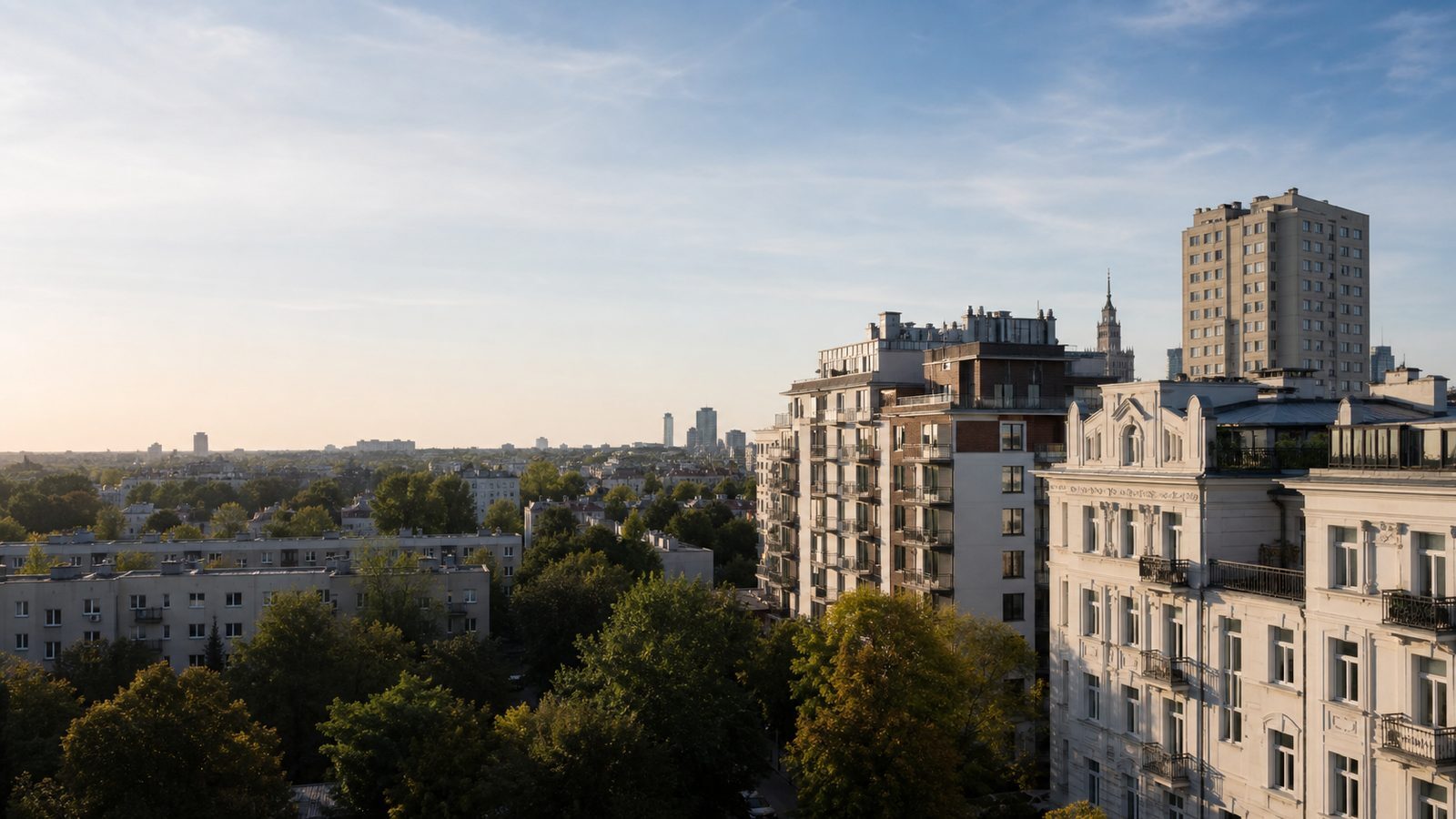
Property ownership types in Poland — what a foreign buyer actually acquires
Full ownership, separate apartment ownership, cooperative rights, co-ownership and perpetual usufruct can look similar in a listing but create different rights, documents and risks. This guide shows what to verify before reservation, deposit or notarial signing.
The legal right named in the deed matters more than the word “apartment” in the listing.
For a typical city apartment, the clearest ownership structure is odrębna własność lokalu: the flat is a separate immovable property and its owner also holds an inseparable share in the common land and building. The current Act on Ownership of Premises states that an independent residential unit may constitute separate real estate and that the associated share covers the land and those parts of the building not reserved for one owner.
Other offers may involve a transferable cooperative ownership right, a fractional share in an undivided property, perpetual usufruct of public land or only a contractual claim to ownership in the future. These are not interchangeable. Before comparing price per square metre, identify the exact right, its land-and-mortgage register, the seller's authority and every right attached to or burdening it.
Best-known apartment title
Separate ownership of a self-contained unit, normally with its own land-and-mortgage register and an inseparable common-property share.
Transferable but not ownership
A cooperative ownership right can be sold and inherited, yet Polish law classifies it as a limited property right rather than ownership of the unit.
A share is not a room
A fractional share gives co-ownership of the whole. Exclusive use of a defined part requires a separate legal basis and careful review.
Contract is not final title
A reservation, preliminary or developer agreement can create obligations or claims; ownership arrives through the required final transfer and registration process.
Six positions a buyer may encounter
The labels below describe legal positions, not investment rankings. Each can require a different document pack, financing path and permit analysis. The first task is classification; the second is due diligence.
Separate ownership of a unit
Odrębna własność lokaluThe apartment is legally separated as its own immovable property. Its owner also holds a linked share in the common land, structural elements and installations serving more than one unit.
Ownership of a house and land
Własność nieruchomości gruntowejThe buyer acquires the land and, under the general rule, its component buildings. Boundaries, legal access, utilities, planning and easements become central.
Cooperative ownership right
Spółdzielcze własnościowe prawoA transferable, inheritable and enforceable limited property right to use a cooperative unit. It is valuable and tradable, but it is not separate ownership of the apartment.
Fractional co-ownership
Współwłasność ułamkowaThe buyer owns a percentage of the whole property. Use, income, costs, management and a future exit depend on statutory rules and any valid arrangements among co-owners.
Perpetual usufruct
Użytkowanie wieczysteA long-term right to use publicly owned land, usually linked to ownership of buildings on it. Much residential land converted to ownership in 2019, but the right still exists in Polish law and records.
Contractual or occupancy right
Not ownershipA developer agreement, tenancy, TBS/SIM participation or cooperative tenancy may give a claim or right to occupy. Do not market or value it as present ownership unless the legal route actually leads there.
Separate ownership of an apartment
This is not merely a right to occupy. The self-contained unit is a separate immovable property. The related share in the common property follows the apartment and cannot be separated from it while separate ownership continues.
 Separate ownership combines the private unit with a legally connected share in the common property.
What belongs to the title
The notarial deed and land register should identify the unit, owner and linked share. A basement, storage room or garage may be an appurtenant room, a separate unit, a share in another unit or only an allocated-use area. Those structures are legally different even when the marketing description sounds identical.
What remains common
The common property includes the land and parts of the building and installations not serving only one owner: typically structural elements, stairwells, roof, façade, common corridors and shared systems. The owner's participation in common costs and votes is connected to the recorded share.
What the buyer must reconcile
- Unit number, floor, area and use against the register and technical documents
- Appurtenant rooms against the deed and floor plans
- Share in the common property against the parent land register
- Seller and marital status against the authority to sell
- Community arrears, resolutions, renovation plans and litigation
Why “own land” can still mislead
An apartment owner normally holds a fractional share of the common land, not a separate private plot under the flat. Parking, access roads and adjoining estate parcels may sit in separate registers. MSWiA expressly warns that a land share tied to the apartment differs from a share in a separate access road or estate parcel.
Do not reserve from the headline alone.
Send us the listing, land-register number and seller documents. We can screen the opportunity from the buyer's side and coordinate the case with a reputable lawyer and notary before the transaction becomes expensive to unwind.
Cooperative ownership right versus cooperative tenancy
Polish terminology matters. A transferable cooperative ownership right is a limited property right and can be sold by notarial deed. A cooperative tenancy right is not transferable, does not pass to heirs and is not subject to enforcement. Treating them as the same is a fundamental error.
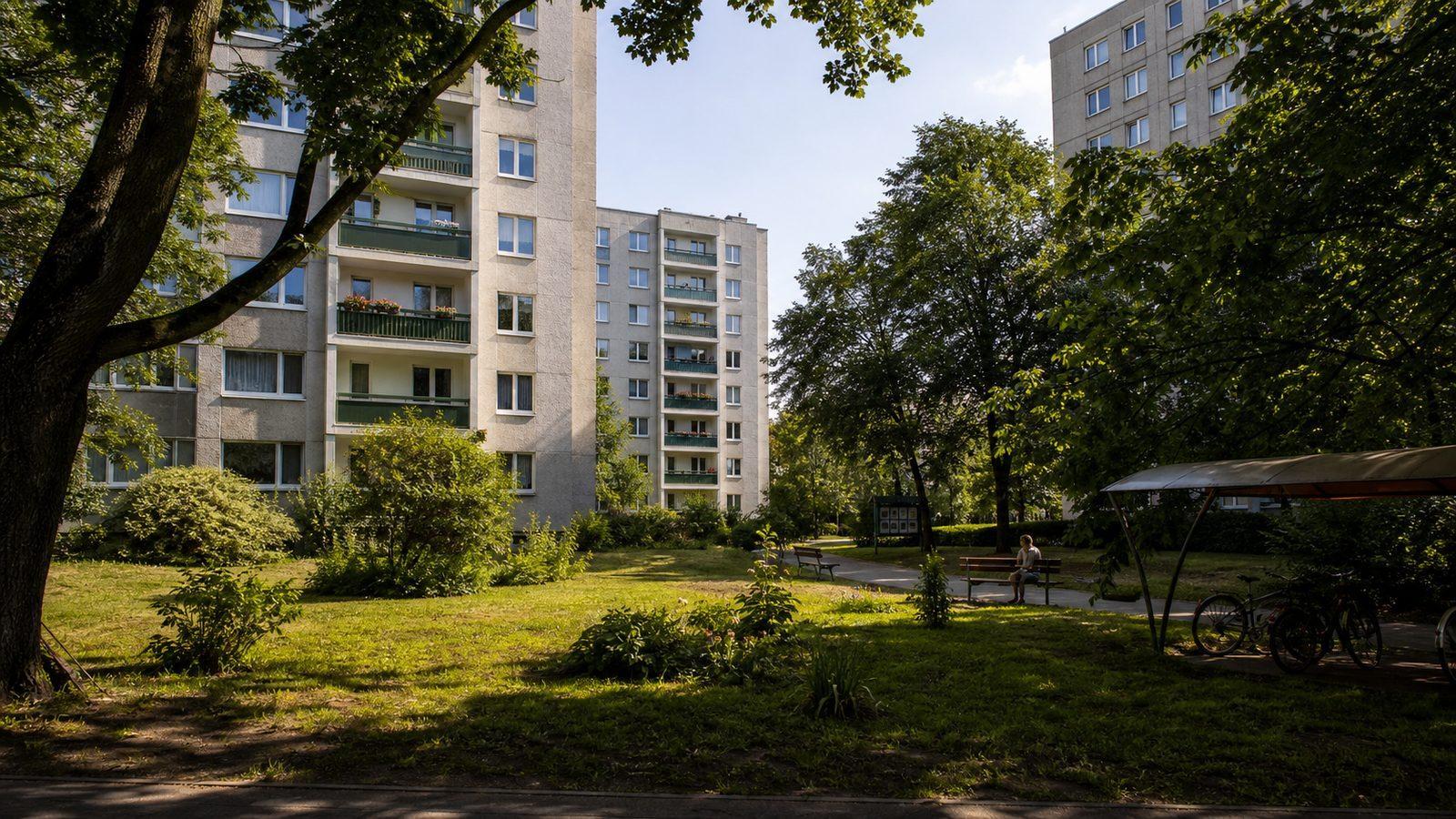 The physical apartment can look ordinary while its legal title remains cooperative rather than separate ownership.
Cooperative ownership right
Spółdzielcze własnościowe prawo do lokalu is transferable, inheritable and subject to enforcement. The law expressly classifies it as a limited property right, and its sale requires a notarial deed. A land-and-mortgage register can be maintained for this right.
Cooperative tenancy right
Spółdzielcze lokatorskie prawo do lokalu mieszkalnego is a right created by agreement with a cooperative for use of a residential unit. The statute says it is non-transferable, does not pass to heirs and is not subject to enforcement. It should not be presented as an ordinary saleable ownership title.
Due diligence for the transferable right
- Confirm the exact right and every holder
- Check whether a register exists and whether one can be established
- Verify cooperative land title and any unregulated land position
- Obtain the cooperative's certificates on the right, charges and arrears
- Check mortgages, enforcement and rights of third parties
- Ask a lender to approve the title before relying on financing
Conversion is not automatic in every case
The holder may have a statutory route to request transfer of separate ownership after satisfying specified debts, but the Act includes exceptions where the land status is unregulated or the cooperative lacks ownership or perpetual usufruct of the land. Never price the purchase on an assumed conversion without document-level confirmation.
Land ownership and perpetual usufruct
With a house, the legal review expands beyond the interior. The buyer must identify the land right, parcel boundaries, legal access, utilities, planning position and rights benefiting or burdening the property.
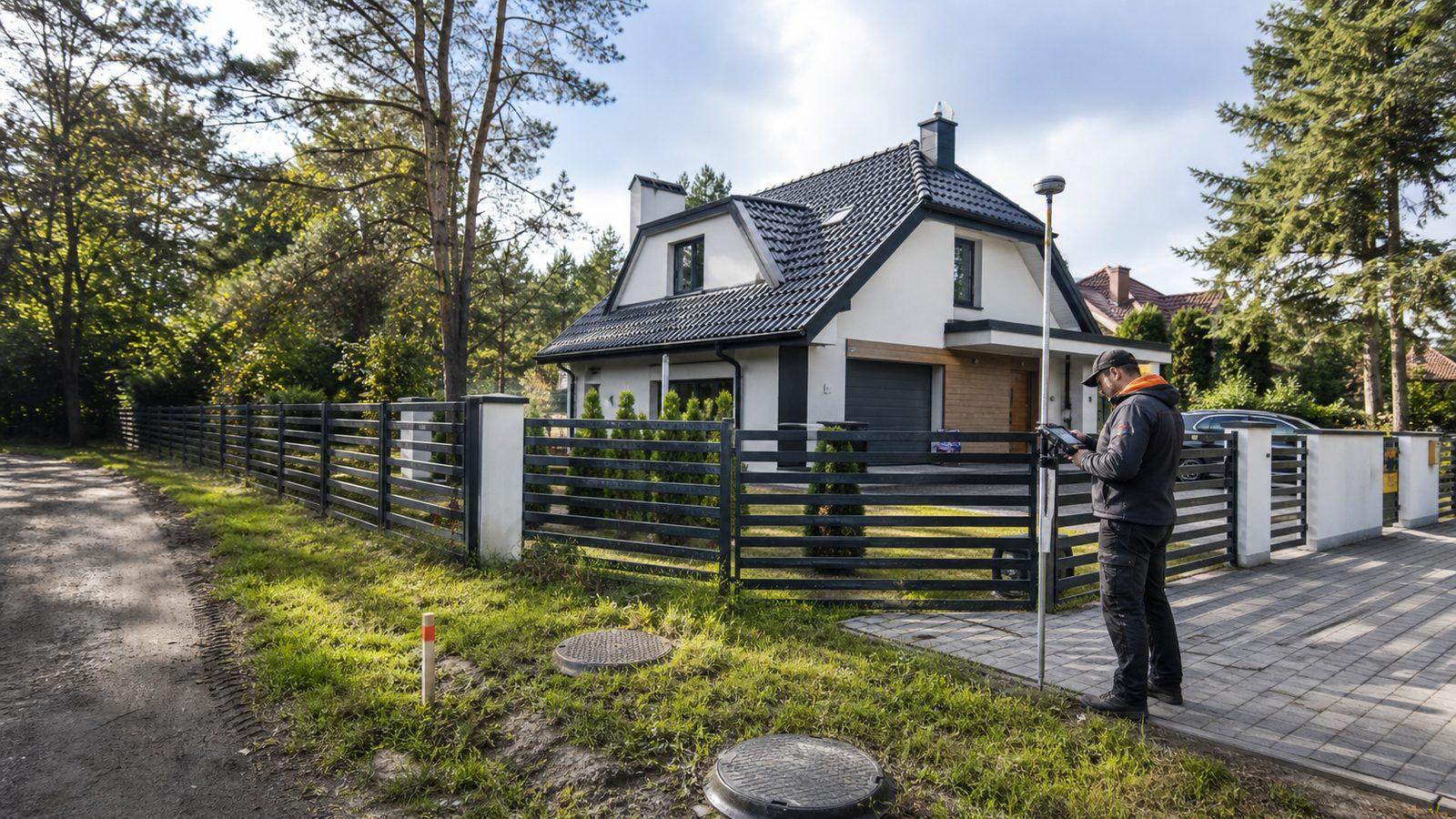 A house purchase is also a land, access, boundary, utility and planning transaction.
Ownership of land
Under the Civil Code framework, ownership is the strongest property right, but it is still exercised within statutes, zoning, neighbour rights and public-law restrictions. Buildings permanently attached to land generally form part of it unless a special rule creates separate ownership.
Perpetual usufruct
This is a long-term right over publicly owned land. The Civil Code provides for a standard 99-year period, exceptionally no less than 40 years, possible extension and an annual fee. Buildings erected by the perpetual user can belong to that user as a right linked to the usufruct.
What changed in 2019
On 1 January 2019, perpetual usufruct of land built up for qualifying residential purposes converted by operation of law into ownership. The change was substantial but not universal: the present register, conversion certificate and any remaining conversion fee still need review.
House-and-plot checklist
- Every parcel and its land-register number
- Boundary compatibility with survey and occupation
- Direct public-road access or a valid easement/share
- Utility connections and rights to infrastructure
- Planning, building legality and occupancy documents
- Perpetual-usufruct term, fee and use conditions if applicable
- Agricultural or forest classification and acquisition restrictions
Co-ownership: a percentage of the whole is not a separate apartment
Polish law recognises fractional co-ownership and joint co-ownership. In fractional co-ownership each holder owns an abstract share in the same thing, not automatically a privately owned physical slice.
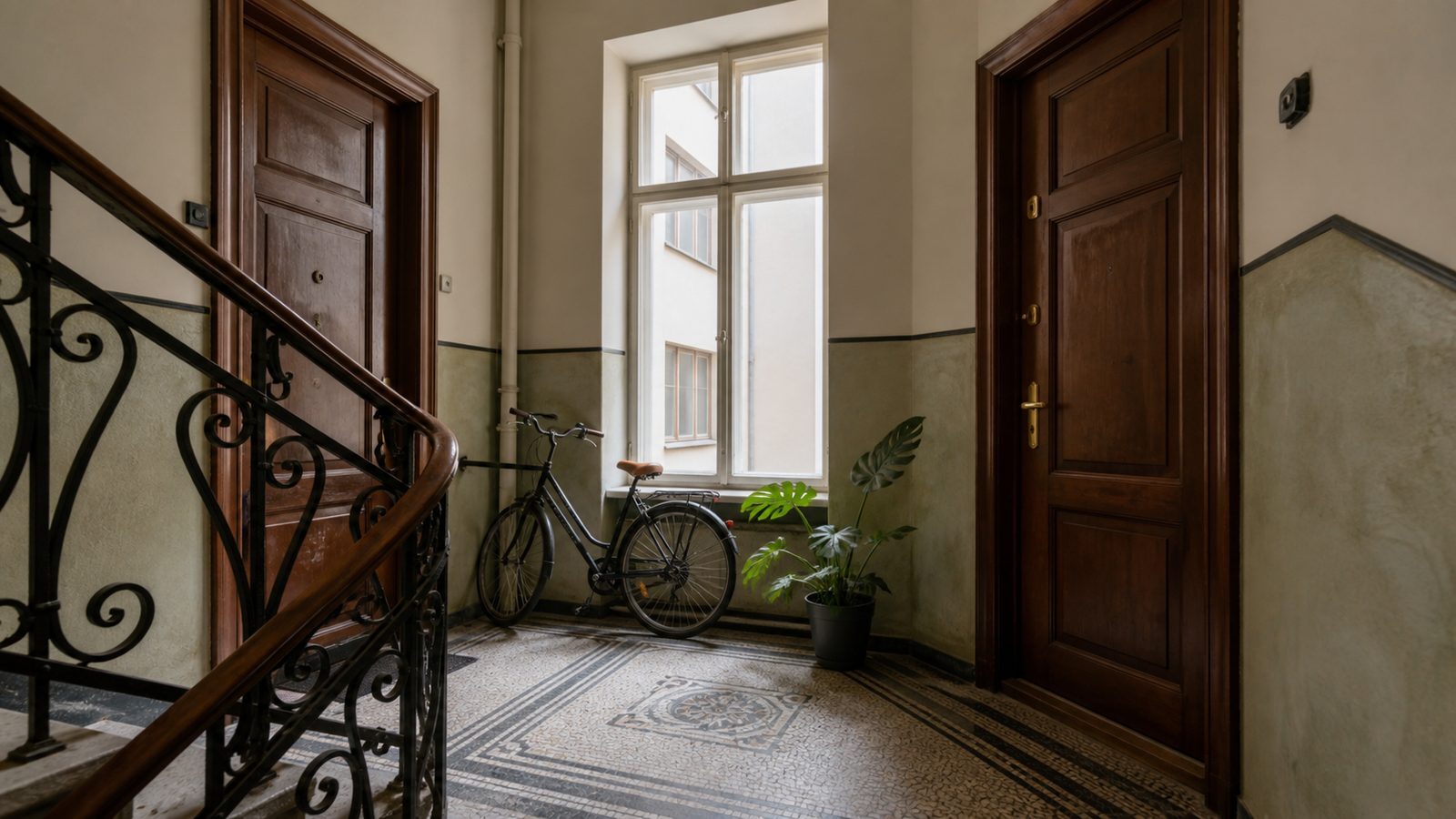 Private spaces may share one legal and physical structure; the deed must show which model actually applies.
Fractional co-ownership
Each co-owner may generally dispose of their share without the others' consent. But disposing of the common property or taking other acts beyond ordinary management normally requires all co-owners' consent, subject to the statutory court route. Income and costs follow the shares unless the legal arrangement supports a different allocation.
Joint co-ownership
Współwłasność łączna arises from a specific legal relationship, most commonly marital community property. There are no freely disposable fractional shares while that joint relationship continues. The seller's marital regime and spousal consent can therefore be central to authority to sell.
Quoad usum is use, not separation
An agreement dividing use may allow one co-owner to use a stated part exclusively, but it does not by itself turn that part into a separately owned apartment. Review its form, parties, successors, register disclosure and practical enforceability before attaching apartment-level value to the share.
Exit risk belongs in the purchase price
A co-owner may generally seek dissolution of fractional co-ownership. Physical division may be refused when legally or practically unsuitable; an indivisible property can be awarded to one co-owner with buy-outs or sold under court rules. Financing and resale audiences may be narrower than for a separate unit.
Read the whole land register—not only the owner name
Polish land-and-mortgage registers exist to establish the legal status of real estate and may also be kept for a cooperative ownership right. They are public, but a screenshot is not enough: check the live register, all sections and every pending-application notice.
 The register is the legal map; the deed, files, cooperative records and actual property must still reconcile with it.
Section I
Identifies the property and rights connected with its ownership. Check address, parcel, area, unit description, appurtenant rooms and linked shares or easements against the deed, maps and reality.
Section II
Shows ownership and perpetual usufruct entries. Confirm every seller, the size and type of right and whether marital, inheritance, company or power-of-attorney documents are needed.
Section III
Contains limited property rights other than mortgages, restrictions on disposal, personal rights, claims and warnings. A life estate, enforcement entry, buyer claim or discrepancy warning can materially change the transaction.
Section IV
Contains mortgages. Review creditor, amount, currency, priority, basis and the exact mechanism for repayment, release and deletion before transferring purchase funds.
Pending notices
A wzmianka signals a pending application, appeal or other register event. The statute states that such a notice can exclude the protection normally associated with reliance on the register. Obtain and analyse the underlying file.
No register or mismatched data
Do not infer that “no mortgage is visible” means clean title when no unit register exists. Trace the parent register, source deeds, cooperative certificate, court files and land status with a qualified lawyer or notary.
New-build contracts: know which stage you are buying
A reservation or developer agreement is not the same as already owning the finished apartment. It creates a contractual position designed to lead to transfer of the defined right after legal, construction and payment conditions are met.
Reservation stage
The unit can be taken off the market under defined terms. Verify the reservation fee, refund conditions, expiry, price and exactly which future agreement is contemplated. Do not confuse commercial exclusivity with title.
Developer agreement and buyer claim
The developer undertakes to build and transfer the relevant ownership or usufruct structure. The current Developer Act regulates buyer payments, escrow accounts, information duties and the registration of the buyer's claim.
Handover is technical, not necessarily legal transfer
Keys and a handover protocol can precede the final ownership deed. Technical acceptance identifies defects and possession issues; it does not replace the notarial act transferring the title.
Final notarial transfer and registration
The final deed transfers the specified apartment and connected rights when statutory and contractual conditions are satisfied, followed by the land-register application. Match the final title, shares, storage and parking rights to what was promised.
How the ownership type affects a foreign buyer
The permit analysis depends on citizenship, the exact right, property type, location, land classification, connected parcels and ownership vehicle. Do not carry an apartment exemption over to a house, road share or company acquisition without checking it.
EU, EEA and Swiss buyers
MSWiA states that nationals and entities from the European Economic Area and Swiss Confederation are exempt from the ministerial permit requirement for acquiring real estate and shares in companies owning or holding perpetual usufruct of Polish real estate.
Non-EEA separate residential apartment
MSWiA lists acquisition of an independent residential unit among exemptions available regardless of citizenship, subject to statutory conditions. The linked share in the common property follows that unit, but a separately registered road or estate parcel can require a different conclusion.
House, plot, border zone or agricultural land
A non-EEA buyer may need a permit to acquire ownership or perpetual usufruct. The general residential-unit exemption does not cover every property, and MSWiA notes that statutory exemptions do not apply in the same way to border-zone real estate or agricultural land above one hectare.
Company shares are a separate route
Buying shares in a company is not direct ownership of its apartment or land. For non-EEA buyers, a permit can be required where the company owns or holds perpetual usufruct of Polish real estate and the statutory control conditions are met.
Ten checks before you commit money
The correct checklist is property-specific. These ten questions expose most classification gaps early enough for a buyer-side lawyer, notary, lender and technical team to investigate them properly.
- What exact right will be transferred in the final deed?
- Does it have its own land-and-mortgage register?
- Does the seller in Section II match the contracting party?
- Which appurtenant rooms, parking and storage rights are included?
- Which land share is inseparably attached, and which parcels are separate?
- What do Sections III and IV and all pending notices contain?
- Is any cooperative, marital, inheritance or corporate consent required?
- For a house: are boundaries, access, utilities and construction legal?
- For a foreigner: does the exact acquisition require MSWiA clearance?
- Will the chosen bank finance this title and accept the security?
What Warsaw Investor Care can do—and where regulated advice begins
WIC does not have an inventory to move. We search developers, agencies and private owners across Warsaw around the client's brief, budget and risk tolerance. That independence lets us reject an attractive-looking property when its title, land, documents, condition or economics do not fit.
We are not a law firm, notary, lender, tax adviser or public authority. We can organise the evidence, keep the purchase workstreams aligned and coordinate with reputable specialists; the relevant professional or authority remains responsible for regulated opinions and decisions.
- Independent full-market property search
- Listing and title-structure triage
- Primary and resale-market comparison
- Buyer-side negotiation strategy
- Land-register and document workflow coordination
- Remote viewing and evidence packs
- Technical inspection, renovation and finishing
- Long-term rental and management planning
Property ownership FAQ for foreign buyers in Poland
These answers describe the general legal framework checked on 25 August 2026. The title documents, live register and case-specific professional advice take priority for an individual purchase.
What is the safest common ownership type for a Warsaw apartment?
Separate ownership of a self-contained apartment is the clearest commonly encountered apartment title: the unit is separate real estate with an inseparable share in the common property. “Safest” still depends on a clean register, valid seller authority, sound building documents and no unacceptable burdens.
Is a cooperative ownership right the same as owning an apartment?
No. It is a transferable, inheritable and enforceable limited property right to a cooperative unit, not separate ownership of that unit. It can be valuable and mortgageable, but its register, cooperative documentation and land status require their own review.
Can I buy a cooperative tenancy right?
Not as an ordinary transferable asset. The Housing Cooperatives Act states that the cooperative tenancy right is non-transferable, does not pass to heirs and is not subject to enforcement. If an offer uses imprecise cooperative language, identify the exact statutory right before proceeding.
Does a 50% share mean I own half of the rooms?
No. A fractional share is an abstract share in the whole property. It does not itself create separate title to rooms shown on a plan. Exclusive-use arrangements may exist, but their legal effect, form and enforceability need a separate review.
What does perpetual usufruct mean?
It is a long-term property right over land owned by the State Treasury or local government, normally granted for 99 years and exceptionally for at least 40 years. It can be linked to separate ownership of buildings and carries an annual fee. Much qualifying residential land converted into ownership in 2019, but the right has not disappeared from Polish law.
Does signing a developer agreement make me the owner?
No. It creates contractual rights and a route to the future transfer defined by the agreement and Developer Act. Handover of keys can also be separate from legal transfer. Confirm the final notarial deed, connected rights and land-register application.
Must a foreigner obtain an MSWiA permit for a Polish apartment?
EEA and Swiss buyers benefit from a broad statutory exemption described by MSWiA. For other foreigners, acquisition of an independent residential unit is also listed among exemptions, but separately registered land, access roads, houses, plots, agricultural land, border areas and company structures can change the result.
Does a land-and-mortgage register guarantee there is no risk?
No. It is central and carries important statutory presumptions, but pending notices, statutory exceptions, document inconsistencies, seller authority and facts outside the register still matter. Review all four sections, notices and source documents rather than relying on a seller's PDF.
Can an apartment exist without its own land register?
Yes, particularly where the relevant right is a cooperative ownership right. The absence of a unit register does not prove clean title. It increases the need to trace the right, cooperative records, parent land status and whether a register can be established.
Can Warsaw Investor Care provide a legal opinion on the title?
WIC provides independent buyer-side property search and transaction coordination, not regulated legal advice. We can organise the title-first review, documents, deadlines and communication and coordinate with a reputable lawyer and notary, who remain responsible for their professional work.
Official source library
The page links to the controlling public material in context. Always re-check the live legal text, land register and transaction documents before acting.
Know exactly what you are buying before you negotiate it.
We search Warsaw around your brief, not around inventory we need to sell. Once a candidate property fits, we organise the buyer-side evidence and coordinate the legal, technical and notarial workstreams so the attractive address is backed by a title structure you understand.
Send us the property and the title described in the listing.
We will assess the buyer-side next step and, where regulated legal analysis is needed, coordinate the document pack with a reputable lawyer or notary.
Editorial note: updated 25 August 2026 and checked against official Polish sources. This page provides general educational information in English. It is not legal, notarial, tax, credit, administrative or investment advice and does not determine whether an MSWiA permit is required in a particular transaction. Rights, records and facts differ by property. Verify the live land register, source documents and actual condition and obtain case-specific advice from the competent professional or authority before signing or paying. Warsaw Investor Care provides independent buyer-side property search and transaction coordination. Editorial images illustrate the topic and do not depict a property offered for sale.