



Choose the location that gives your household or tenant the strongest complete routine — not the shortest station name on a listing.
Central Warsaw is usually strongest for walkability, mixed-use convenience and access to multiple destinations. Metro-connected outer districts can offer more space, quieter streets and green areas while keeping a predictable rail connection. The winner depends on the real door-to-door journey, apartment quality, target user and exit strategy.
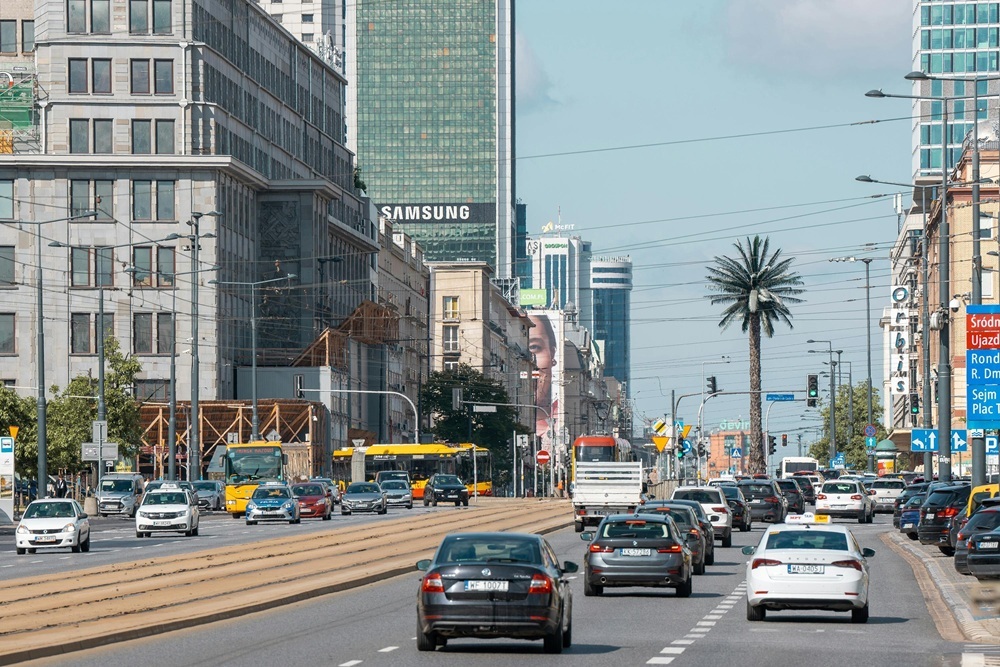 Central Warsaw: more destinations can sit within one walk, but the exact street decides comfort.
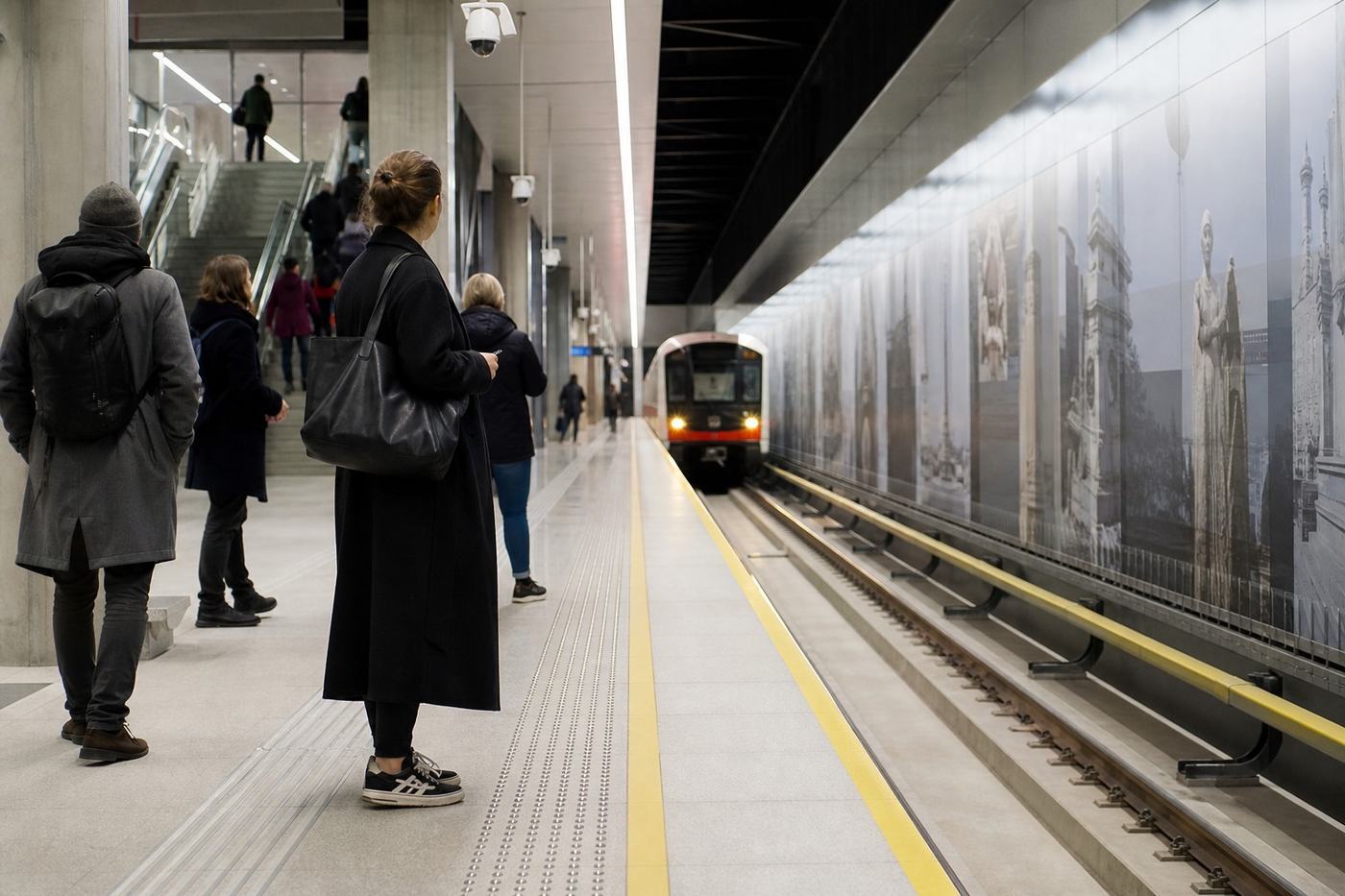 Metro access is valuable when the apartment, station entrance and final destination form one efficient journey.
This is not simply Śródmieście versus “the suburbs.” Warsaw’s practical urban core extends across administrative boundaries, while some outer districts contain highly urban neighbourhoods around metro stations. A home near Rondo Daszyńskiego in Wola may function more centrally than a quiet edge of administrative Śródmieście. An apartment beside M1 in Ursynów or Bielany may provide a simpler daily journey than a theoretically central address requiring two surface transfers.
The comparison should therefore use micro-locations and routines, not district labels alone. This guide treats central Warsaw as the walkable, mixed-use core covering Śródmieście and selected close-in areas of Wola, Ochota, Powiśle and Praga. “Metro-connected outer districts” means established residential areas farther from that core with practical access to operating M1 or M2 stations.
The centre is a function, not one boundary.
Start with the places the resident must reach and how often each journey occurs.
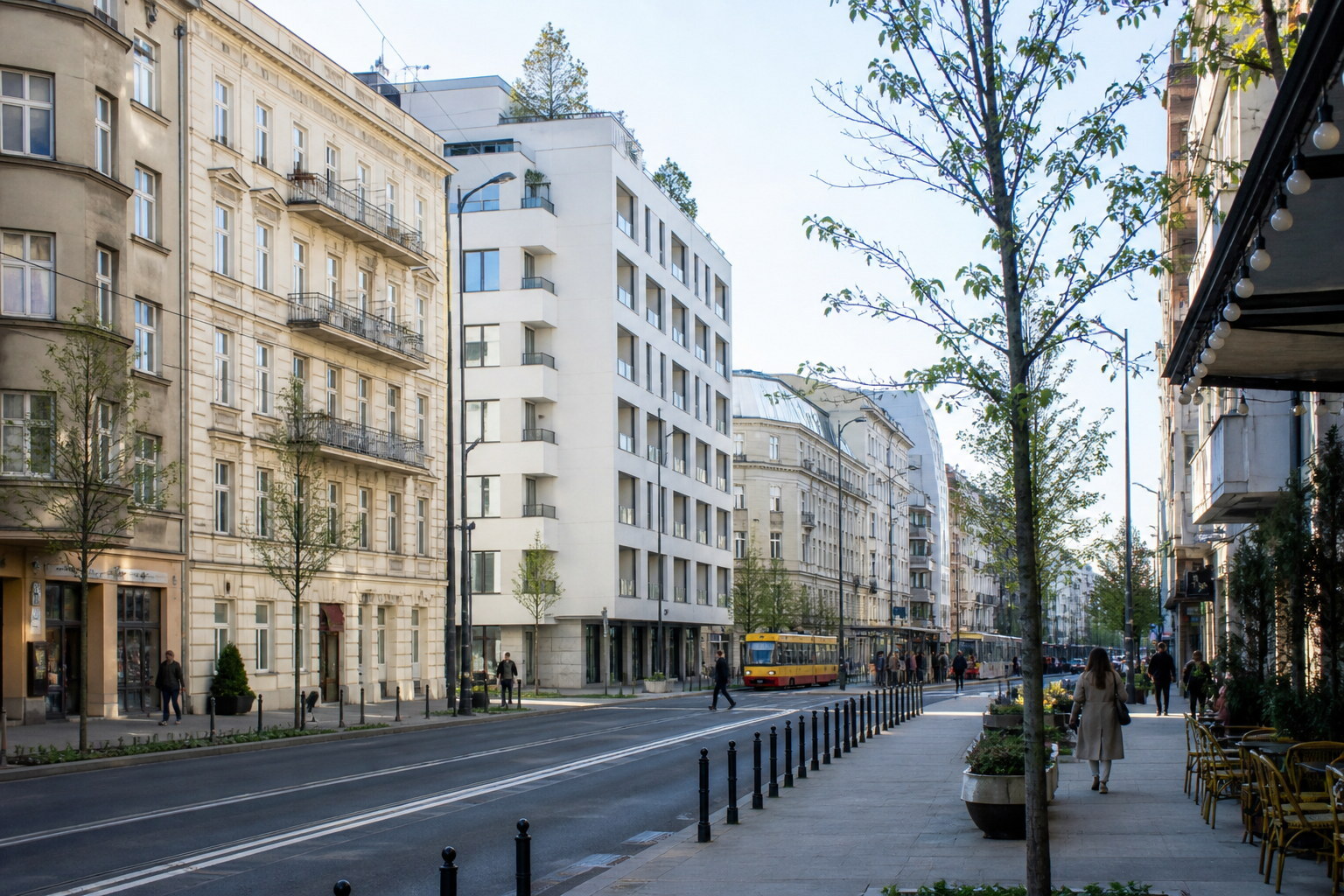 A useful search map follows work, school, social and airport journeys rather than an administrative border.
For a buyer, “central” should mean that several important destinations are available by foot, bicycle or a short direct public-transport trip. For one person this may be the office district around Rondo ONZ and Rondo Daszyńskiego. For another it may be the university, Old Town, Powiśle, hospitals or a school. The centre that matters is the resident’s network of repeated journeys.
An outer district is not automatically disconnected. The operating M1 line links Kabaty and Młociny through the city centre; the operating M2 service links Bemowo and Bródno through Wola, Śródmieście and Praga. That creates outer residential nodes with a direct rail spine. However, a listing located in a district “served by metro” can still sit a long walk or bus ride from the station.
Multiple nearby destinations
Strong when work, culture, services and social life sit within one compact area and several transport modes provide backup.
One reliable urban spine
Strong when the walk to the station is short and the line reaches the resident’s recurring destinations without a weak final transfer.
District name without access
Weak when a nominal metro district still requires an unreliable feeder, unpleasant walk or daily car journey.
Draw a 15-minute walking area around the exact station entrance, not a circle around the station label. Barriers, wide roads, rail tracks, fenced estates and the position of entrances can change the real catchment.
Why buyers pay for proximity and optionality.
The central advantage is not prestige alone. It is the ability to complete more of daily life without planning every trip.
 Central living is strongest on streets that combine access with a genuinely residential atmosphere.
 Parts of Wola now function as an extension of the central employment and residential market.
Walkability and network redundancy
A central address can provide walking access to employment, restaurants, healthcare, shopping and entertainment. It may also offer metro, tram, bus and rail alternatives. This redundancy matters when one line is interrupted or the resident’s routine changes. The benefit is strongest where the street itself remains comfortable, not merely close to a major junction.
Flexible demand
Central apartments can serve owner-occupiers, corporate tenants, students, relocating professionals and buyers seeking a Warsaw base. That does not make every central unit liquid. Dark courtyards, traffic noise, weak layouts, walk-up buildings, unresolved tenement condition or high service charges can reduce demand despite the postcode.
Lower dependence on a car
Residents may be able to manage without daily driving, which can reduce the importance of parking. Yet central parking has its own value for buyers who need it, and limited supply can make a missing space a real constraint. Test deliveries, visitor access, resident parking rules and the route to any separate garage.
Smaller space and more urban exposure
The trade-off can include a smaller apartment for the same budget, busier streets, tourism, nightlife, deliveries and construction. The strongest central purchase often lies one or two streets away from the loudest corridor while retaining the same walking network.
Residents whose life is distributed across several central destinations, buyers who value walkability over apartment size, and investors targeting tenants who pay for flexibility and short everyday journeys.
More space can remain urban when the station works.
The opportunity is not “cheap distance.” It is a complete neighbourhood with a direct rapid-transit link.
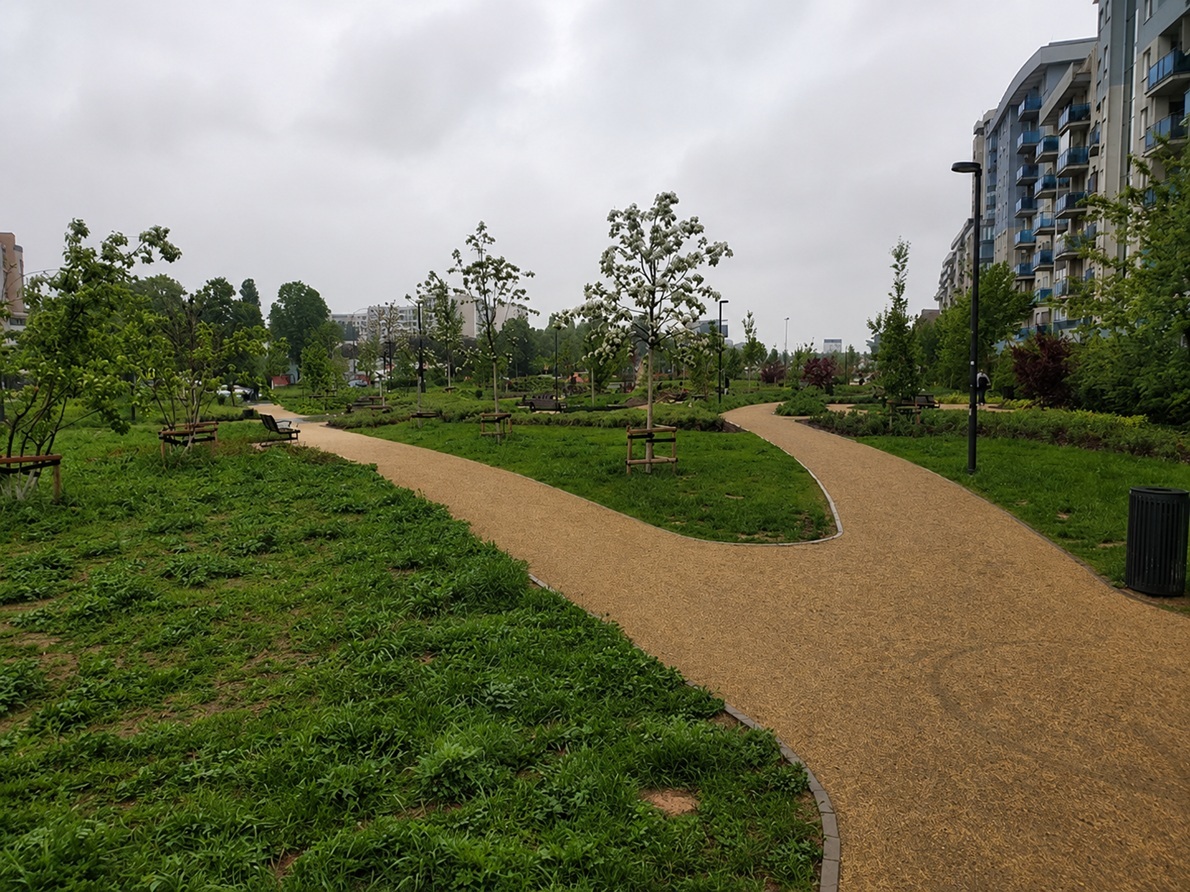 M1 south
Ursynów
Established services, family housing, green areas and direct M1 access along several neighbourhood nodes.
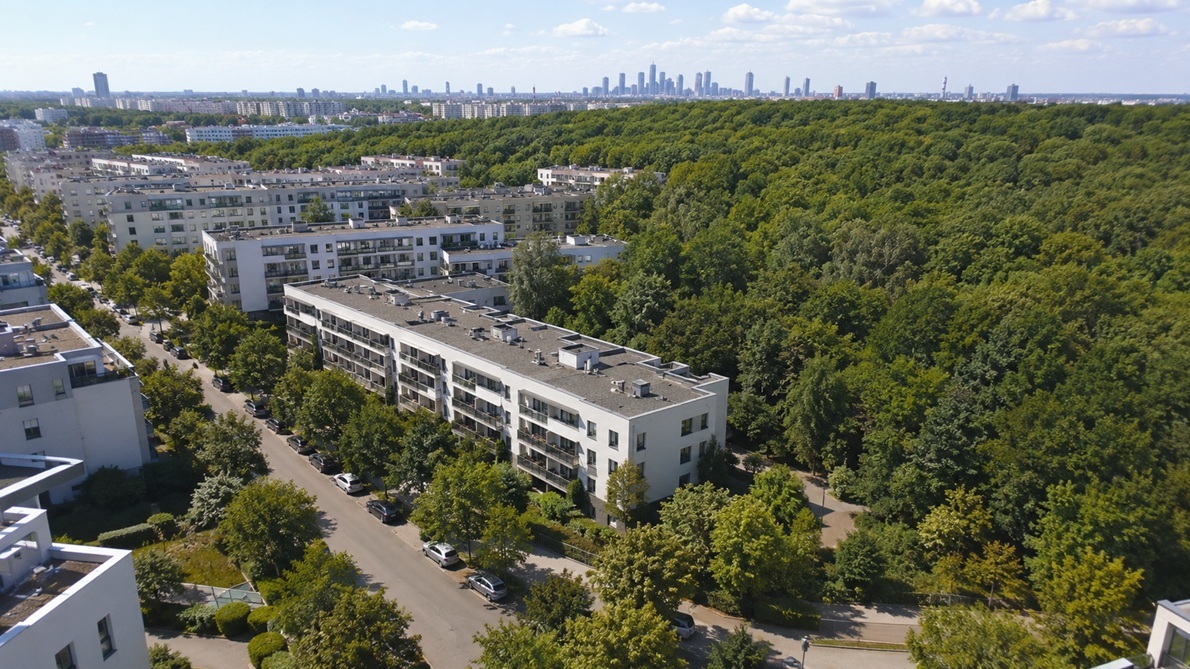 M1 north
Bielany
Metro-connected residential areas with mature greenery, varied stock and access to the northern side of the core.
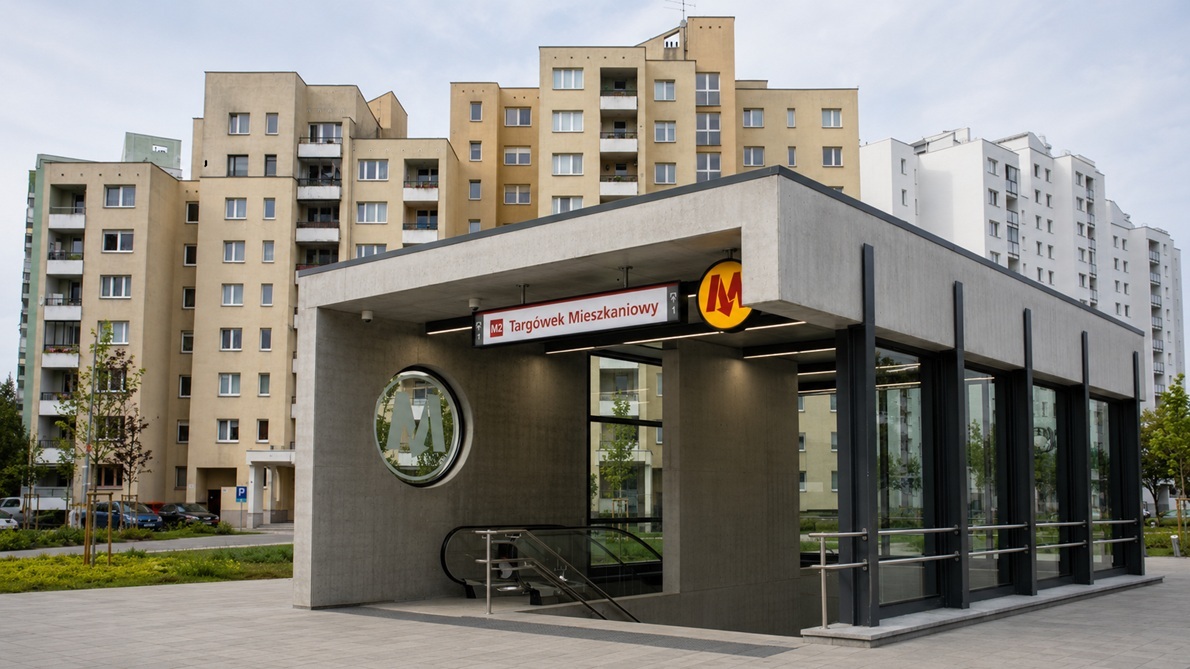 M2 east
Targówek and Bródno
Direct M2 access has changed the practical relationship between outer right-bank housing and the centre.
Outer metro areas often provide larger floor plans, more recent buildings, family-oriented estates, parks and local shopping. Some also provide better access to forests, sports facilities and quieter evening streets. These benefits can be more valuable than central proximity for a household that works partly from home or has one repeated commute.
The risk is that the apartment becomes dependent on one route. If the station walk is long, the feeder bus irregular, or the resident’s destination is far from the central station at the other end, the headline metro connection can overstate convenience. A second car may then become necessary, changing the budget and parking requirements.
More usable home
The budget may reach a second bedroom, storage, balcony or parking that would be difficult in the core. Compare total cost, not square metres alone.
Local daily life
Schools, parks, clinics and groceries can support a stable routine even when entertainment and specialist services remain central.
Lower urban intensity
A quieter micro-location can improve family and home-working use, although traffic corridors and estate construction still require inspection.
One line can dominate
The buyer should test disruption alternatives: tram, bus, rail, bicycle and car routes, not only the ideal metro journey.
Buyers who value space, greenery and a stable residential routine; families who can place school and childcare locally; and investors targeting long-term tenants with a clear employment or university corridor.
A 20-minute train ride is not a 20-minute commute.
Measure the complete journey in both directions and under normal weekday conditions.
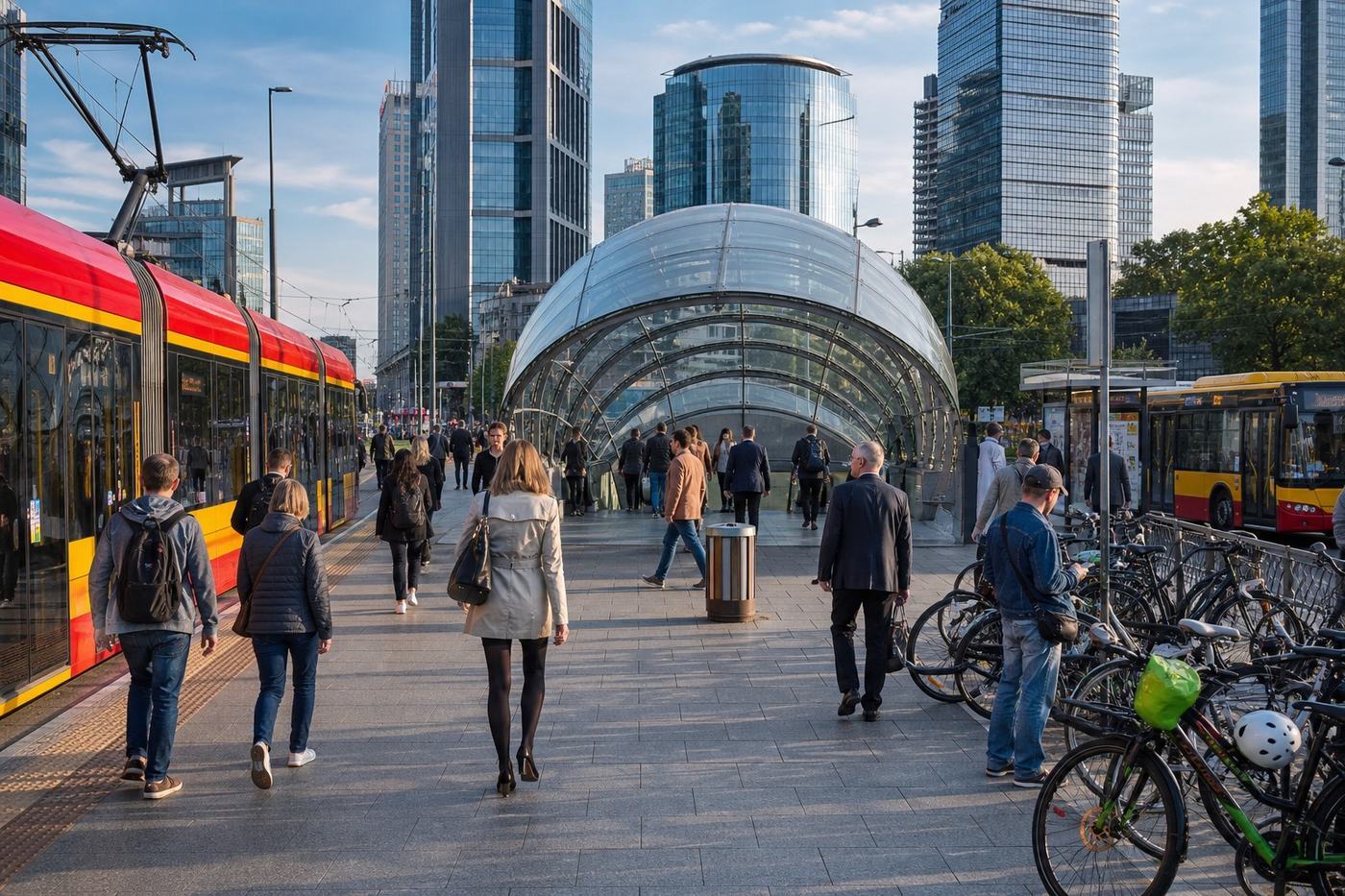 The best outer location combines a short station walk with useful surface-transport backup.
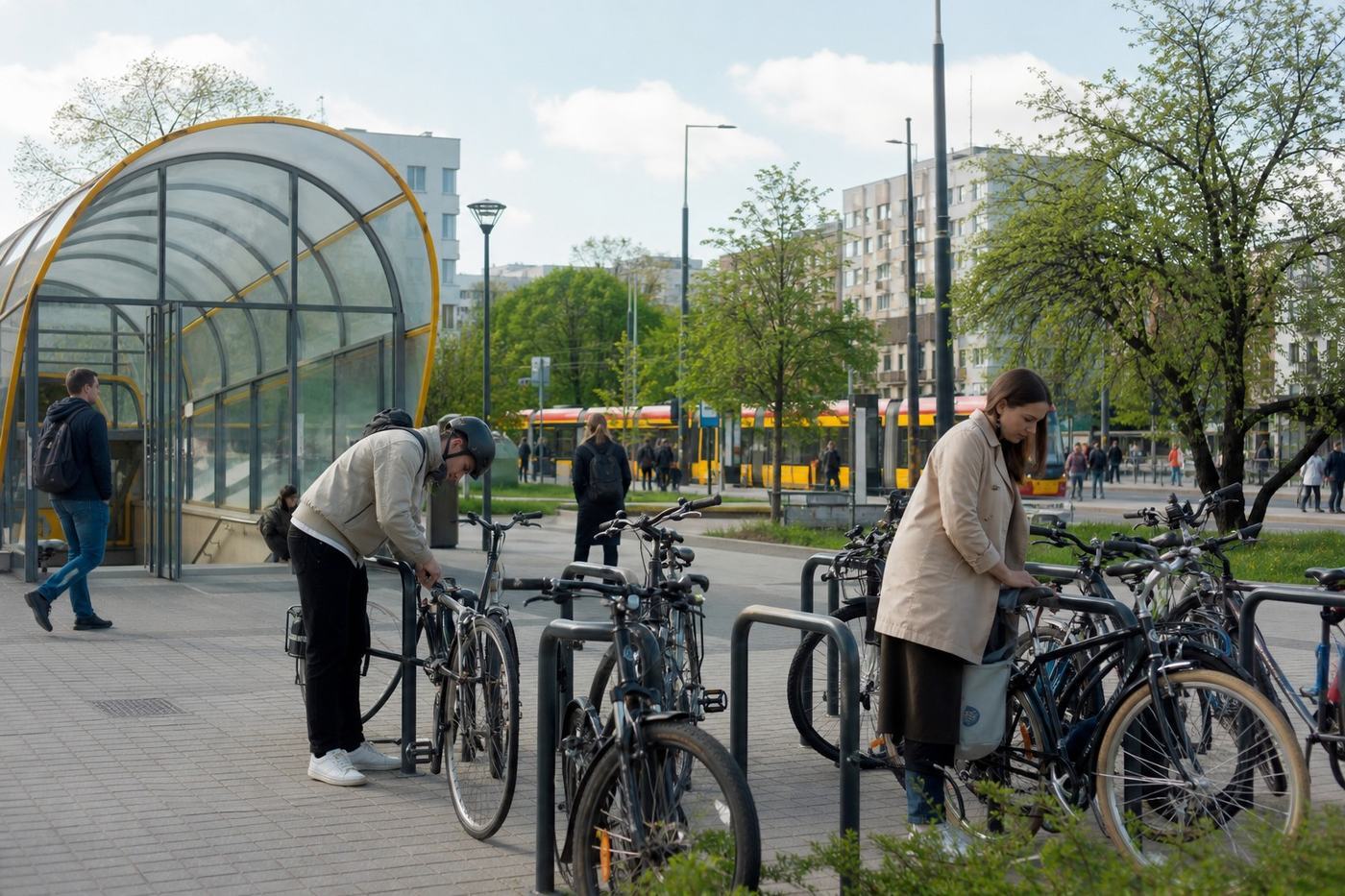 Walking and bicycle access can decide whether the metro remains convenient in real life.
Apartment door to station entrance
Time the route at normal walking speed. Include lifts, crossings, winter conditions, lighting and any route through private estates.
Entrance to platform
Add ticket gates, escalators, stairs, long corridors and the wait. Different entrances may serve different sides of a major road.
Platform to final destination
Do not stop the timer at “Centrum.” Include the exit, final walk and any change to tram, bus or another metro line.
Evening and weekend return
Check the journey when frequency, lighting, street activity and feeder services differ from the morning peak.
Disruption alternative
Identify the second-best route. A resilient location has a tolerable fallback rather than one perfect line and no practical alternative.
As of September 2026, official Warsaw Metro passenger information shows operating M1 service between Kabaty and Młociny and M2 service between Bemowo and Bródno. The western M2 extension toward Lazurowa, Chrzanów and Karolin remained a construction project during 2026. A future station can influence long-term strategy, but it should not be priced as current access until passenger service actually begins.
Use the official Metro timetable for current operation and check construction news separately. Do not let a developer brochure or listing turn a planned line into today’s commute.
The location choice also changes what you can buy.
Central and outer corridors differ in age, layout, common areas and the type of risk hidden behind the address.
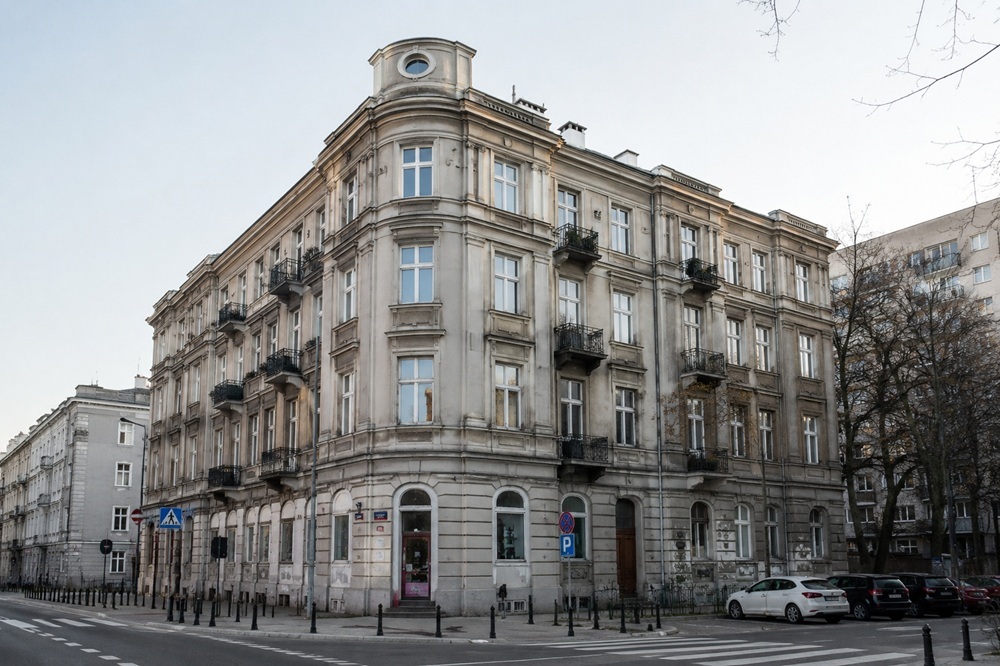 Central stock
Character and complexity
Tenements, post-war infill and newer projects can sit on the same street with very different legal and technical profiles.
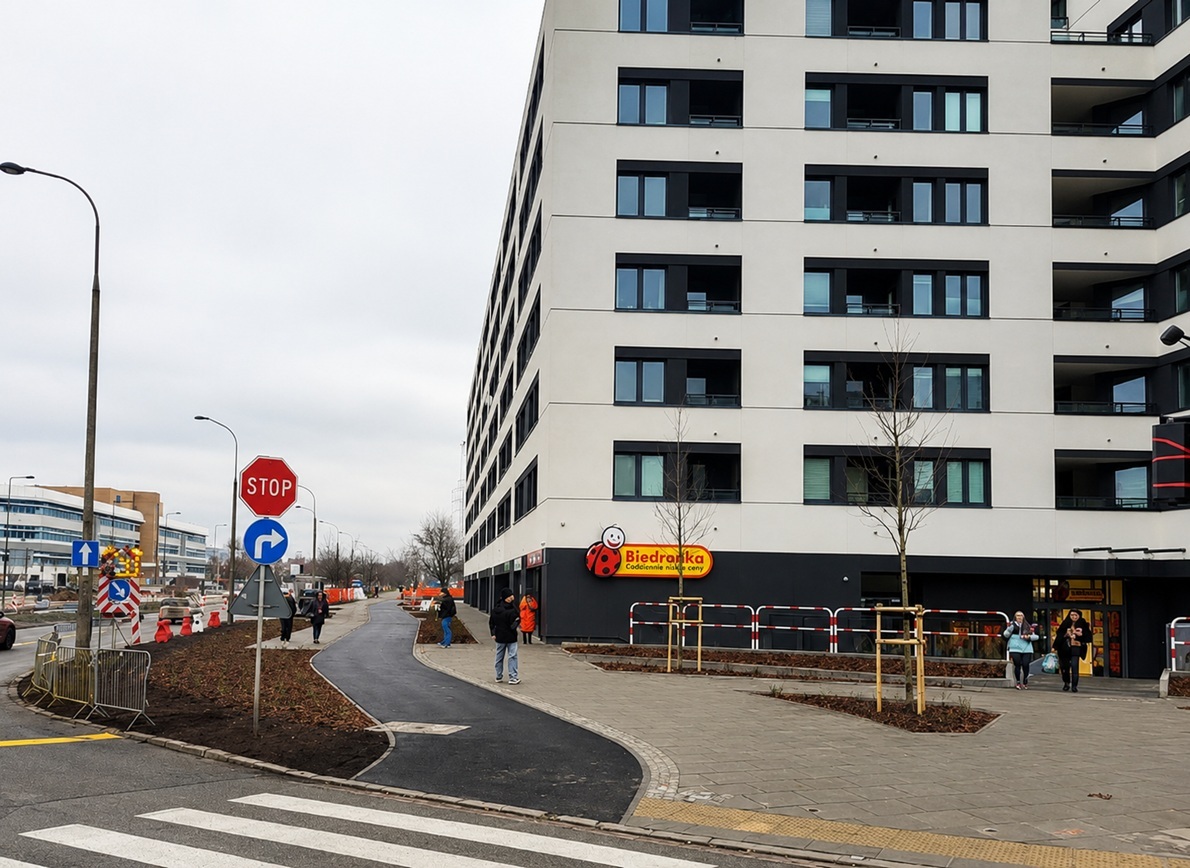 Outer stock
Estate scale and everyday function
Larger post-war estates and newer developments can offer practical layouts and local services around metro nodes.
Central Warsaw stock
Buyers may encounter pre-war tenements, reconstructed buildings, post-war blocks, cooperative ownership structures, 1990s infill and premium new developments. Ceiling height, street frontage and architectural character can be compelling. Due diligence may need to address title, building claims, conservation constraints, lift absence, common installations, façade and roof work, courtyard condition and renovation history.
Outer metro stock
Ursynów and Bielany contain large established estates alongside newer projects. Bemowo and Targówek combine older blocks with expanding modern development. Larger sites may provide playgrounds, garages, storage and landscaped courtyards, but buyers should check service charges, phased construction, commercial units, traffic generated by the estate and the walk from the actual building to the station.
Apartment size versus building quality
More square metres outside the centre are not automatically better value. Compare usable layout, daylight, floor, storage, balcony, parking, common-area standard, reserve fund and upcoming repairs. A smaller central apartment with an efficient plan may work better than a larger outer unit with long corridors, a poor orientation or a second bedroom too small for its intended use.
Compare the complete acquisition: purchase price, transaction costs, immediate repairs, fit-out, parking, storage, service charges and the cost of any extra car or repeated taxi use created by the location.
Urban energy and residential calm solve different problems.
The correct trade-off depends on the household’s real week, not an idealised weekend.
 Walk the neighbourhood as a resident: groceries, pharmacy, park, school route, evening return and station access.
| Daily-life factor | Central Warsaw | Metro-connected outer district | Buyer test |
|---|---|---|---|
| Work and meetings | Often more destinations reachable directly | Strong when work lies on the same line | Map the actual weekly calendar |
| Apartment space | Budget may require a smaller or older unit | Budget may reach an extra room or parking | Compare usable rooms, not nominal area |
| Green space | Parks may be excellent but shared by a dense population | More estate greenery or forest access in selected areas | Walk to the green space, do not rely on map colour |
| Food and culture | Greater variety within walking distance | Daily services local; specialist choice often central | List what is used weekly versus occasionally |
| Children | Short adult journeys, but less private space and busier streets | Potentially more family infrastructure and larger homes | Test school, childcare and activity routes |
| Car ownership | May be unnecessary but parking difficult | Parking may be easier but car dependence can grow | Model the household with and without a car |
| Evening return | More activity and transport alternatives | Quieter, but final walk and feeder frequency matter | Repeat the route after 21:00 |
Home working can change the answer. A resident commuting only twice per week may gain more from an extra room, balcony and quiet surroundings than from saving ten minutes on each trip. Conversely, a person with daily meetings across the central core may lose more time to repeated transfers than the larger outer apartment returns in comfort.
Families should place school and childcare before the office commute in the model. A strong outer neighbourhood can reduce several daily journeys if education, shopping and recreation are local. A central family apartment can work brilliantly when the home is large enough and the street safe enough, but paying only for the address while outsourcing every family need to another district defeats the premium.
Demand follows routines, not rings on a map.
Central liquidity and outer value are useful hypotheses — never automatic conclusions.
 The investment model should compare target tenant, complete cost, competing stock and exit demand.
Central demand
Central apartments can attract tenants who value walking access, short relocation decisions and proximity to business, universities or culture. Compact, well-designed units may have a broad audience. However, high entry cost, noise, weak building condition or an oversupply of similar small apartments can reduce the investment case. Short-term rental assumptions should be separated from long-term demand and checked against current building, contractual and regulatory constraints.
Outer metro demand
Demand can be stable where the station serves a clear office, university or city-centre corridor and the neighbourhood offers complete daily services. Larger apartments may suit couples and families who remain longer, but the tenant pool can be more location-specific. A long station walk or large volume of identical new-build units can weaken differentiation.
Resale depth
A central address may appeal to several buyer profiles, but price and technical complexity can shrink the qualified pool. An outer metro apartment may reach a larger local owner-occupier audience when it offers a functional layout, lift, balcony, parking and school access. Resale analysis should ask who will buy the exact apartment five or ten years later — not who likes the district today.
Protect flexibility
Prioritise a usable layout, residential micro-street, building quality and several transport options instead of paying for a postcode alone.
Protect the connection
Prioritise a short station walk, complete local services and an apartment type with owner-occupier as well as tenant demand.
Do not assume that outer districts always yield more or that central apartments always appreciate faster. Use current comparable rents and sales, then deduct complete acquisition, vacancy, service, management and maintenance costs.
Use stations to build a shortlist, then inspect streets.
Each corridor contains strong and weak micro-locations; the following is a search framework, not a ranking.
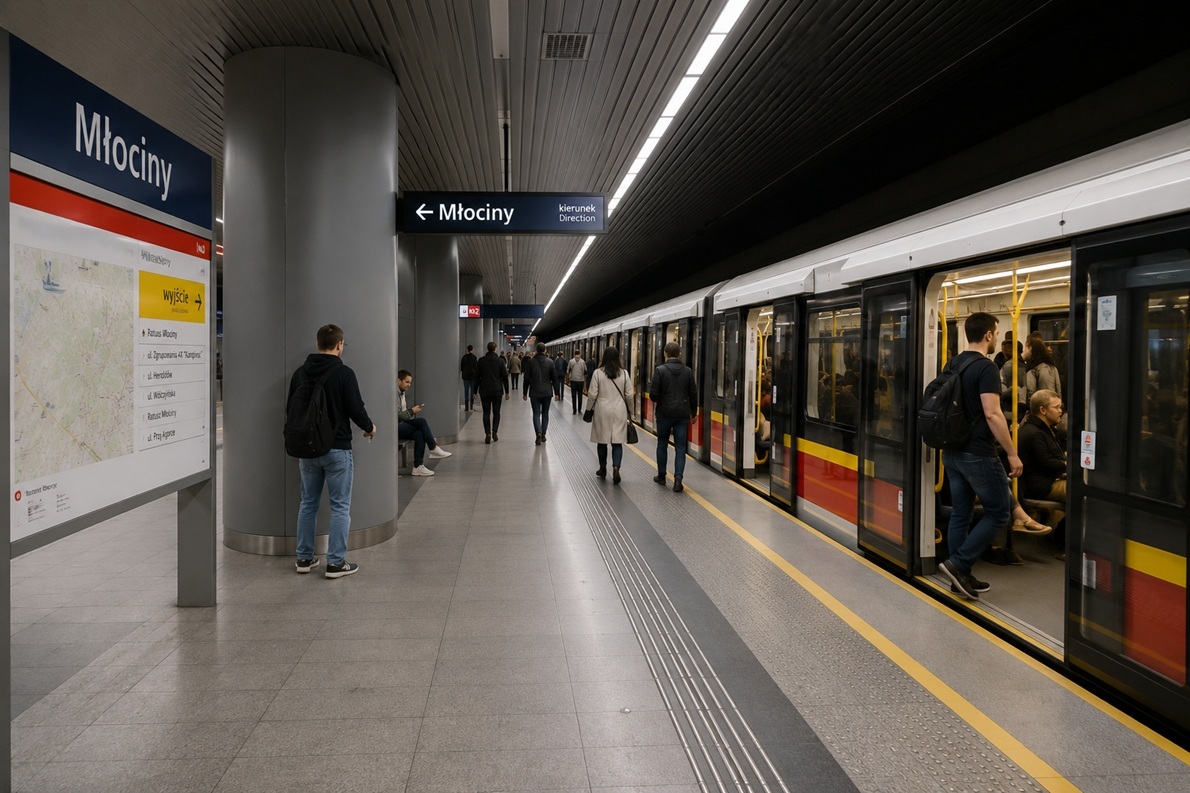 M1 links established northern and southern residential areas through central Warsaw.
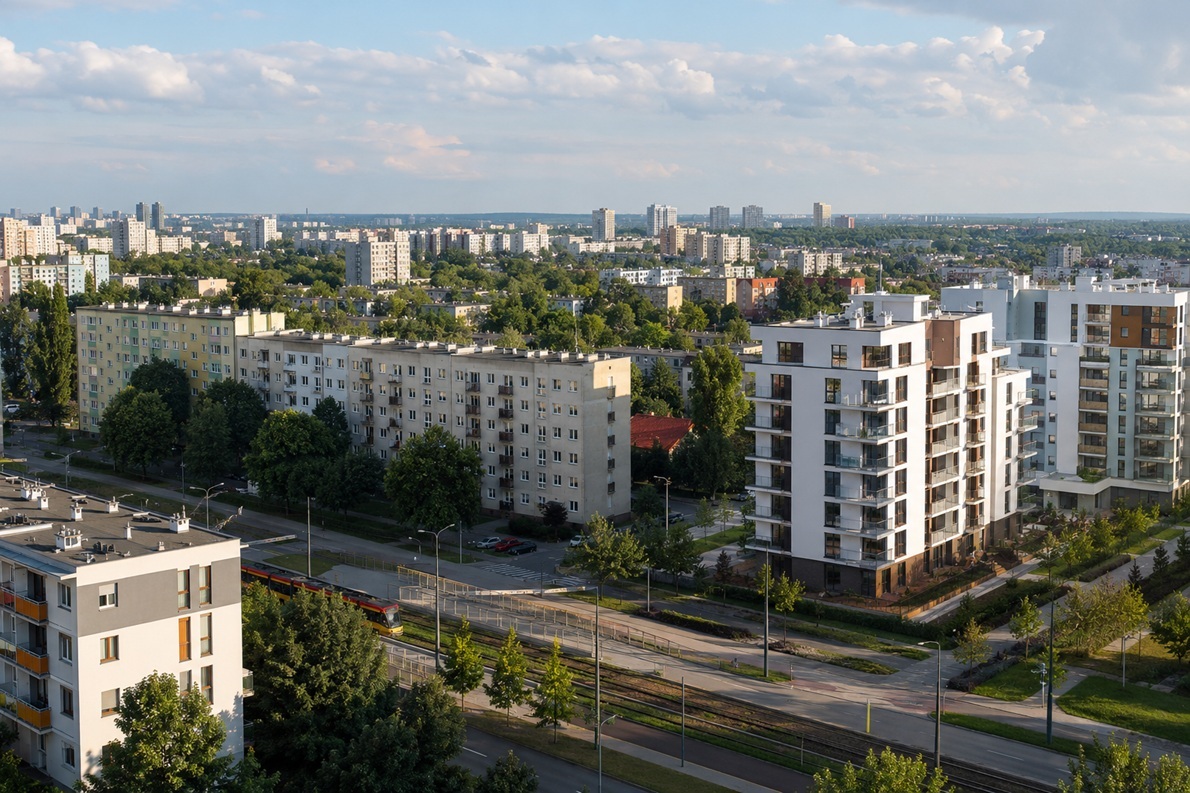 M2 has changed access, but every Targówek or Bródno address still needs its own station-walk test.
Ursynów, Natolin and Kabaty
Consider established services, green spaces, family demand, station walk, local retail, building age and the trade-off between central distance and residential completeness.
Bielany and Młociny corridor
Consider access to parks and forest, varied stock, tram and bus interchange, local centres and the exact relationship between housing and station entrances.
Wola and operating Bemowo stations
Separate already centralised Wola from more residential Bemowo. Treat Lazurowa, Chrzanów and Karolin as construction or future-service context until official passenger operation begins.
Targówek, Zacisze and Bródno
Compare older estates and new projects, park access, local services, construction volume, station proximity and the direct journey to Wola or central destinations.
A station can create a strong search zone, but it does not eliminate building due diligence. Noise from ventilation, bus loops or major roads may affect the closest buildings. New development around a station can improve services while adding years of construction. Mature estates may offer trees and established shops but require closer review of lifts, façades, installations and community finances.
Which side is the stronger starting point?
Use the table to frame the search, then allow real apartments to change the answer.
| Buyer priority | Likely stronger starting point | Condition to verify |
|---|---|---|
| Daily meetings across the core | Central Warsaw | Residential street quality, noise and several useful transport options |
| Extra bedroom for home working | Outer metro district | Short station walk and a genuinely usable room |
| Car-free lifestyle | Central Warsaw | Weekly needs reachable without repeatedly using taxis |
| Family space and local routine | Outer metro district | School, childcare, parks and shopping available locally |
| Corporate or relocation tenant | Central or close-in Wola | Apartment standard, direct employment access and building quality |
| Longer-stay family tenant | Outer metro district | Layout, lift, balcony, parking and complete neighbourhood |
| Maximum resale flexibility | Either | Central micro-location or strong outer owner-occupier product |
| Low transport dependence | Central Warsaw | The resident can walk to several destinations, not only one office |
| Quiet evening environment | Outer metro district | Inspect roads, estate activity and the final station walk after dark |
Your schedule uses several central destinations, walkability has daily value, the budget still reaches a functional apartment and the exact street avoids the worst urban exposure.
The larger home or calmer neighbourhood materially improves daily life, the station connection serves the real routine and the final walk remains easy in poor weather and after dark.
Spend one ordinary day in each finalist.
Neighbourhood quality becomes clear when you repeat the routine rather than tour the landmarks.
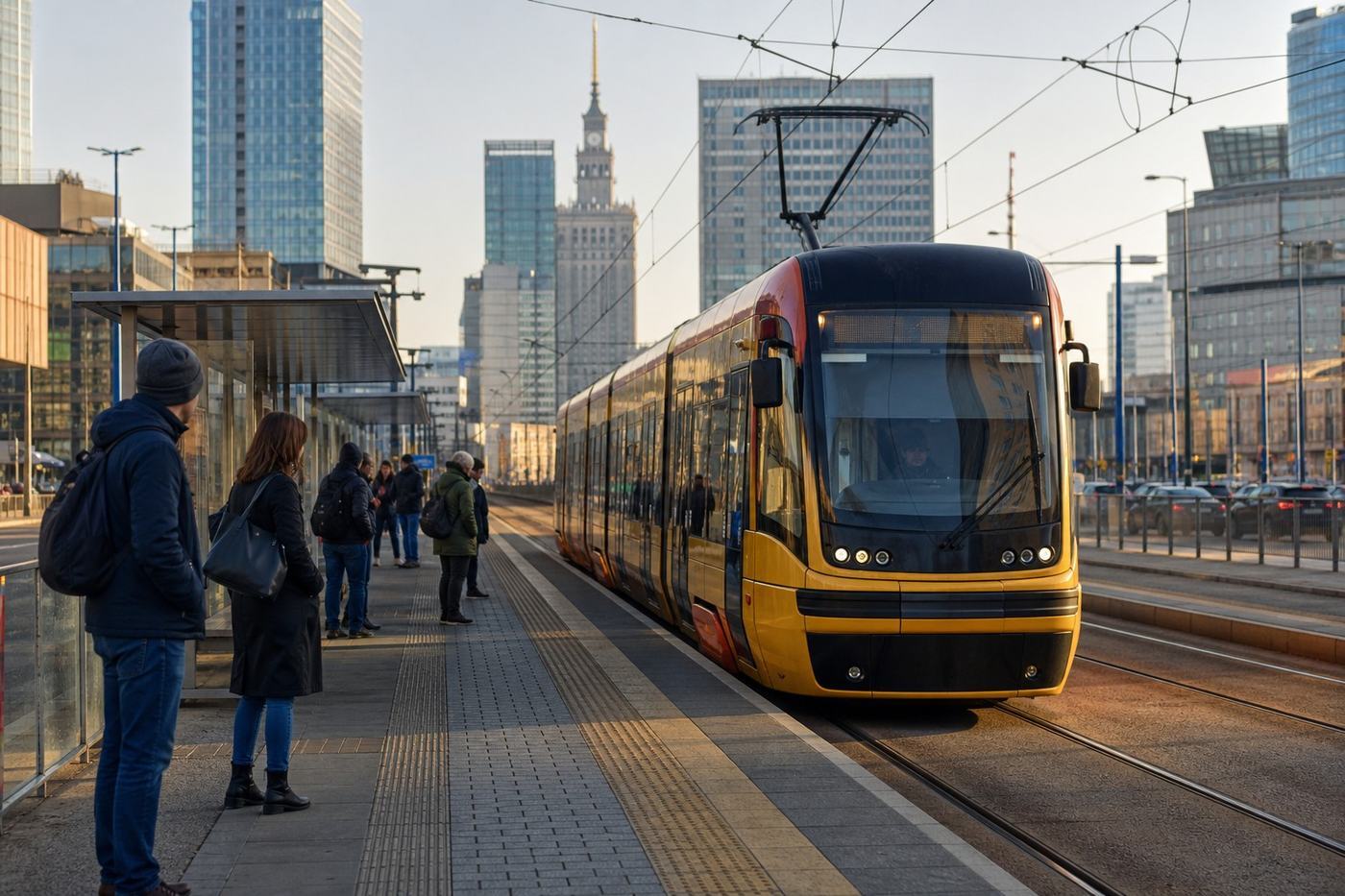 Transport speed matters, but so do crowding, crossings, noise and the quality of the walk home.
Start at the apartment at 07:30
Walk to the station, count crossings and note pavement width, lighting, traffic, queues, school routes and winter exposure.
Complete the actual work or school journey
Use the correct station exit and final destination. Record walking, waiting, transfers and the full door-to-door time.
Buy normal weekly essentials
Check grocery, pharmacy, parcel collection, clinic, gym and other routine services. A café street is not automatically a complete neighbourhood.
Return after 21:00
Observe frequency, crowding, lighting, active frontages, shortcuts, noise and whether the final walk still feels natural.
Repeat on a weekend
Central nightlife and tourism may increase, while some outer services and feeder routes may become less active.
Inspect future change
Review nearby construction, vacant plots, planned roads and official transport status. Separate funded work from distant concepts.
Score every finalist on the same ten factors: apartment, building, station walk, destination time, local services, evening environment, green space, car need, competing stock and resale audience.
What turns a good district idea into a weak purchase.
Most errors come from replacing address-level evidence with a general story about the area.
Using administrative district averages
Śródmieście, Wola, Bielany, Ursynów and Targówek each contain very different streets, buildings and transport relationships.
Timing only the train
The station walk, platform access, waiting, transfer and final walk can equal or exceed the rail journey.
Pricing planned metro as operating metro
Construction progress is relevant, but today’s buyer must retain a workable location if the opening changes or is delayed.
Buying more area than the household uses
An extra room has value only when it works; poor layout and longer journeys can turn cheaper square metres into dead capital.
Assuming central means liquid
A noisy, dark or technically difficult central apartment can have a narrower resale pool than a strong outer owner-occupier product.
Ignoring the second-best route
A one-line location should be tested during closures, late evenings and maintenance. Resilience is part of value.
Central Warsaw and metro-connected outer districts.
Direct answers to common buyer questions.
Is central Warsaw always better for property investment?
No. Central locations can provide flexible demand and walkability, but entry cost, building condition, layout, noise and service charges can weaken the case. A strong outer metro apartment can outperform a weak central property.
Which Warsaw districts are connected by the operating metro?
M1 runs between Kabaty and Młociny through southern, central and northern Warsaw. M2 operates between Bemowo and Bródno through Wola, Śródmieście and Praga. Verify the current official timetable before relying on any extension.
How close should an apartment be to a metro station?
There is no universal distance. Time the real route from the apartment door to the platform, including crossings, station entrance, lifts and weather exposure. A pleasant eight-minute walk can be stronger than a difficult five-minute route.
Are apartments cheaper in outer Warsaw districts?
Often the same budget can reach more space outside the core, but prices vary by station, building, age and micro-location. Compare complete cost, including parking, fit-out, service charges and any additional transport or car expense.
Is Ursynów too far from central Warsaw?
Not automatically. Areas close to M1 can provide a direct journey and complete local services. The answer depends on the exact station walk, destination, work frequency and whether the household values space and greenery.
Is Targówek a practical choice for a foreign buyer?
It can be when the apartment is close to operating M2 service, the neighbourhood supports daily life and the building passes legal and technical review. Targówek is not uniform, so compare individual station areas and streets.
Should I pay today for a planned metro station?
Treat future infrastructure as a scenario, not present access. Verify official construction status, retain a workable current transport plan and avoid paying the full completed-infrastructure premium before passenger service operates.
Which location is better for a family?
Outer metro districts may offer larger homes, parks and local schools, while central areas can reduce adult travel. Model the full family routine: work, school, childcare, activities, healthcare, shopping and evening return.
Which location is better for rental demand?
Central units may reach a broader mobile tenant pool; outer metro units can attract stable long-term tenants tied to a corridor or family routine. The apartment type, rent, station walk and competing supply decide the result.
Can WIC compare central and outer districts in one search?
Yes. Both can be evaluated under one budget, complete-capital limit, commute test, apartment brief and exit strategy so that real properties — rather than assumptions — determine the stronger option.
Build one shortlist across both sides of the trade-off.
We compare apartments, transport, building risk and future resale inside one buyer brief.
 From district strategy and viewings to specialist checks and final handover coordination.
Send us your budget and the journeys that actually matter.
We can compare central Warsaw with operating metro corridors using the same apartment requirements, complete cost and exit criteria. The result is a shortlist built around daily use and verified addresses — not a generic district ranking.