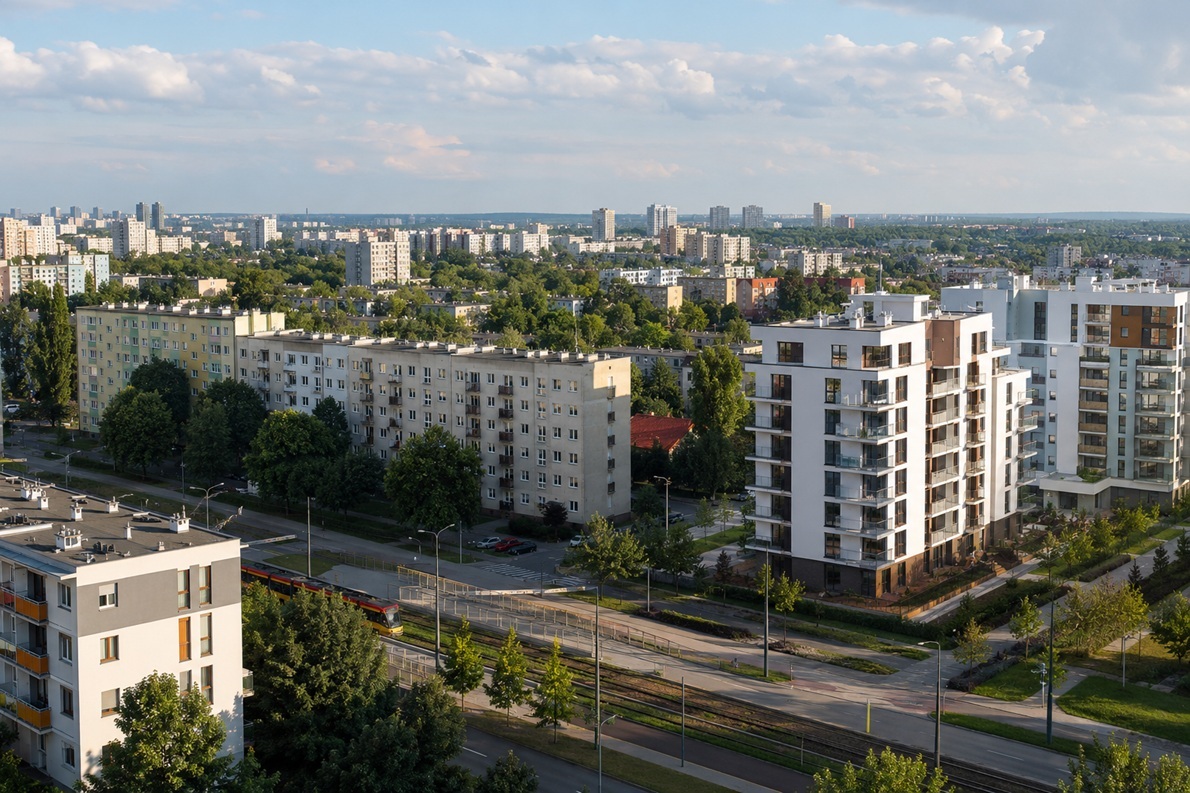
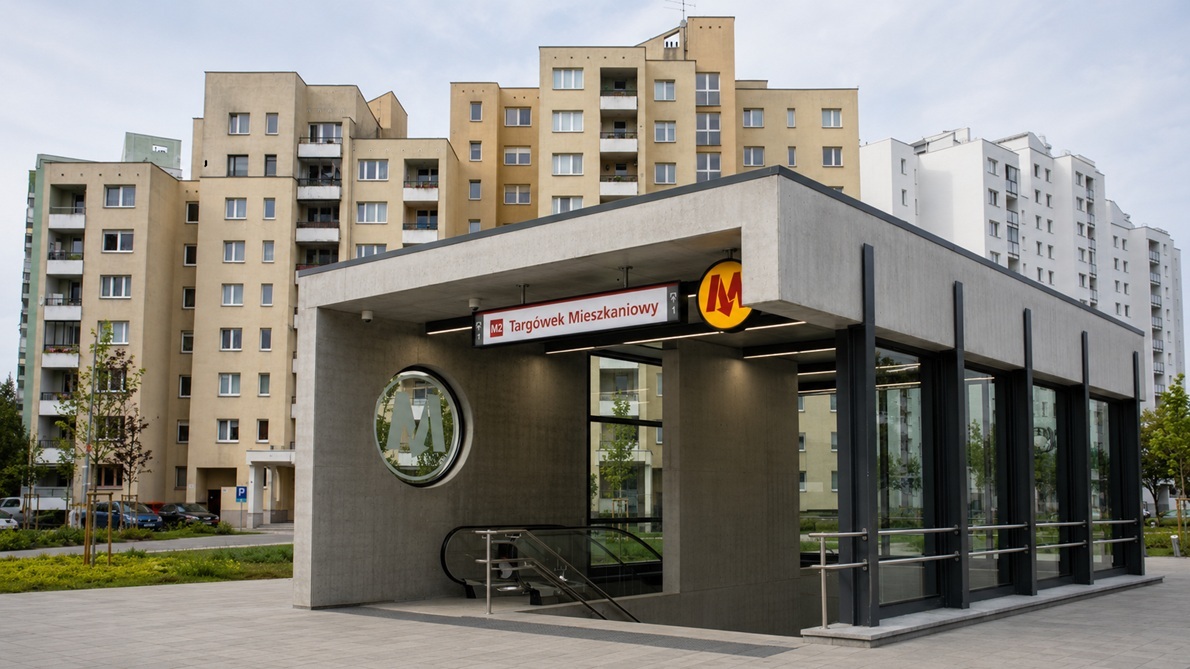
Targówek's investment case is built on a single, unusually clear structural driver: metro M2. Before September 2019, the district had no rail transit — residents depended on bus and tram connections, putting Targówek at a disadvantage relative to metro-served left-bank districts like Ursynów (5 M1 stations) or Bielany (4 M1 stations). That changed in two phases: Trocka and Targówek Mieszkaniowy opened in September 2019, and Zacisze, Kondratowicza and Bródno in September 2022, per Warsaw Metro data. In three years, Targówek went from zero stations to five — more M2 stations than any other single district on the line.
The price impact was immediate and measurable. Urban.one documented increases of +30% near Targówek Mieszkaniowy (from ~6,800 to 9,000 PLN/m²) and +17% near Trocka following opening. The three 2022 stations are earlier in the same cycle — the repricing around Zacisze, Kondratowicza and Bródno is still in progress, creating a window that has already closed for the 2019 stations.
The second structural element is supply at low entry prices. Targówek has 731 new-build listings across 17 projects (RynekPierwotny.pl) at an average of 15,546 PLN/m² — meaningfully below equivalent new-build in left-bank metro-served districts (Ursynów: 20,446 PLN/m², Bielany: 20,869 PLN/m²). That gap reflects both the historical right-bank pricing discount and the fact that much of Targówek's surrounding environment is still in transition. For investors, the trade is: lower entry price and higher yield, in exchange for a district that is less polished than its left-bank competitors.
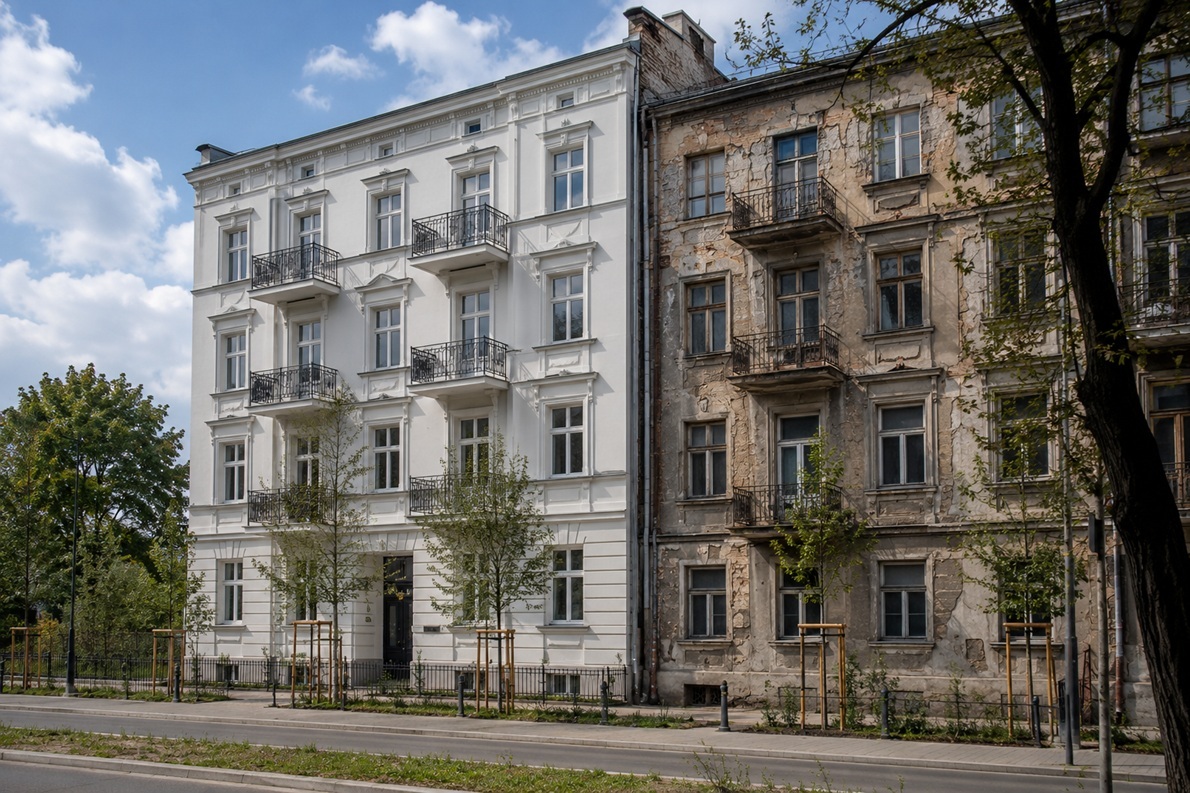
The gentrification spillover from neighbouring Praga Północ adds a third layer. Praga's transformation — visible along ul. Ząbkowska and at the Koneser complex — is pushing young professionals eastward into Targówek as Praga's prices rise. That tenant migration, combined with metro access, is gradually reshaping the tenant profile of metro-adjacent Targówek toward the kind of younger, professionally mobile renter that supports higher rents and shorter vacancy periods.
Zero to five stations in three years
The most dramatic transport upgrade any Warsaw district has received — from no rail transit to five M2 stations between 2019 and 2022.
17% below the Warsaw average
At 15,011 PLN/m² (Viva Invest), Targówek is the cheapest metro-served district in Warsaw — a structural discount the metro is gradually compressing.
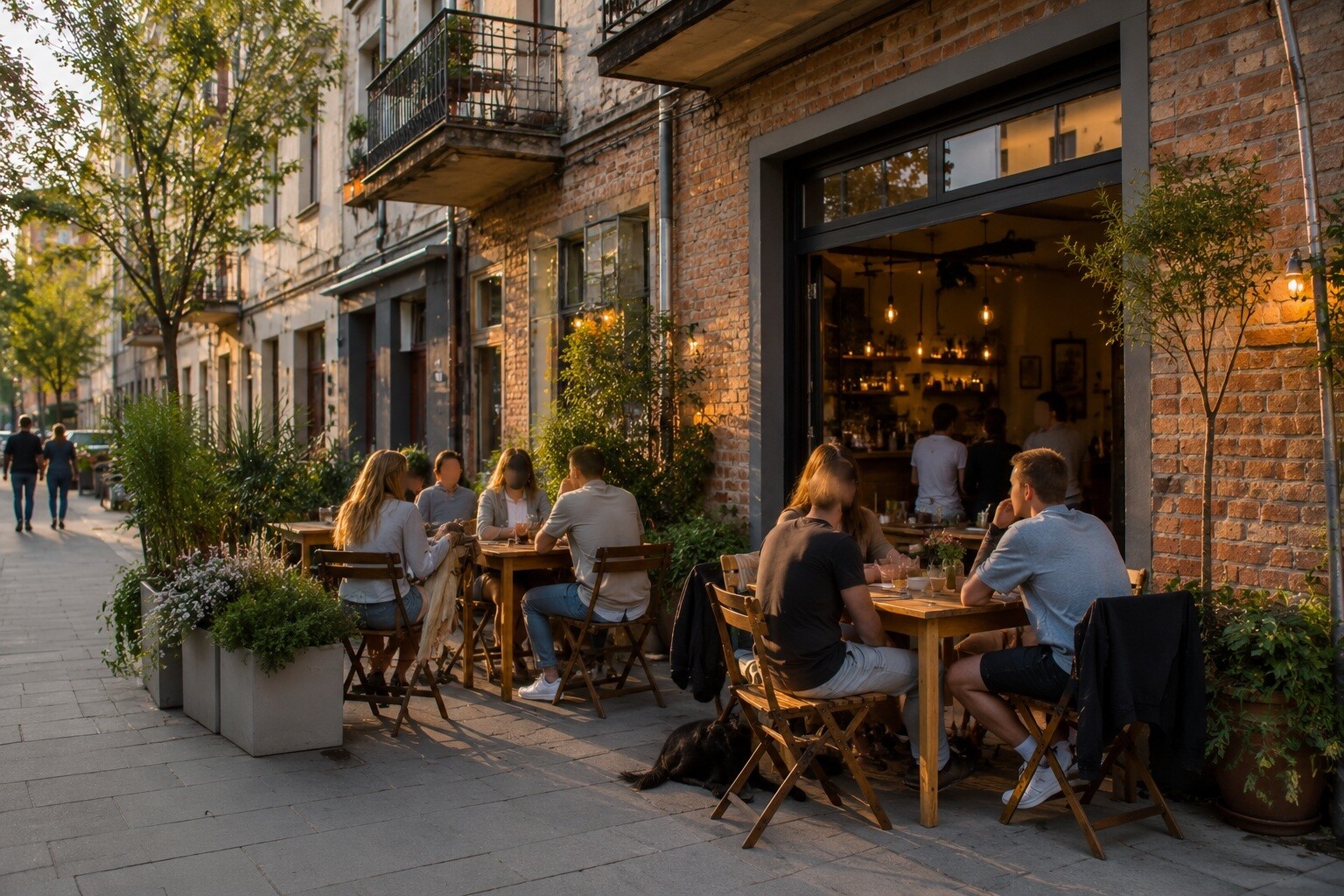
Praga Północ's tenant migration
Rising prices in neighbouring Praga are pushing young professionals into metro-adjacent Targówek — reshaping the tenant profile and supporting rent growth.
When M2 stations opened on Wola (Rondo Daszyńskiego, Rondo ONZ), prices rose 25–30% over the following 3–5 years, per Urban.one. Wola is now one of Warsaw's most expensive districts. Targówek is earlier in the same cycle, at a fraction of the price. The parallel is not exact — Wola had an office-district catalyst that Targówek lacks — but the directional comparison is relevant for 5–10 year holding periods.