Warsaw Investor Care logo
District guide · Warsaw · Updated July 2026

Wola property
guide 2026.

Prices from 17,572 PLN/m² district average up to 28,000+ PLN/m² in the CBD core. Gross rental yields of 6–7%. Warsaw's densest concentration of modern office space, five M2 metro stations inside one district, and among the clearest price momentum in the city. A data-driven guide for foreign buyers and investors.

Price range: 17,572 – 28,100+ PLN/m² depending on zone Gross yield: 6–7% · unit type and location dependent Also read: Targówek guide · Mokotów guide · Legal guide
Quick answer
Is Wola a good district for foreign property investors?

Short answer: Yes. Wola offers some of Warsaw's strongest rental demand, excellent metro access via five in-district M2 stations, and one of the city's largest office markets — making it attractive for both long-term investors and owner-occupiers. It is not the cheapest district, and the environment outside the CBD core is still mid-transformation, but the combination of tenant depth and transport is hard to match elsewhere in Warsaw.

Quick facts — Wola, Warsaw
Average price 17,572 PLN/m²
Rental yield 6–7% gross
Metro stations 5 (M2 line)
Best for Yield + metro-driven demand
Worst for Lowest-price entry seekers
Population ~140,000

Wola is the district most first-time Warsaw buyers reach for by instinct — and, unusually, the instinct largely holds up under the numbers. Unlike Targówek's underdog metro-transformation story or Ursynów's mature suburban range, Wola's case rests on scale that already exists today: the largest concentration of modern office space in the city, one of the best-served metro corridors of any Warsaw district, and price momentum among the strongest in Warsaw through 2026.

District-wide, secondary-market pricing averaged 17,572 PLN/m² in mid-2026, up 3.72% since the start of the year, with a year-end forecast near 18,995 PLN/m² — placing Wola 3rd of Warsaw's 18 districts, behind only Śródmieście and Żoliborz (SonarHome). New-build pricing runs meaningfully higher in the CBD-adjacent core — Q1 2026 developer-offer tracking placed Wola's average new-build asking price around 28,100 PLN/m² — while more typical new stock in Czyste and Odolany trades closer to 19,000–22,000 PLN/m² per RynekPierwotny district listings.

What separates Wola from a pure momentum story is the tenant base underneath it. The office cluster around Rondo Daszyńskiego and Rondo ONZ — often called Warsaw's "new CBD" — anchors a large, recurring pool of corporate tenants, a meaningfully less cyclical demand driver than the tourism- or lifestyle-led demand that supports some other central districts. Investropa's 2026 momentum tracking places Wola among the districts with the clearest year-over-year price pressure in Warsaw, alongside Praga-Północ and Targówek.

District average asking price
17,572 PLN/m²
Mid-2026 · 3rd of 18 · +3.72% YTD · SonarHome
New-build primary market avg.
28,100 PLN/m²
Q1 2026 · CBD core · Tabelaofert.pl
Gross yield (typical unit)
~6–7%
Strongest for studios near M2 stations · WIC estimate
Metro M2 stations
5 stations
Rondo Daszyńskiego → Ks. Janusza · Metro Warszawskie
Market logic

Why Wola is Warsaw's clearest scale-plus-momentum investment case

Wola combines the largest office cluster in Warsaw with one of its best metro corridors — a combination almost no other district can match at once.

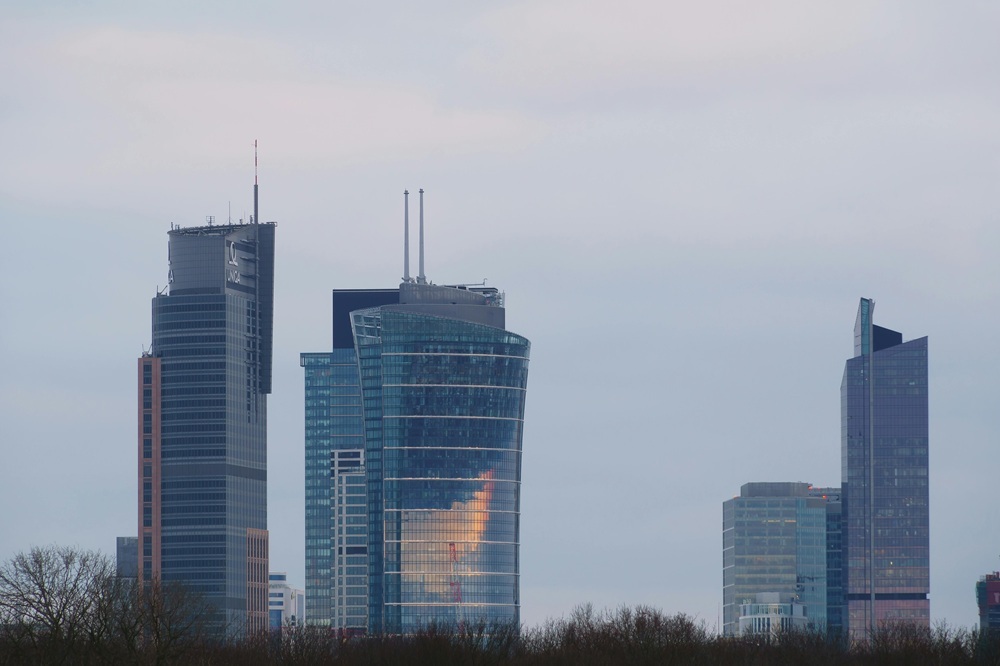
Why Wola is one of Warsaw's strongest momentum districts — office towers near Rondo Daszyńskiego

Wola's investment case rests on a combination few other Warsaw districts can match at once: the largest concentration of modern office space in the city, one of the best-served metro corridors, and a still-active new-build pipeline that keeps supply flowing into a district with genuinely strong demand. That is a meaningfully different profile from districts that rely on a single demand driver.

The office cluster around Rondo Daszyńskiego and Rondo ONZ anchors a large, recurring pool of corporate tenants — professionals in finance, technology, consulting and law who want to live within walking distance or one metro stop of their office. That tenant base is less cyclical than demand tied to tourism or lifestyle, and meaningfully different from the office-adjacent pool many buyers associate purely with Mokotów.

Transport reinforces the case rather than complicating it. The M2 metro line runs directly through Wola, with five stations inside the district — Rondo Daszyńskiego, Rondo ONZ, Młynów, Płocka and Księcia Janusza — giving Wola one of the highest metro-station densities of any Warsaw district. That density matters for both tenant demand and resale liquidity.

Investropa's 2026 momentum tracking places Wola among the districts with the strongest recent price pressure in Warsaw, alongside Praga-Północ and Targówek — driven by exactly this combination of metro access, office demand and ongoing new supply.

In our experience, foreign buyers usually underestimate the difference between CBD Wola and western Wola — on paper it is one district with one average price, but on the ground it is closer to two separate markets.

01 · Demand base

Warsaw's densest office cluster

Rondo Daszyńskiego and Rondo ONZ form the largest modern office concentration in the city, feeding a deep, recurring corporate tenant pool.

02 · Transport

Five M2 stations in one district

Few Warsaw districts offer this level of in-district metro coverage — a direct driver of both tenant demand and resale liquidity.

03 · Momentum

Among Warsaw's fastest-moving prices

2026 tracking places Wola among the districts with the clearest year-over-year price pressure, alongside Praga-Północ and Targówek.

The precedent Wola itself already set

Wola is, in effect, the finished version of the story Targówek is telling now: a formerly industrial, under-connected district that repriced sharply once the M2 metro arrived. Wola's stations opened years before Targówek's, and the district has already moved from an affordable outer option to Warsaw's 3rd most expensive district. The parallel is not exact — Wola's office-district catalyst is stronger than anything on Targówek's stretch of the line — but it is a useful reference point for how far a metro-driven repricing cycle can run.

Pricing data

Current market prices and Wola's position in Warsaw

Wola sits just below Śródmieście and Żoliborz as Warsaw's third most expensive district, with a wide internal spread between the CBD core and outer Wola.

SonarHome's mid-2026 district data places Wola's secondary-market pricing at around 17,572 PLN/m², up 3.72% since the start of the year, with a year-end 2026 forecast near 18,995 PLN/m². New-build pricing runs meaningfully higher and varies sharply by micro-location: Q1 2026 developer-offer tracking placed Wola's average new-build asking price around 28,100 PLN/m², reflecting the concentration of premium towers near Rondo ONZ; more typical new-build stock in Odolany and Czyste trades closer to 19,000–22,000 PLN/m² per RynekPierwotny district listings, with entry prices from around 475,000 PLN for smaller units.

Śródmieście
20,692 PLN/m²
Jul 2026, SonarHome · city centre
Żoliborz
18,853 PLN/m²
Jul 2026, SonarHome · low supply
Wola ★
17,572 PLN/m²
Mid-2026, SonarHome · 5 M2 stations
Mokotów
16,694 PLN/m²
Jul 2026, SonarHome · 5th of 18

Wola prices at a premium of roughly 5–15% over Mokotów depending on micro-location, largely explained by the density of the office cluster and the in-district metro coverage — Mokotów's own metro stations sit at the district's edges rather than running through its centre the way M2 does through Wola.

Product type Average purchase price Average monthly rent Gross yield Net yield
Studio apartment 492,000 PLN 2,830 PLN 6.9% 5.5%
One-bedroom apartment 703,000 PLN 3,750 PLN 6.4% 5.0%
Two-bedroom apartment 966,000 PLN 4,830 PLN 6.0% 4.6%
What these numbers mean in practice

Wola is not a discount district — it is Warsaw's third most expensive on a district-wide basis. But the combination of momentum, transport and tenant depth gives it one of the cleaner cases in the city for buyers who want price appreciation and rental demand to move together rather than trading one off against the other.

Investment returns

Wola yields — solid, and backed by real tenant depth

Wola's yields sit in the middle of Warsaw's central-district range, but the district's tenant depth makes those yields more dependable than the headline number alone suggests.

Gross yield · studio
6.9%
Net yield ~5.5% after costs
Gross yield · 1-bed
6.4%
Net yield ~5.0% after costs
Gross yield · 2-bed
6.0%
Net yield ~4.6% after costs

What supports these yields is not only central-Warsaw scarcity, but a genuinely broad tenant base: corporate professionals working around Rondo Daszyńskiego and Rondo ONZ, a growing resident population in Czyste and Odolany, and renters who value direct M2 access over marginally cheaper rent further out. Pewny Lokal's 2026 rental market analysis places citywide rental yields for standard 40–60 m² units in Poland's largest cities at around 4.5–5.7% — Wola's 6–7% range sits clearly above that big-city benchmark.

Investment example — Wola one-bedroom apartment

Illustrative model using district-level mid-2026 price and rent estimates.

Purchase price 703,000 PLN
PCC + notary + land register + basic advisory ~35,500 PLN
Total capital deployed ~738,500 PLN
Monthly gross rent 3,750 PLN
Annual gross rental income 45,000 PLN
Operating fees / vacancy / upkeep ~8,000 PLN
Indicative net annual income ~37,000 PLN
Indicative net yield on total capital ~5.0%
District character

What living and investing in Wola actually feels like

Wola splits cleanly into two identities — a dense, modern CBD core and a calmer, greener western half — and both work, but for different buyers.

The strongest parts of Wola district Warsaw

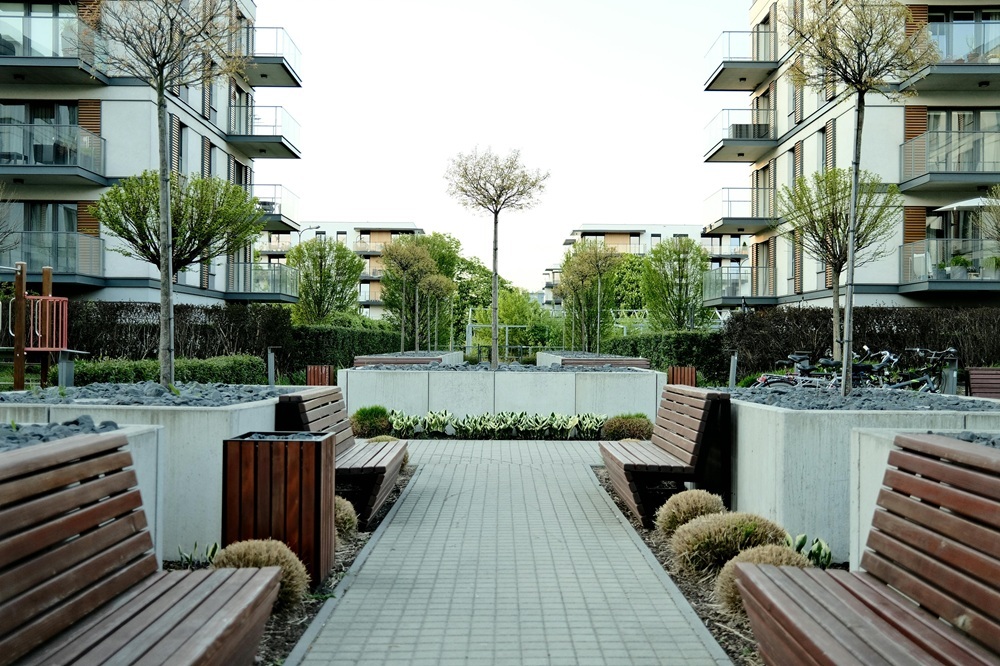
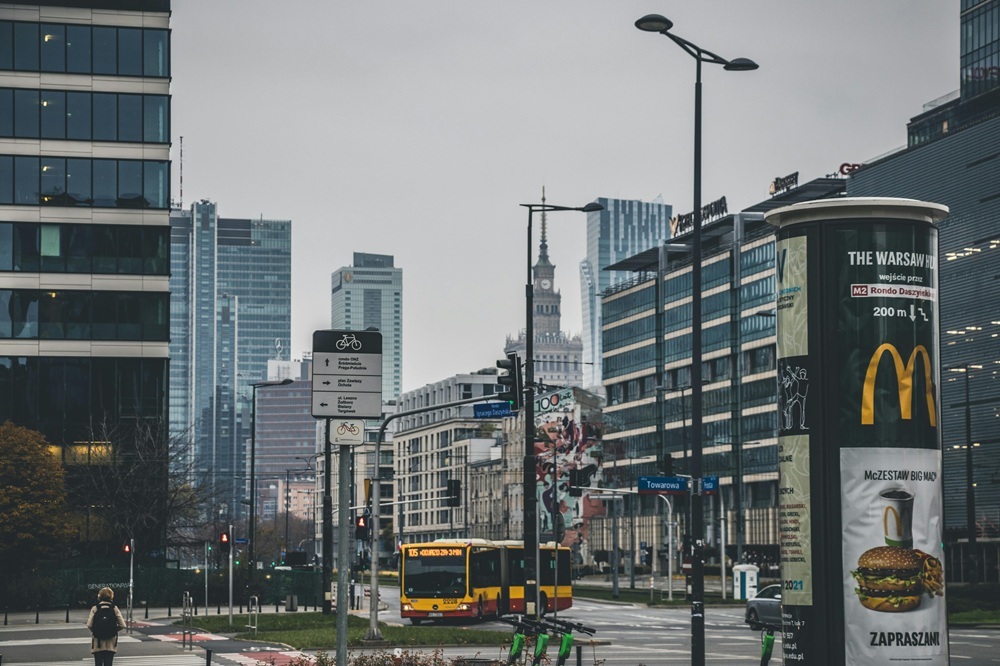
Eastern Wola — Czyste and the area around Rondo Daszyńskiego and Rondo ONZ — is unmistakably a modern, high-rise, office-adjacent environment. It is Warsaw's closest equivalent to a purpose-built financial district, with glass towers, ground-floor retail, and a fast-growing residential population living directly among the offices they work in. This part of Wola feels genuinely international, in a way few other Warsaw districts do.

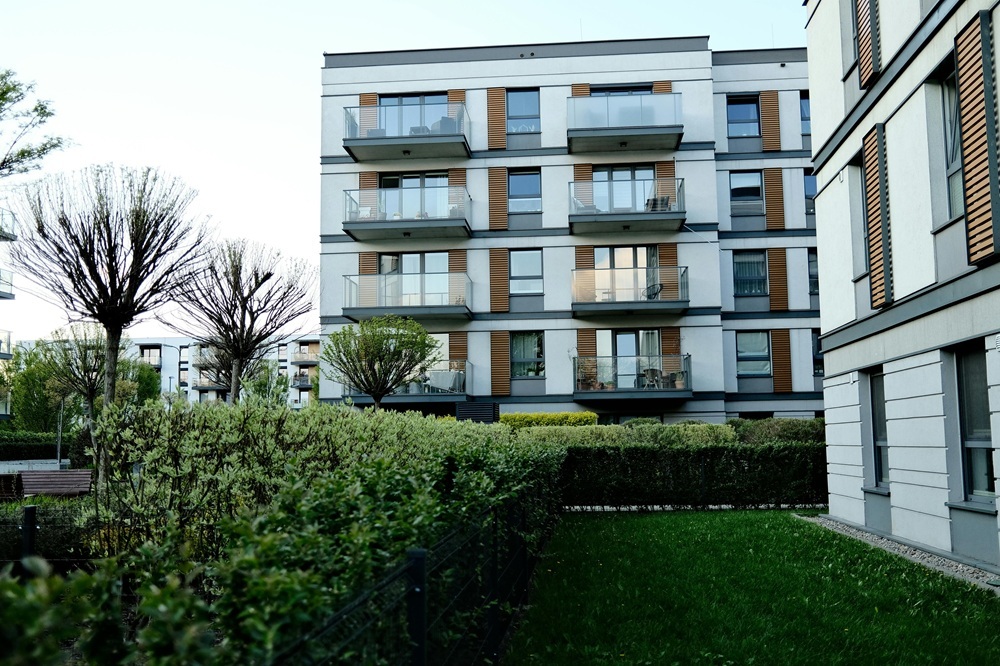
Western Wola — Ulrychów, Koło and the areas further from the CBD — is a different, more residential district: lower buildings, more established streets, and a slower pace that suits owner-occupiers and families as much as investors. The contrast matters, because "Wola" as a single label covers two genuinely distinct buyer experiences.

What ties the district together is transport and ongoing regeneration. Former industrial and rail land continues to convert into new residential and mixed-use development, and the M2 metro corridor gives both halves of the district a shared backbone that makes cross-district commuting genuinely easy.

Buyers who only visit the Rondo ONZ area and assume the rest of Wola looks the same are making the district's single most common evaluation mistake — the two halves genuinely need to be judged separately.

Most first-time buyers we work with focus heavily on apartment finishes while overlooking micro-location entirely — in Wola specifically, that trade-off matters more than in almost any other Warsaw district.

The practical rule for Wola

Which half of Wola an apartment sits in explains more about its investment case than the district label alone. A property near Rondo ONZ and a property in outer Ulrychów can differ by 30–40% per m², with genuinely different tenant profiles.

Buyer fit

Who Wola tends to fit best

Wola is strongest for buyers who prioritise transport, office-adjacent tenant demand and price momentum over an established, low-rise residential identity.

Who Wola tends to fit best for Warsaw property investment

Wola is often a strong fit if:

  • you want direct M2 metro access and a short commute to Warsaw's densest office cluster
  • your strategy targets corporate professionals as a recurring tenant base
  • you want a district with genuine price momentum rather than a settled, mature market
  • you are comfortable with modern high-rise stock in the CBD-adjacent core
  • you want exposure to Warsaw's most active new-build pipeline

Wola may be less suitable if:

  • you want an established, low-rise residential identity throughout the whole district
  • your brief depends on green space and parks as a primary amenity
  • you are highly price-sensitive and want Warsaw's cheapest entry point
  • you prefer buying only resale stock with minimal exposure to new-build supply competition
  • you want the quietest possible street environment near your building
The Wola tenant profile

The office cluster around Rondo Daszyńskiego and Rondo ONZ anchors a tenant pool of corporate professionals in finance, technology, consulting and law — people who prioritise a short, metro-free commute over marginally cheaper rent further out. That demand base is what keeps Wola's yields resilient even at the district's elevated price point.

We've noticed that buyers who prioritise a specific commute time to a specific office cluster tend to end up happier with their Wola purchase than those who prioritise square footage alone — the tenant they're chasing is making the same trade-off.

Location filtering

Wola's micro-locations — prices, character and investor logic

Wola works best when filtered by sub-area rather than treated as a single homogeneous district — the gap between Czyste and outer Ulrychów is one of the widest of any Warsaw district.

Zone How it tends to read Investor logic
Czyste / Rondo Daszyńskiego Modern CBD core, highest prices, dense office-tenant demand, best M2 access Strongest for corporate-tenant rental strategies and buyers who prioritise transport and prestige over calm
Odolany Fast-growing new-build zone, formerly industrial and rail land, family-oriented new stock Good value entry into modern stock with strong medium-term regeneration upside
Młynów / Nowolipki edge Closer to Śródmieście, mixed older and newer stock, strong walkability to the centre Attractive for owner-occupiers wanting a near-central address without full Śródmieście pricing
Ulrychów / Koło Greener, more residential, further from the CBD, more affordable per m² Suits buyers prioritising price and calm over metro-adjacent tenant depth
The key Wola mistake

Treating Wola as one price story is the most common error. A property near Rondo ONZ and a property in outer Ulrychów can differ by 30–40% per m², with genuinely different tenant profiles — building-level and street-level filtering matters more here than in most Warsaw districts.

Cost structure

Buying costs in Wola — what to budget beyond the purchase price

Wola is a genuine mixed market between resale and new-build, so cost logic differs materially depending on which side of the market a buyer targets.

Resale purchases in Wola carry the standard Polish PCC tax of 2%, plus notary, land register and legal review costs. New-build purchases avoid PCC but should be budgeted with VAT already included in the developer's headline price, along with notary and legal review fees for the reservation and developer agreements. Our full cost guide covers every line item across Warsaw.

Resale — 703,000 PLN example
PCC tax (2%) 14,060 PLN
Notary fee + land register ~4,000–6,000 PLN
Legal review ~3,500–6,000 PLN
Total additional ~21,500–26,000 PLN
New-build — 703,000 PLN example
PCC tax 0 PLN
Notary fee (developer agreement) ~4,500–6,500 PLN
Legal review ~3,500–6,000 PLN
Total additional ~8,000–12,500 PLN
Building fees

Czynsz varies sharply

Newer Czyste towers can run considerably higher than older Ulrychów stock — always confirm before committing.

Parking

Not always included

Underground parking in CBD-core new-build is frequently sold or rented separately — budget it explicitly.

Foreign buyers

No permit for apartments

EU, EEA and most non-EU nationals can purchase apartments without a permit. See our legal guide.

Due diligence

What buyers must watch carefully in Wola

Wola is not uniformly polished, and most mistakes here come from assuming the whole district matches its most photogenic corner.

Wola is not uniformly polished — due diligence for Warsaw investors

New-build oversupply competition

Wola has one of Warsaw's most active pipelines. Investors buying to let should check nearby competing supply carefully, since tenants have real choice in the CBD core.

Busy corridors, real noise exposure

Streets like Wolska and Górczewska carry heavy traffic. Building position and glazing standard matter more here than in quieter districts.

Uneven stock quality outside the core

Older buildings in parts of outer Wola can require real refresh budgets — the district's average conceals significant building-level variation.

Ongoing regeneration disruption

Construction activity around former industrial and rail land is still active in several pockets, which can mean temporary noise, dust or access disruption near a purchase.

Investor advisory

How Warsaw Investor Care helps foreign buyers buy right in Wola

The advisory value in Wola comes from precise sub-area filtering, honest supply-competition analysis and matching the property to the right tenant logic.

For foreign buyers, Wola often looks appealing for the right reasons: metro access, office-tenant depth and visible momentum. But it is also a district where two apartments carrying the same district label can perform very differently depending on exact micro-location, building age and exposure to nearby new supply. We help clients filter Wola by intended use — corporate-tenant rental, owner-use near the CBD, or value-oriented purchase in the western half.

We define the investment brief, budget and target tenant profile before searching. For Wola, that determines whether the search focuses on the CBD core near Rondo Daszyńskiego/ONZ, the fast-growing Odolany new-build zone, or the calmer, more affordable western half around Ulrychów and Koło.

Beyond selection, we manage the full transaction: legal and tax coordination, notary process, developer contract review on primary purchases, and supply-competition analysis on secondary purchases. That connects to the wider acquisition process, including buying property in Warsaw as a foreigner and, where needed, new-build apartment guidance.

01

Clarify the tenant or owner-use brief

Wola works differently for a corporate rental, an owner-use CBD purchase and a value-oriented western-Wola buy. We start by fixing the use case.

02

Filter the right pocket of the district

We narrow by sub-area, new-supply competition, transport reality and building type, rather than relying on the district label alone.

03

Build a real capital model

We connect acquisition cost, any refresh budget and expected rent so the investor sees the true return, not only the headline price.

04

Coordinate the purchase and next stage

That includes legal review, notarial process, remote buyer support and, where needed, fit-out, furnishing or ongoing management.

FAQ

Frequently asked questions about buying in Wola

The key questions about Wola usually concern pricing, yields, metro access and how the district compares with Mokotów or Śródmieście.

What is the average price per square metre in Wola in 2026?

District-level secondary-market pricing in mid-2026 is around 17,572 PLN/m², according to SonarHome, with a year-end forecast near 18,995 PLN/m². New-build pricing in the Czyste/CBD core runs materially higher, often in the 20,000–28,000 PLN/m² range per RynekPierwotny listings.

What rental yield can I expect in Wola?

Current district estimates place gross yields around 6.9% for studios, 6.4% for one-bedroom units and 6.0% for two-bedroom apartments, with net yields around 5.5%, 5.0% and 4.6% respectively — above the 4.5–5.7% big-city benchmark reported by Pewny Lokal.

Does Wola have metro access?

Yes — the M2 line runs directly through Wola with five stations inside the district: Rondo Daszyńskiego, Rondo ONZ, Młynów, Płocka and Księcia Janusza, making it one of the best metro-served districts in Warsaw.

Is Wola better than Mokotów for investment?

Not automatically. Mokotów offers broader established residential prestige and a more settled market. Wola typically offers stronger price momentum, the densest office-tenant pool in Warsaw and better in-district metro coverage — see our Mokotów guide for the direct comparison.

Why is new-build supply so active in Wola?

Large areas of former industrial and rail land in Czyste and Odolany continue to convert into residential and mixed-use development, keeping Wola one of Warsaw's most active new-build districts — see RynekPierwotny's Odolany data.

Can foreigners buy property in Wola?

Yes. As with other Warsaw apartment purchases, EU and EEA citizens can buy freely, and non-EU nationals can usually buy apartments in multi-unit buildings without a permit. Houses with land require separate analysis. See our legal guide.

Do I need advisory support to buy in Wola?

It helps more than in most districts. The gap between the CBD core and outer Wola is one of the widest of any Warsaw district, and remote evaluation from listing photos alone can miss it entirely. Contact us to discuss your brief.

Key takeaways

Wola in three decisions

The right pocket of Wola depends entirely on what you're optimising for — these rarely point to the same address.

Rental income

If you're buying for rental income, choose Czyste or Rondo Daszyńskiego.

Highest tenant depth, shortest vacancy periods, strongest gross yields on studios and one-beds among corporate renters.

Appreciation

If you're buying for appreciation, choose Kondratowicza-style early-cycle pockets in Odolany.

Newer regeneration zones still repricing, similar in spirit to where Wola itself was 8–10 years ago.

Family living

If you're buying for family living, choose Ulrychów or Koło.

Lower density, greener streets, more affordable per m², without leaving the district entirely.

Next step

Looking at Wola for your Warsaw purchase?

The strongest Wola purchases usually come from matching the right pocket of the district to the right tenant logic, supply-competition analysis and capital plan.

Considering Wola for your Warsaw purchase

Let's assess whether Wola is the right fit for your brief.

We compare CBD-core and western-Wola micro-locations, build realistic yield and supply-competition models, coordinate the full foreign-buyer process and activate for rental. No charge for an initial consultation.

Micro-location filtering
New-supply competition analysis
Legal coordination for foreign buyers
Rental and post-purchase execution

Continue reading — guides & district profiles

District guide

Mokotów Property Guide

Established residential prestige with a broad, settled tenant base — ~6.7% yield.

District guide

Śródmieście Property Guide

Warsaw's most expensive district — city-centre prestige and constrained supply.

District guide

Żoliborz Property Guide

Green, supply-constrained and quietly premium — ~6.5% yield.

District guide

Targówek Property Guide

Warsaw's clearest metro-driven repricing story, years behind Wola's own cycle.

Legal guide

Can Foreigners Buy in Poland?

Permits, process, notarial deed and non-EU buyer rules for apartments.

Cost guide

Total Cost of Buying

Every cost itemised: PCC, notary, finishing and running costs with real figures.