Warsaw Investor Care logo
District guide · Warsaw · Updated July 2026

Żoliborz property
guide 2026.

One of Warsaw's greenest and most supply-constrained established residential districts. Prices 19,000–22,000 PLN/m². Rents among Warsaw's top 3. A quiet, pre-war neighbourhood address explained with data — including where the yield case is genuinely weaker than the headline story suggests.

Price range: 19,000–22,000 PLN/m² · second highest in Warsaw Gross yield: ~5.0–5.5% · below Mokotów and Praga Also read: Mokotów · Wola · Legal guide
Quick answer
Is Żoliborz a good district for foreign property investors?

Short answer: It depends on what you're optimising for. Żoliborz is not a high-yield play — independent market analysis puts net yields around 3.2–3.5%, meaningfully below Mokotów or Praga. What Żoliborz offers instead is structural supply scarcity, top-3 rents per m² in Warsaw, and one of the most stable, family-oriented tenant profiles in the city. It suits investors prioritising capital preservation and lifestyle quality over maximum income, and owner-occupiers who want a quiet, green, well-connected address.

Quick facts — Żoliborz, Warsaw
Average price 19,000–22,000 PLN/m²
Rental yield ~5.0–5.5% gross / ~3.2–3.5% net
Best for Capital preservation + family tenants
Worst for Buyers prioritising maximum yield
District area 8.3–8.5 km² · smallest in Warsaw
Metro M1: Plac Wilsona, Marymont

Żoliborz is one of Warsaw's most consistently underappreciated investment districts by first-time buyers — though the reasons for that are worth stating honestly rather than dressed up. It ranks second only to Śródmieście in price per m² among Warsaw's main districts, at approximately 20,500 PLN/m², according to Investropa's district-level analysis (early 2026). It is among the districts commanding Warsaw's highest rents per m², particularly for 2-bedroom units, alongside Śródmieście and premium parts of Mokotów, per Investropa's Updated Rents in Warsaw report. And it is Warsaw's smallest district by area — roughly 8.3–8.5 km² according to the official district portal — with a building fabric so thoroughly established that meaningful new supply is structurally minimal.

What that combination does not automatically produce is a strong rental yield. Independent market modelling from Investropa places Żoliborz among Warsaw's "less attractive for yield-focused investors" districts — high purchase prices relative to achievable rents compress net yields to roughly 3.2–3.5%, well below Mokotów or Praga. This guide is built around that honest starting point: Żoliborz's real case is supply scarcity, tenant stability and lifestyle quality, not headline income — and it is worth evaluating on those terms rather than being oversold on yield it does not deliver.

District avg. price (2026)
~20,500 PLN/m²
Second highest in Warsaw · Investropa
Renovated pre-war (70 m²)
~1,450,000 PLN
≈ €335,000 · WIC market estimate, Q1 2026
Gross / net yield (studio, near M1)
~5.0–5.5% / ~3.2–3.5%
Below Mokotów & Praga · Investropa
New supply constraint
Structurally minimal
Smallest district by area · pre-war fabric dominates
Investment case

Why Żoliborz is one of Warsaw's most supply-constrained premium districts

Three structural factors set Żoliborz apart from most other Warsaw districts. None of them are cyclical — they are close to permanent.

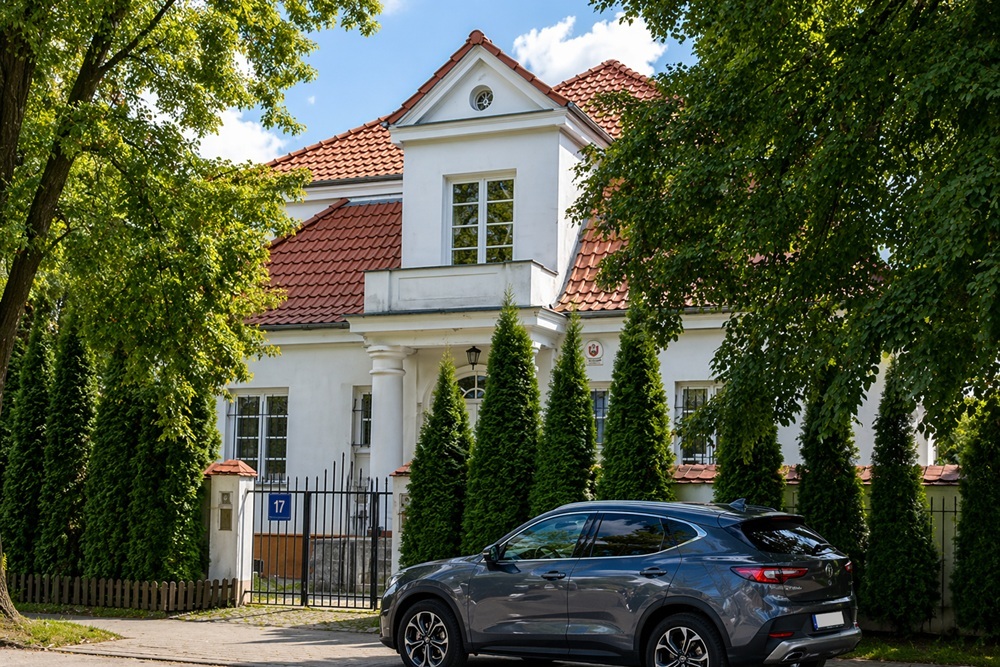
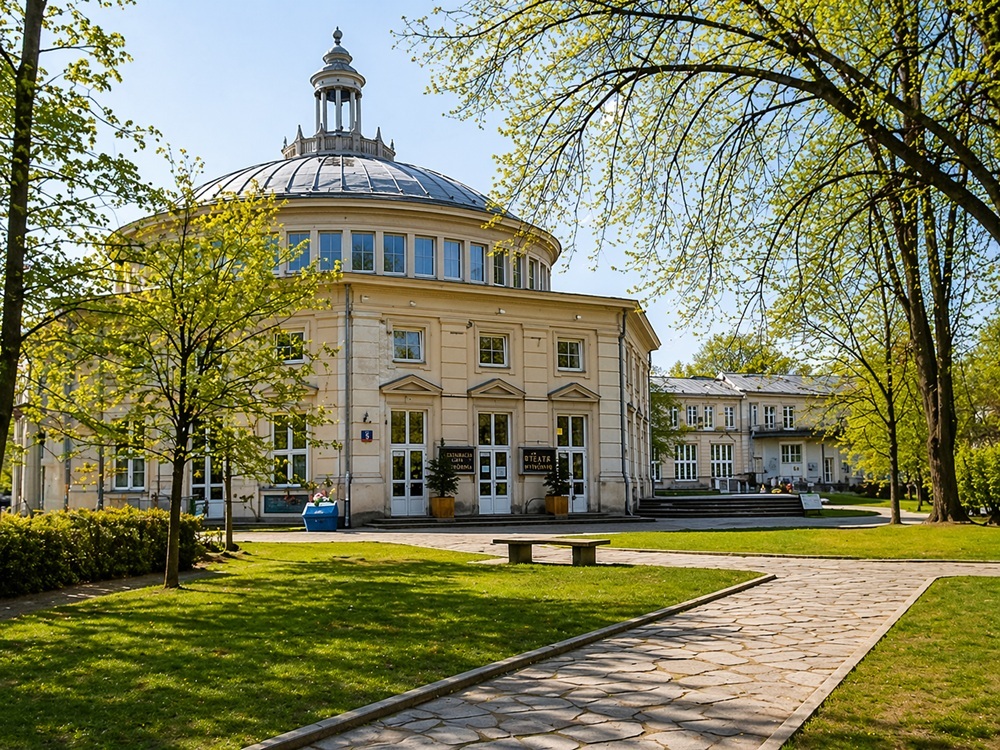
Żoliborz Warsaw — established leafy residential streets and pre-war architectural character

The first and most important structural factor is supply scarcity. Żoliborz is Warsaw's smallest administrative district by area and one of the most architecturally homogeneous — dominated by pre-war and inter-war residential buildings, with heritage designations and a built-out urban fabric that leaves very little land for meaningful new residential development. The contrast with Wola or Wilanów, where developers can deliver thousands of new units per year, is stark. In Żoliborz, new supply enters the market mainly through renovation of existing buildings and the occasional courtyard infill — not through new district creation. That scarcity is the structural floor beneath the district's pricing.

The second factor is M1 metro connectivity. Plac Wilsona station is one of the most used on Warsaw's M1 north-south line, providing direct connection to the city's central business and cultural core in around 4–6 minutes. For a district with Żoliborz's quiet, neighbourhood character, that connectivity removes the main practical objection to living here.

The third factor is tenant profile stability. Investropa's rent research identifies Ursynów (Kabaty), Wilanów and Żoliborz as the three Warsaw neighbourhoods most popular with families, driven by green space, school access and calmer streets. That tenant profile — families, established professionals, long-term expats — tends to renew leases and provide more predictable occupancy than districts dominated by young, mobile professionals. That operational difference matters for net return even when the headline yield is modest.

Together, these three factors explain why Żoliborz has held its value through Warsaw's market cycles. What they do not automatically deliver is a strong rental yield — the district's high price relative to achievable rent is exactly why Investropa's own yield modelling flags Żoliborz as a district where "prestige and liquidity absorb much of the rental return."

01 · Supply scarcity

Warsaw's smallest district by area

Pre-war building fabric and heritage constraints make meaningful new residential development structurally minimal. The stock is close to finite — a durable floor on values that few other Warsaw districts can match at this price level.

02 · Metro access

Plac Wilsona — around 4 minutes to Śródmieście

M1 metro access removes the main practical objection to Żoliborz as a near-central address. The district's green, quiet character combined with fast central connectivity is a combination few other Warsaw districts offer together.

03 · Tenant stability

Families, professionals, long-term expats

Żoliborz attracts a comparatively stable tenant demographic — families with children, senior corporate professionals and long-term international residents. Lower turnover and better maintenance, even where headline yield is unremarkable.

Pricing data

Current prices and Żoliborz's position in the Warsaw market

Warsaw's second most expensive district — and one of a small number where pre-war character commands a genuine premium over standard new-build product.

Żoliborz is consistently cited as Warsaw's second most expensive district after Śródmieście. Investropa's early-2026 analysis places the district at approximately 20,500 PLN/m², ahead of Wola and Mokotów on average, and its Housing Prices in Warsaw report puts Żoliborz among the districts where realistic closing ranges run from roughly 18,500 to 26,000+ PLN/m² depending on building and street. In our own market observation, a renovated pre-war 70 m² apartment in a well-located Żoliborz building trades at approximately 1,450,000 PLN (≈ €335,000) — this is a WIC estimate based on comparable listings rather than a third-party statistic, and should be treated as indicative.

Śródmieście
21,500–22,500 PLN/m²
Yield: ~5.8% gross · prestige capital
Żoliborz ★
19,000–22,000 PLN/m²
Yield: ~5.0–5.5% gross · constrained supply
Mokotów
18,000–22,000 PLN/m²
Yield: 6.7–8% gross · residential depth
Wola (east)
18,000–20,500 PLN/m²
Yield: 6.0–7.0% gross · supply watch
Product type Typical size Price range (Żoliborz) Indicative monthly rent Gross yield (approx.)
Studio · near Plac Wilsona metro 24–32 m² 480,000 – 700,000 PLN 2,600 – 3,200 PLN ~5.3–5.8%
1-bedroom (2-room) · central Żoliborz 38–55 m² 760,000 – 1,150,000 PLN 3,400 – 4,600 PLN ~4.8–5.3%
Pre-war renovated · 2-bed (3-room) 55–80 m² 1,100,000 – 1,700,000 PLN 4,500 – 6,500 PLN ~4.3–4.8%
Pre-war family · 3-bed+ (4+ rooms) 75–120 m² 1,550,000 – 2,800,000 PLN 6,200 – 10,500 PLN ~4.0–4.5%
Boutique new-build (rare infill) 40–80 m² 850,000 – 1,750,000 PLN 3,600 – 7,000 PLN ~4.3–4.8%
Why pre-war stock still commands a premium in Żoliborz

In most Warsaw districts, new-build developer stock carries a premium over resale equivalents. In Żoliborz, this logic is at least partly inverted for the best product: the pre-war and inter-war apartment fabric — high ceilings, thick walls, parquet floors, period architectural character — commands a premium that modern construction cannot fully replicate. That premium reflects genuine scarcity value rather than yield potential — which is precisely why the district's price level and its rental income do not move in step.

Investment returns

Rental yields and net return reality in Żoliborz

Top-tier rents per m² — but a high price level that compresses yield below Mokotów, Wola and Praga. Worth stating plainly before any purchase decision.

Gross yield · studio near M1
~5.2%
Net yield · realistic estimate
~3.2–3.5%
In line with Investropa's Warsaw yield modelling for Żoliborz
Rent per m²/month · top buildings
80–110 PLN
Among Warsaw's highest for 2-bed units · Investropa

It is worth being direct about this: Investropa's Warsaw yield modelling places Żoliborz among the districts that "have become less attractive for yield-focused investors," with modelled net yields of approximately 3.2% for a 1-bedroom apartment and 3.1% for a 2-bedroom apartment — describing the district as having "strong lifestyle appeal but compressed yields." That is meaningfully below the NBP Warsaw capitalization benchmark of 5.56% (Q3 2025), and below Mokotów's 6.7–8% or Praga's 6.5–7.5% gross ranges covered in our other district guides.

The reason is straightforward: Żoliborz's rents are genuinely strong — among the highest per m² in Warsaw for 2-bedroom units, per Investropa — but the purchase price is high enough relative to that rent that the ratio compresses. This is a district where buyers should not expect yield to be the reason to buy. The case for Żoliborz rests on supply scarcity, tenant stability, resale demand from a specific and persistent local buyer type, and lifestyle quality — not on outperforming Mokotów or Praga on income.

Investment example — Żoliborz 1-bed, Plac Wilsona area

Illustrative model based on Q1 2026 market data, calibrated to Investropa's Warsaw yield modelling for Żoliborz. For indicative purposes only.

Purchase price (44 m² · secondary market, renovated pre-war) 880,000 PLN
Additional costs (PCC 2% + notary + advisory ~4.5%) ~46,000 PLN
Total capital deployed ~926,000 PLN
Monthly gross rent (furnished, near M1, ~86 PLN/m²) 3,800 PLN
Annual gross rental income 45,600 PLN
Gross yield on purchase price ~5.2%
Operating costs, vacancy allowance & management (~34%) – 15,500 PLN
Net annual income (pre-tax) ~30,100 PLN
Net yield on total capital deployed ~3.2–3.3%
Why the gross-to-net gap is wider here than the headline suggests

The ~34% deduction used above is higher than the vacancy-and-management deduction used in our Wola or Mokotów examples. That is deliberate: it reflects the realistic operating cost and tax-reserve allowance consistent with Investropa's Warsaw yield modelling for Żoliborz, and brings the net figure in line with their independently modelled 3.1–3.3% range. Tenant stability in Żoliborz is real — families and long-term professionals do renew leases more often than in higher-turnover districts — but that operational advantage shows up as lower re-letting friction and maintenance risk, not as a materially higher net yield than the price-to-rent ratio otherwise implies.

District character

What Żoliborz actually feels like on the ground

Warsaw without the noise. A near-central address with a neighbourhood soul — and the scarcest residential fabric in the capital.

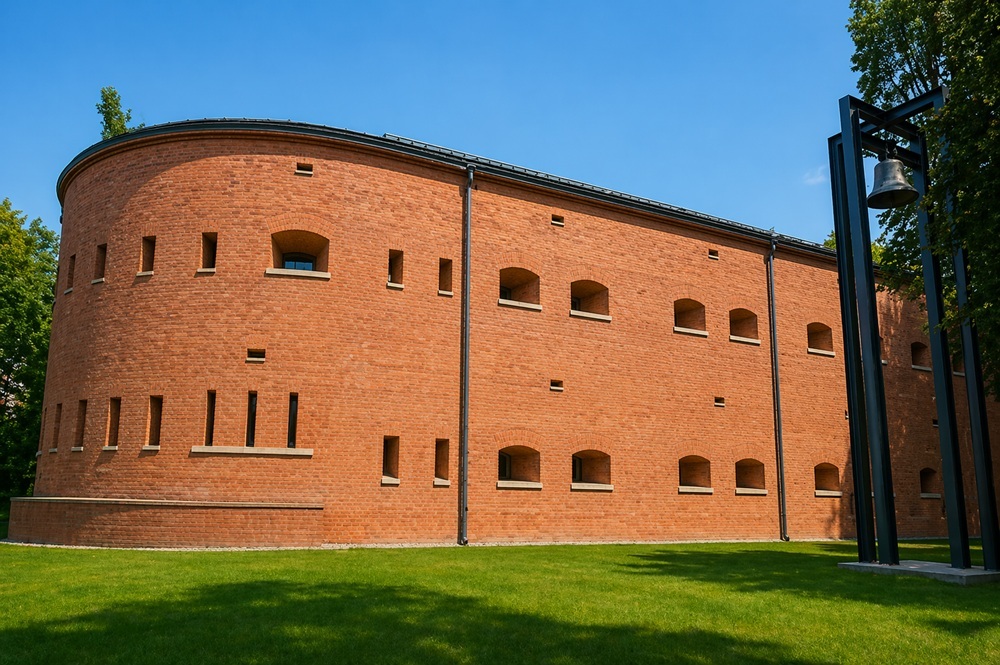
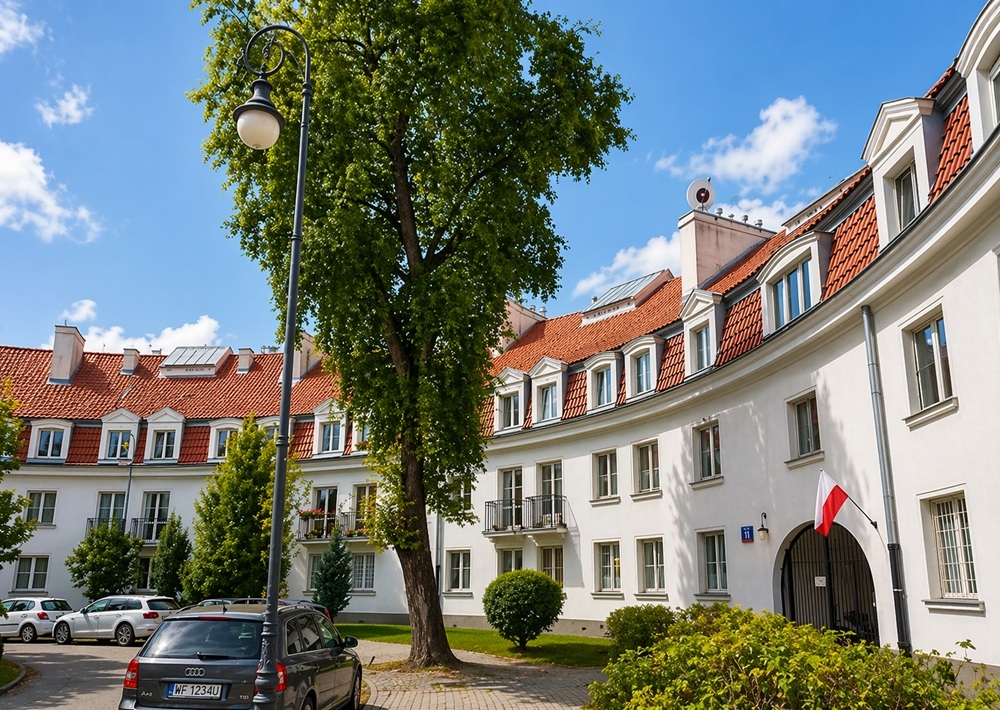
Żoliborz Warsaw residential street — pre-war building fabric and green neighbourhood atmosphere
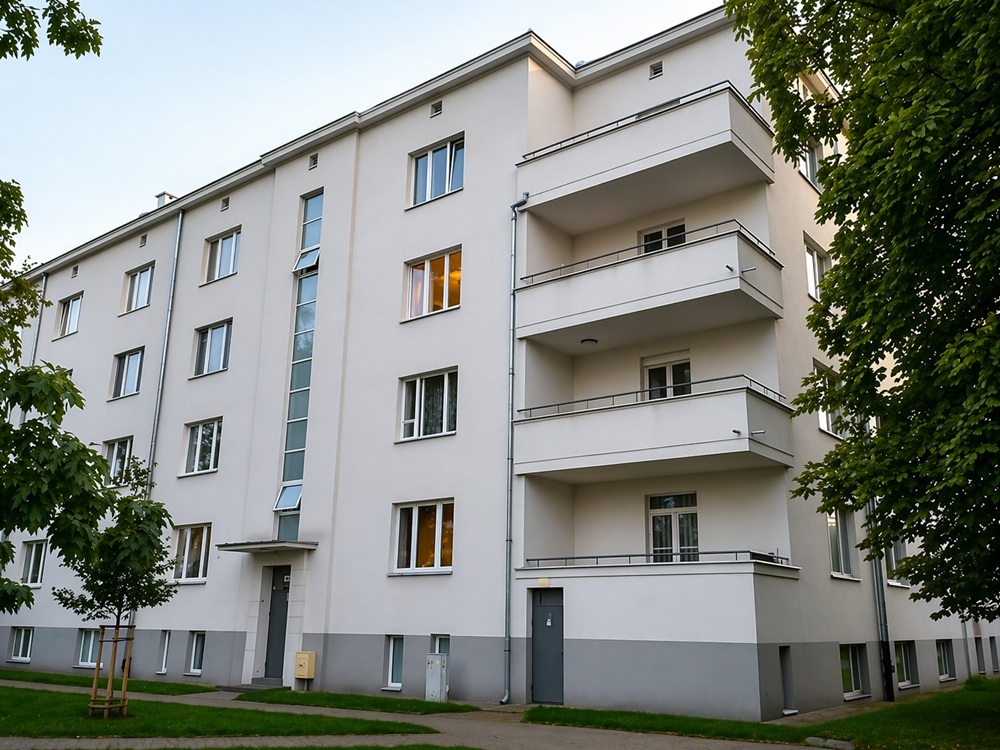
Żoliborz Warsaw — tree-lined streets and established residential character

Walking through Żoliborz for the first time, the district reads differently from almost anywhere else in Warsaw. The streets are quieter — not dead, but calm in a way that feels deliberate rather than peripheral. The building fabric is predominantly pre-war: three, four and five-storey residential buildings with ornate facades, generous ceiling heights, wide stairwells and a street-level rhythm that takes decades to accumulate. Parks and green corridors are woven through the district at a density that only Żoliborz and parts of Mokotów can claim among Warsaw's inner-ring districts.

Plac Wilsona — the district's civic and commercial heart — gives Żoliborz a proper neighbourhood centre that many Warsaw districts lack. The square and its immediate streets contain the metro station, local restaurants, cafés, independent shops and the weekend market that give the area an identifiable community character rather than the anonymised retail infrastructure of newer developments.

The international community in Żoliborz is established rather than transient. The district has housed diplomatic families, academic professionals and long-term expat residents for decades, which shows in the quality of services and the general habitability of the neighbourhood for foreign residents over extended periods. According to Investropa's local-preference research, Żoliborz is genuinely favoured by Polish locals for daily livability, even though it is sometimes overlooked by foreign buyers who prioritise newer, more visibly "modern" stock.

The physical constraint of the district — its small size, its preserved building stock, the limited new development — also means there is very little dead zone in Żoliborz. Unlike Wola or Praga, where the gap between excellent and poor streets can be significant, Żoliborz is remarkably uniform in quality across its extent.

The character advantage — and its limits

Żoliborz's neighbourhood quality is a genuine structural driver of tenant permanence and resale demand from a specific, persistent local buyer type. But it is important not to overstate what that translates to financially: it supports lower vacancy and steadier occupancy, not a materially higher net yield than the district's price-to-rent ratio otherwise implies. Investors who understand this — who buy Żoliborz for capital preservation and operational simplicity rather than income maximisation — tend to be the ones who come away satisfied with the purchase.

Buyer fit

Who Żoliborz tends to suit best

Żoliborz works for a specific and well-defined buyer profile. It is not for everyone — and understanding that distinction is the starting point for any honest evaluation.

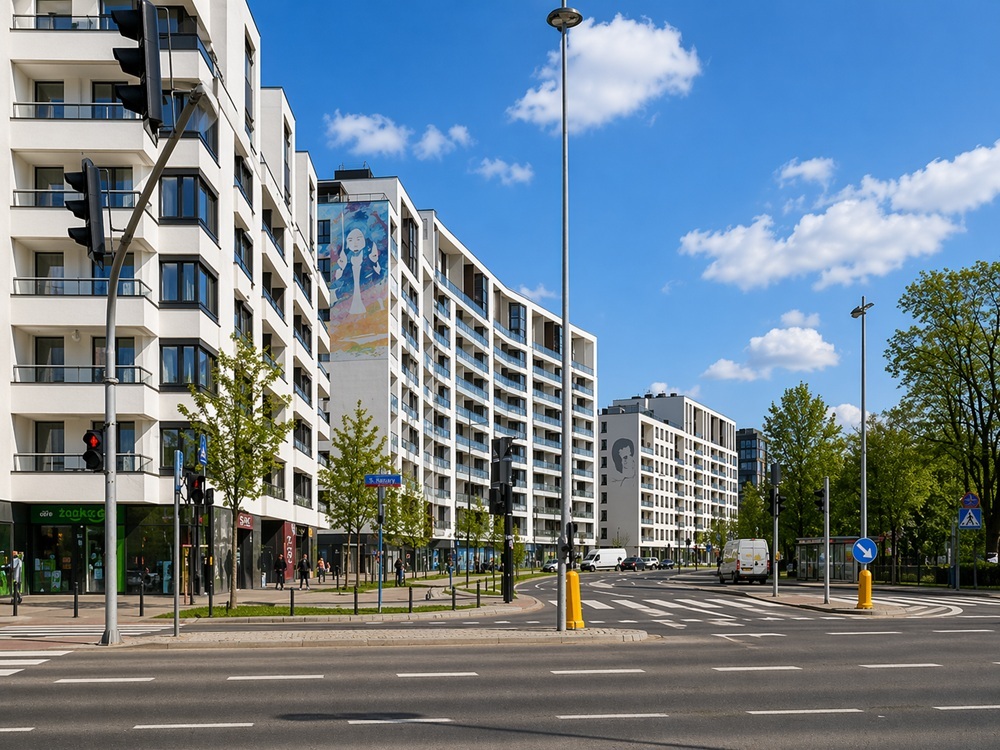
Żoliborz Warsaw — premium residential street quality and lifestyle character

Żoliborz is a strong fit if:

  • you want an established, supply-constrained residential district with a structural floor under pricing
  • your target tenant is a family, long-term expat professional or established senior corporate resident
  • you value lower vacancy risk and lease renewal rates over maximising headline yield
  • you are buying for owner-use and want a genuinely liveable, community-oriented neighbourhood
  • you want pre-war architectural character that cannot be replicated by new construction
  • your investment horizon is 7+ years and capital preservation matters as much as income

Żoliborz is not the right choice if:

  • you want the highest yield in Warsaw — Mokotów (6.7–8%) and Praga (6.5–7.5%) meaningfully outperform Żoliborz's ~5.0–5.5% gross / ~3.2–3.5% net
  • your target tenant is a young mobile professional prioritising proximity to Wola's business cluster
  • you need a broad product range — Żoliborz offers pre-war heritage stock and very limited new-build
  • your acquisition budget is below 700,000 PLN — competitive entry points start higher than most Warsaw districts
  • you want the fastest transaction market in Warsaw — volume here is lower than Mokotów or Wola
Family and expat tenant profile — the Żoliborz advantage in numbers

Investropa identifies Żoliborz alongside Ursynów (Kabaty) and Wilanów as the three Warsaw districts most popular with families — driven by green space, school infrastructure and community character. For investors, that family tenant profile translates into real operational advantages: longer average lease duration than Wola or Śródmieście, lower tenant-caused damage rates, and shorter re-letting periods after tenant departure. Those advantages reduce risk and friction — they do not, on their own, close the yield gap with higher-income districts.

Location precision

Żoliborz's micro-locations — how to read the district

Żoliborz is more uniform than most Warsaw districts. But meaningful differences still exist — and knowing them improves the purchase.

Żoliborz Warsaw neighbourhood street — micro-location quality and building character
Żoliborz zone Approx. price range Character Investor logic
Plac Wilsona / central Żoliborz
M1 metro · civic core · highest activity
20,000–23,000 PLN/m² The district's most active and well-serviced zone. Direct metro access, strongest café and restaurant density, highest tenant demand from both families and professionals. Fastest re-letting in the district and the top end of the district's rent range. Still a below-6% gross yield asset class — bought for liquidity and location, not income.
Mickiewicza / Krasińskiego corridor
Cultural institutions · park adjacency
19,500–22,500 PLN/m² More residential in character, slightly quieter than Plac Wilsona. Proximity to Wilson Park, cultural institutions and Cytadela. Preferred by family buyers and established expat households. Strongest lease duration and lowest vacancy in the district. Best suited to capital preservation buyers rather than yield-focused investors.
Southern Żoliborz
Towards Bielańska / Forteczna · mixed
18,500–21,000 PLN/m² Somewhat more varied in building quality and street character. Some genuinely excellent buildings; others more practical than premium. More accessible entry price within the district. Entry point for investors who want Żoliborz exposure at a slight discount. Requires building-level selection — the quality range is wider here than in the central zone.
Marymont / northern edge
M1 Marymont station · transitional
18,000–20,500 PLN/m² More transitional in character. Benefits from M1 metro access at Marymont station but has a more mixed building stock than central Żoliborz. The most affordable entry within the district. Lower entry, M1 connectivity maintained. Works for investors comfortable with more careful building selection.
Why Żoliborz micro-location matters less than in other districts

Unlike Praga (where the gap between excellent and poor streets can represent 15%+ in achievable rent) or Wola (where east/west location is a category distinction), Żoliborz is remarkably consistent across its extent. Even the least premium zone in the district — Marymont — offers better operational consistency than most of Warsaw's investment-grade stock. That said, none of Żoliborz's zones deliver yields competitive with Mokotów or Praga; micro-location here changes tenant quality and re-letting speed more than it changes the district's fundamental income profile.

Cost structure

Full cost of buying in Żoliborz — what foreign buyers need to budget

Żoliborz is predominantly a secondary market district. The 2% PCC tax is unavoidable — budget for it from day one.

Because Żoliborz's appeal lies overwhelmingly in its pre-war and inter-war building stock rather than new-build product, the vast majority of purchases here are secondary market transactions — which means the 2% PCC civil law transaction tax applies (see Ministry of Finance PCC guidance). On an 880,000 PLN purchase, that is 17,600 PLN in tax before any other costs are counted. Total additional costs on a standard Żoliborz secondary market purchase typically run 4–5% of the purchase price. Our full cost guide covers every element across both market segments.

Secondary market purchase — 880,000 PLN
PCC tax (2%) 17,600 PLN
Notary fee (scaled) ~6,500–8,000 PLN
Court registration fee 200 PLN
Advisory / buyer support 13,000–26,000 PLN
Legal review (recommended) 3,000–6,000 PLN
Total additional costs ~40,000–58,000 PLN
Pre-war renovation (if required) — indicative
Standard quality fit-out 2,500–4,000 PLN/m²
Period-appropriate renovation 4,000–7,000 PLN/m²
Example: 44 m² standard ~110,000–176,000 PLN
Parquet restoration (if original) included above
Building-specific inspection 1,500–3,500 PLN
Typical total renovation ~120,000–190,000 PLN
Building inspection

Pre-war stock — technical check is non-optional

Żoliborz's pre-war buildings vary significantly in actual structural condition, roof status and planned maintenance reserves. Commission a technical inspection before any commitment.

Running costs

Czynsz (maintenance fee) varies widely

Monthly building maintenance fees in Warsaw average 600–900 PLN, but in Żoliborz's older housing associations (TBS and spółdzielnia buildings), fees can range from 400 to 1,400 PLN/month. Always verify before purchase.

Foreign buyer rules

No permit needed for apartments

EU, EEA and non-EU nationals (UK, US, UAE) can purchase apartments without a permit. See our legal guide and legal coordination service for the complete process.

Due diligence

What buyers should watch carefully in Żoliborz

Żoliborz is one of the more internally consistent Warsaw investment districts — but specific risks, including the yield reality, need direct attention.

Do not buy expecting Mokotów- or Praga-level yield

This is the single most important risk to manage: Żoliborz's net yield of approximately 3.2–3.5% is meaningfully below Mokotów or Praga. Buyers sold on a "top-3 rents" narrative without the corresponding price context can end up disappointed by actual cash return.

Check actual building condition — not just facade appeal

Żoliborz's pre-war buildings are visually compelling. That visual appeal can distract buyers from the technical reality: roof condition, plumbing age, electrical system and maintenance reserve fund status can vary enormously between similar-looking buildings.

Understand the housing association structure

Many Żoliborz buildings operate under housing cooperative (spółdzielnia) or TBS structures that carry specific legal implications for ownership, renovation rights and resale. Review the legal form of ownership carefully before committing.

Budget renovation before computing any yield figure

Many secondary market Żoliborz apartments require renovation before they are tenantable at premium rent levels. Period-appropriate renovation costs more than standard shell fit-out. Include the full renovation budget in total capital before calculating yield.

Accept that transaction volume is lower than Mokotów or Wola

Żoliborz is a smaller market. Properties can take longer to sell — not because demand is weaker, but because supply is limited and the matching process takes longer. Build a realistic exit timeline into any investment model.

Verify listing prices against transaction comparables

Warsaw listing prices commonly run several percent above final closing prices citywide. In Żoliborz's low-volume market, sellers sometimes test above this range for premium pre-war product. Working with a local advisory partner with access to actual transaction data is particularly important here.

Investor advisory

How Warsaw Investor Care helps foreign buyers buy right in Żoliborz

A lower-volume, premium market with pre-war building complexity and a yield story that needs to be told honestly. Advisory support here has a different character than in Wola or Praga.

Żoliborz's advisory value starts with setting expectations correctly. We do not present Żoliborz as a high-yield opportunity, because it is not one — and clients who buy here on a mistaken yield expectation are the ones who end up unhappy with an otherwise sound purchase. Where we add real value is in the building-level complexity: the range of legal ownership structures (cooperative, TBS, full ownership), the variability in actual building condition behind similar facades, and the renovation cost reality for pre-war stock all require local expertise that cannot be reliably acquired remotely from listing data alone.

We help clients identify the right product type within Żoliborz — whether that is a fully renovated pre-war apartment for immediate letting, a renovation project where value can be added, or the rare new-build infill that provides modern specification without compromising on location. We build a realistic total capital and net-yield model — including the compressed yield reality — before any commitment.

Beyond selection and costing, we manage the full acquisition process: legal review including housing cooperative structure analysis, notary process management, technical inspection coordination and documentation review. For purchases that require renovation, we coordinate finishing works through contractors who understand pre-war Żoliborz building requirements.

After purchase, we manage rental activation and ongoing lettings for investors who want a Warsaw-based team handling day-to-day operations. For Żoliborz specifically — where the tenant demographic tends toward established families and long-term professionals — thorough tenant selection at the start of a tenancy has a disproportionate positive impact on the entire investment experience.

01

Honest expectation-setting on yield

Before anything else, we walk through the realistic net yield picture for Żoliborz — approximately 3.2–3.5% — so clients decide with accurate numbers, not a misleadingly optimistic headline.

02

Building legal structure review before shortlisting

In Żoliborz, the legal form of ownership (full title, cooperative share, TBS) affects renovation rights, resale freedoms and financing options. We clarify this before shortlisting any building.

03

Technical inspection and renovation cost modelling

For every shortlisted property, we coordinate a technical inspection and build a realistic renovation cost estimate — including pre-war specific requirements — before any offer is made.

04

Transaction management and legal coordination

We manage the preliminary agreement through to notarial deed, coordinate document review and handle all communication with the seller, housing cooperative administration and legal representatives.

05

Pre-war renovation coordination

We coordinate finishing works through contractors experienced in Żoliborz's pre-war building context — parquet restoration, period facade details, appropriate material selection.

06

Tenant selection and ongoing management

We manage tenant sourcing, reference checking and lease structuring, then handle ongoing management from Warsaw after tenant placement.

FAQ

Frequently asked questions about buying in Żoliborz

The most important questions foreign buyers ask about Żoliborz — answered directly, including on yield.

What is the average price per square metre in Żoliborz in 2026?

Żoliborz averages approximately 19,000–22,000 PLN/m², placing it as Warsaw's second most expensive district after Śródmieście, at approximately 20,500 PLN/m² per Investropa's district-level analysis. Realistic closing ranges for the best streets run up to 26,000+ PLN/m² per Investropa's Housing Prices in Warsaw report.

What rental yield can I expect from a Żoliborz apartment?

Honestly, a modest one relative to other Warsaw districts. Investropa's Warsaw yield modelling places net yield in Żoliborz at approximately 3.2% for a 1-bedroom apartment and 3.1% for a 2-bedroom apartment, describing the district as having "strong lifestyle appeal but compressed yields." Gross yield runs approximately 5.0–5.5%, below the NBP Warsaw capitalization benchmark of 5.56% and well below Mokotów (6.7–8%) or Praga (6.5–7.5%). Żoliborz's rents are genuinely among Warsaw's highest per m² — but its purchase price is high enough relative to that rent that the ratio compresses.

Why is Żoliborz supply-constrained?

Żoliborz is Warsaw's smallest administrative district by area — roughly 8.3–8.5 km² per the official district portal — and one of its most architecturally preserved. The predominantly pre-war and inter-war building fabric, combined with heritage conservation designations and limited available land, means new residential development is structurally minimal. That scarcity is a durable floor beneath district pricing, even though it does not translate into a strong rental yield.

How does Żoliborz compare to Mokotów for foreign buyers?

They serve overlapping but distinct profiles. Żoliborz is Warsaw's most supply-constrained established district; Mokotów has more metro stations, a wider product range, more transaction volume and meaningfully higher gross yields (6.7–8% vs Żoliborz's ~5.0–5.5%). Żoliborz offers stronger supply-constraint protection and a more intimate community character. For investors targeting family tenants specifically, Żoliborz's demographic profile often produces lower vacancy — but for anyone prioritising income, Mokotów is the stronger choice. See our Mokotów guide for the direct comparison.

Is the pre-war stock in Żoliborz safe to buy?

The pre-war building stock in Żoliborz is generally structurally sound — these buildings have stood for 80–90 years and their fundamental condition is usually well-established. However, condition varies significantly by building. A thorough technical inspection before purchase is non-optional for any Żoliborz pre-war acquisition. We coordinate this as part of our acquisition support process.

Can foreigners buy property in Żoliborz?

Yes. EU and EEA citizens may purchase apartments freely without a government permit. Non-EU nationals — including UK, US, UAE and other non-EEA buyers — can also purchase apartments without a permit. The permit requirement applies to houses with land and agricultural property. All purchases are completed through a Polish notarial deed. Full legal detail in our foreign buyer legal guide.

What is the typical tenant profile in Żoliborz and why does it matter for investors?

Investropa identifies Żoliborz alongside Ursynów (Kabaty) and Wilanów as the three Warsaw districts most popular with families. This demographic produces materially different operational outcomes than districts dominated by young mobile professionals: longer average lease duration, higher renewal rates, lower tenant-caused maintenance demands and shorter void periods. These advantages reduce operational risk — they do not close the yield gap with higher-income districts, and buyers should evaluate Żoliborz with that distinction clearly in mind.

Key takeaways

Żoliborz in three decisions

The right pocket of Żoliborz depends on what you're optimising for — and none of them are "maximum yield."

Liquidity & location

If you're buying for fastest re-letting and resale liquidity, choose Plac Wilsona / central Żoliborz.

Highest activity and rent levels in the district — still not a high-yield asset, but the strongest combination of demand and convenience.

Capital preservation

If you're buying for stability and long-term family tenants, choose Mickiewicza / Krasińskiego.

Lowest vacancy and longest lease duration in the district. Suited to buyers who value predictability over income.

Value entry

If you want Żoliborz exposure at the most accessible price, choose Marymont or southern Żoliborz.

Lower entry price and maintained M1 access, at the cost of a wider building-quality range that needs careful selection.

Next step

Considering Żoliborz for your Warsaw purchase?

The right Żoliborz purchase requires building-level precision, legal structure clarity, and an honest income model. We provide all three.

Żoliborz Warsaw premium residential character — investment advisory by Warsaw Investor Care

Let's assess whether Żoliborz is the right fit for your brief.

We help you identify the right building and product type, review legal ownership structure, model realistic yield and renovation costs before commitment, coordinate the full foreign-buyer transaction and activate the apartment for rental. No charge for an initial consultation.

Building-level selection & legal structure review
Technical inspection coordination
Renovation budgeting & coordination
Tenant selection & management

Continue reading — guides & district profiles

District guide

Mokotów Property Guide

Warsaw's most established expat district — compare yields, micro-locations and buyer profile with Żoliborz.

District guide

Śródmieście Property Guide

The only district that outranks Żoliborz in price — prestige, capital preservation and the luxury market.

District guide

Wola Property Guide

Modern business-district contrast to Żoliborz — higher yields, more supply, different tenant profile.

Legal guide

Can Foreigners Buy in Poland?

Permits, process, cooperative ownership structures and notarial deed — full legal walkthrough for foreign buyers.

Cost guide

Total Cost of Buying in Warsaw

PCC tax, notary fees, renovation budgets and maintenance costs — every element itemised for accurate planning.

Service

Renovation & Finishing

Pre-war stock renovation in Żoliborz — from scope and period-appropriate materials to handover-ready finish.