Warsaw Investor Care logo
Living in Warsaw · Healthcare · Updated 2026

Healthcare in Warsaw.

Public NFZ coverage, private networks like Luxmed and Medicover, English-speaking doctors, pharmacies and emergency care — a practical guide to staying covered and getting seen quickly as a foreigner living in Warsaw.

Public system: NFZ, funded by a 9% contribution Private subscription: ~150–400 PLN/month Emergency: 112 or 999, 24/7

Healthcare is one of the first practical questions anyone relocating to Warsaw has to answer, and Poland's system can feel unfamiliar at first: a public insurance fund that covers residents at no direct cost per visit, sitting alongside a large, well-developed private sector that most Varsovians — locals and foreigners alike — also use for everyday convenience. Understanding how the two fit together, and which one to lean on for what, makes the difference between a smooth experience and a confusing one.

This guide walks through how public NFZ insurance works and who qualifies, how private healthcare networks like Luxmed, Medicover and Enel-Med operate, what things realistically cost in 2026, how to find an English-speaking doctor, and what to do in a genuine emergency.

Public system
NFZ
9% mandatory contribution, deducted from salary
Voluntary NFZ (2026)
~550–830 PLN/mo
For those not covered through work or study
Private medical subscription
150–400 PLN/mo
Luxmed, Medicover, Enel-Med — no referral needed
Emergency numbers
112 / 999
General emergency / dedicated ambulance line
Overview

How healthcare actually works in Poland

Two systems, used together by most residents — not a choice you have to make once and for all.

Poland's public healthcare is run by the Narodowy Fundusz Zdrowia (NFZ) — the National Health Fund — which provides universal coverage to insured residents, funded through a mandatory 9% contribution deducted from salaries or self-employment income. If you are legally working in Poland, in most cases you are automatically enrolled and covered from your first day.

Running alongside NFZ is a large, mature private healthcare sector — led by networks like Luxmed, Medicover and Enel-Med — that most people in Warsaw, Polish and foreign alike, also use. Private care is not a replacement for NFZ eligibility in a legal sense, but in practice it is how the majority of routine, non-emergency care happens in the capital, because it is faster and easier to navigate for anyone not fluent in Polish.

01 · Public (NFZ)

Free at the point of use, but slower

No co-pay for most treatment once you're covered, but specialist waiting times can run from weeks to several months, and a GP referral is required for most specialists.

02 · Private networks

Fast, English-friendly, paid monthly

Medical subscriptions with Luxmed, Medicover or Enel-Med give same-day or next-day access to GPs and most specialists, with no referral required, for a fixed monthly fee.

03 · Most residents use both

NFZ as a safety net, private for daily convenience

A common and sensible pattern for foreign residents is maintaining NFZ eligibility for serious or costly treatment, while using a private subscription for everyday visits and speed.

Public insurance

NFZ — who qualifies and how to register

Eligibility is broader than most newcomers expect, and voluntary registration is available to almost everyone else.

You generally qualify for free NFZ coverage if you fall into one of these categories: employed in Poland on an umowa o pracę (employment contract), where your employer registers you with ZUS and pays contributions automatically; self-employed and paying your own ZUS contributions; enrolled as a full-time student at a Polish university; or a registered dependant — spouse or child — of someone already covered. EU/EEA citizens can also use a European Health Insurance Card (EHIC) for temporary, medically necessary care, though this is not a substitute for full coverage if you're relocating long-term.

If none of these apply — for example, if you are living in Warsaw on passive or foreign income — you can still join NFZ voluntarily, by registering at a local NFZ branch and paying a monthly contribution, running approximately 550–830 PLN per month as of 2026 depending on your declared income base. Your NFZ eligibility is verified electronically through the e-WUS system, linked to your PESEL number, so getting a PESEL early is worth prioritising even if you don't strictly need it for anything else yet.

Residence permit applications require proof of insurance

If you're applying for a Temporary Residence Permit (karta pobytu) as a non-EU citizen, you'll need to show valid health insurance covering the full duration of your stay — either NFZ (voluntary registration) or a qualifying private policy. Confirm the specific requirement with your local urząd wojewódzki office before applying, since accepted policy types can vary.

Seeing a GP and getting a referral

Under NFZ, you first register with a lekarz rodzinny (family doctor) at a local przychodnia (public clinic). For most specialists you'll need a referral from this GP — the main exceptions, which you can see without one, are dermatology, ophthalmology, gynaecology, oncology, psychiatry, dentistry and venereology.

Booking and waiting times

NFZ appointments can be booked by phone, in person, or increasingly online through the government IKP (Internetowe Konto Pacjenta) patient portal. Waiting times for specialists vary widely by field — commonly anywhere from one week to several months for non-urgent cases.

Private sector

Private healthcare — Luxmed, Medicover, Enel-Med

The default choice for most foreign residents in Warsaw, valued for speed and predictability rather than luxury.

Doctor consulting with a patient in a private medical office in Warsaw

Private healthcare in Poland is typically bought as a medical subscription (abonament medyczny) — a fixed monthly fee giving access to GPs, most specialists and standard diagnostics without a referral, usually with same-day or next-day booking. Warsaw has the strongest network coverage of any Polish city across the three main providers:

  • Luxmed — the widest geographic footprint nationally, strong presence across Warsaw
  • Medicover — strong in major metro areas, operates its own hospital in Warsaw
  • Enel-Med — concentrated in Warsaw, particularly strong for dental and specialist care

A basic individual subscription typically runs 150–400 PLN per month, with family packages offering meaningful per-person savings. Broader private health insurance (as distinct from a subscription) — covering hospitalisation, surgery and more serious treatment — is usually a separate product, adding roughly another 100–200 PLN per month. Some employers in Warsaw include a private medical subscription as a standard benefit, which is worth checking before buying your own.

Subscription vs. insurance — know the difference

A medical subscription gets you fast access to routine and specialist care for a flat fee. It is not the same as health insurance, which is what covers the financial cost of hospitalisation, surgery or a serious medical event. Many residents in Warsaw carry both — a subscription for convenience, insurance for the financial worst case.

Finding care

Finding an English-speaking doctor

Warsaw has the best availability in Poland — but it still pays to search deliberately rather than assume.

ZnanyLekarz.pl — the go-to booking platform

ZnanyLekarz.pl (Docplanner) is Poland's largest doctor-booking platform and the fastest way to filter for language — the interface is in Polish, but the "język" (language) filter and specialty search are straightforward to use even without fluency. Both NFZ-contracted and private-only doctors are listed, with patient reviews attached.

Private networks and embassy lists

Within private networks, Luxmed, Medicover and Enel-Med all let you request an English-speaking doctor specifically when booking through their apps or call centres, and availability is strongest for GPs and common specialists. Major hospitals with dedicated international patient departments — including Medicover Hospital and Centrum Medyczne Damiana — offer English-language coordination for more complex care. Many embassies in Warsaw also maintain their own lists of English-speaking doctors, updated periodically, worth checking directly on your embassy's website.

Prescriptions

Pharmacies and how prescriptions work

Poland runs a fully electronic prescription system — genuinely convenient once you know how it works.

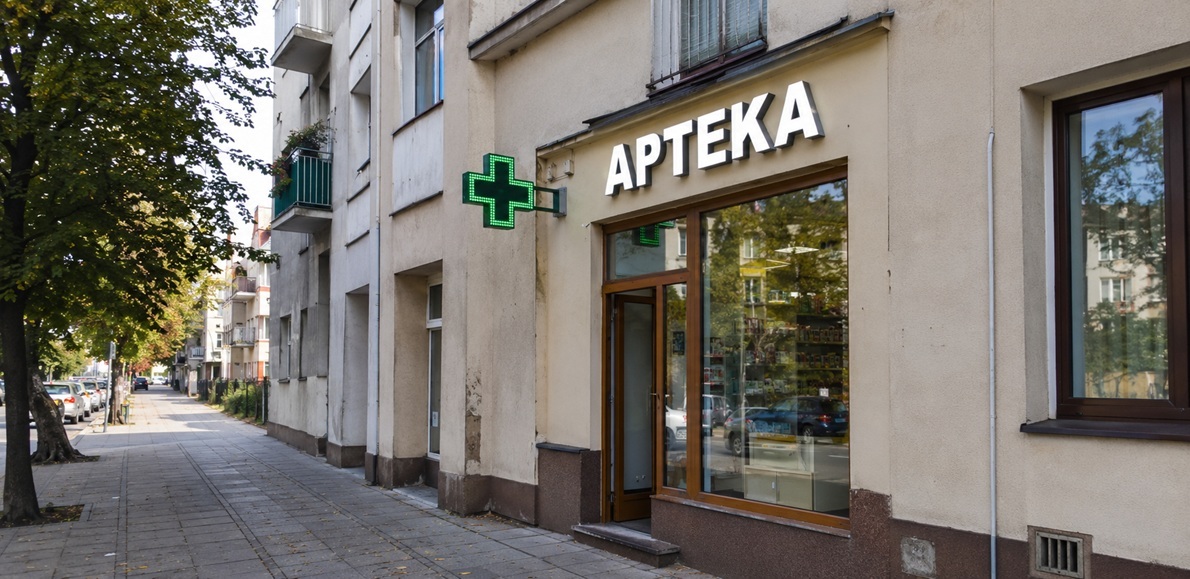
Pharmacy storefront in Poland with a green illuminated cross and APTEKA sign

Pharmacies in Poland — apteka — are easy to spot by their green illuminated cross sign, and most Warsaw neighbourhoods have several within easy walking distance, with at least one 24-hour or extended-hours pharmacy per district for urgent needs. Poland uses e-recepta, a fully electronic prescription system: after a doctor's appointment (public or private), you receive a 4-digit code via SMS or the government IKP app. Present that code plus your PESEL number at any pharmacy in the country to collect your medication — no paper prescription required.

Many common medications prescribed through NFZ are subsidised, meaningfully reducing the price at the till. Medications from private appointments are typically not subsidised in the same way, even if you have private insurance — pharmacy costs are usually a separate, out-of-pocket expense regardless of how you saw the doctor.

Emergencies

Emergency care — numbers and what to expect

Two numbers to know, and one place to go for anything urgent that isn't life-threatening.

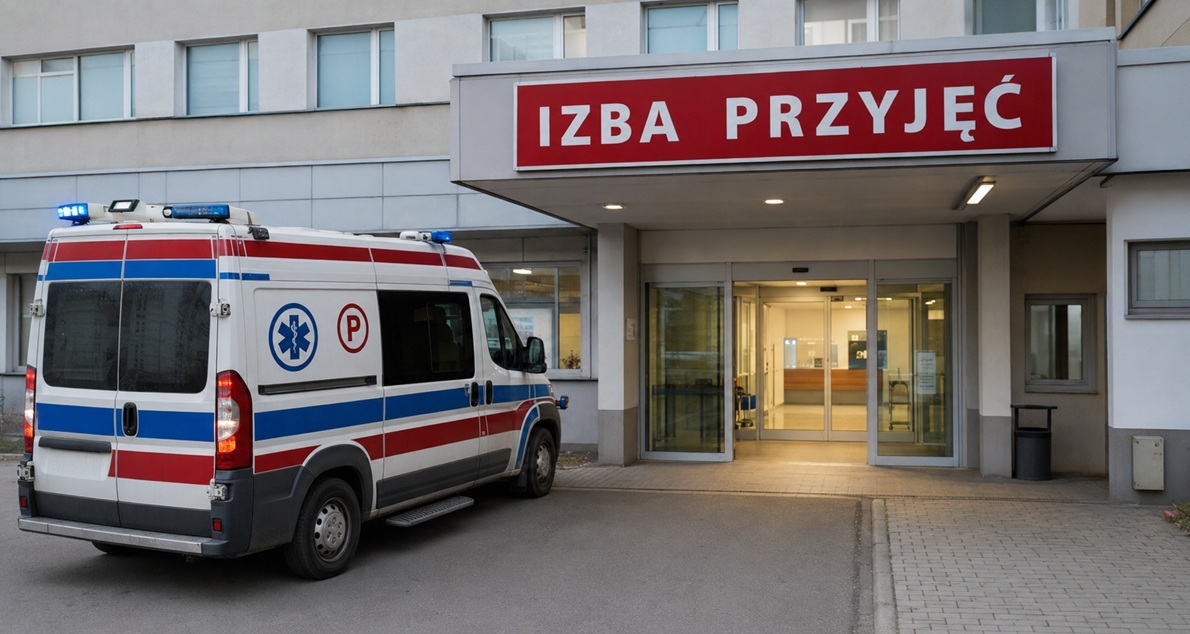
Ambulance parked outside a Polish hospital emergency admission entrance

Call 112 or 999

  • 112 — general European emergency number, works from any phone, any operator
  • 999 — Poland's dedicated ambulance line
  • Both operate 24/7 across Warsaw and are free to call
  • Operators can generally handle basic English, though a Polish-speaking contact can help if available

SOR — hospital emergency departments

  • SOR (Szpitalny Oddział Ratunkowy) accepts walk-in patients without an appointment
  • Best for genuinely urgent but non-life-threatening situations
  • Treatment is triaged by severity, not arrival order, so waits vary significantly
  • Bring ID and, if possible, your PESEL or insurance details
Emergency treatment is provided regardless of insurance status

Life-threatening emergency care in Poland is provided regardless of your insurance status or ability to pay at the point of treatment. That said, being properly insured — through NFZ or a qualifying private policy — remains important for follow-up care, ongoing treatment and avoiding a large bill after the fact.

Budgeting

What healthcare in Warsaw actually costs, 2026

A realistic monthly and per-visit picture, so you can budget before you arrive rather than after.

Item Typical cost Notes
NFZ (employed) 9% of salary Deducted automatically, no separate action needed
NFZ (voluntary) ~550–830 PLN/month 2026 rate, varies by declared income base
Private medical subscription 150–400 PLN/month Individual; family packages offer per-person savings
Private health insurance (hospitalisation) 100–200 PLN/month Usually bought alongside a subscription, not instead of it
Private dental checkup 100–200 PLN Out-of-pocket, per visit
Private dental filling 150–400 PLN Depending on material and complexity
Root canal (private) 400–1,200 PLN Per tooth
A sensible baseline for most foreign residents

For a single working adult already covered through employment, adding a private medical subscription for convenience is the most common upgrade — typically 150–250 PLN per month for meaningfully faster access. For non-working residents or those on passive income, budgeting for voluntary NFZ plus a private subscription gives the most complete and predictable coverage.

FAQ

Frequently asked questions about healthcare in Warsaw

The questions foreign residents ask most often, answered directly.

Do foreigners get free healthcare in Warsaw?

Foreigners qualify for free NFZ coverage if they're employed on a Polish contract, self-employed and paying ZUS contributions, an enrolled student at a Polish university, or a dependant of someone in one of these categories. EU/EEA citizens can also use an EHIC card for temporary, medically necessary care. Everyone else can join NFZ voluntarily for a monthly fee, or rely on private insurance.

How much does private health insurance cost in Warsaw?

Private medical subscriptions such as Luxmed or Medicover typically cost 150–400 PLN per month for an individual, covering GP visits, most specialists and diagnostics without a referral. Broader private health insurance covering hospitalisation and surgery typically adds another 100–200 PLN per month on top.

Can I find English-speaking doctors in Warsaw?

Yes. Warsaw has the best availability of English-speaking doctors of any Polish city, particularly within private networks like Luxmed, Medicover and Enel-Med. The ZnanyLekarz.pl booking platform lets you filter specifically by language spoken.

What number do I call for a medical emergency?

Call 112, the general European emergency number, or 999, Poland's dedicated ambulance number. Both operate in Warsaw around the clock. For urgent but non-life-threatening care, the nearest SOR (hospital emergency department) accepts walk-in patients without an appointment.

Do I need health insurance for a residence permit application?

Yes. Non-EU citizens applying for a Temporary Residence Permit (karta pobytu) must show valid health insurance covering the full planned duration of their stay — either voluntary NFZ registration or a qualifying private policy. Confirm accepted policy types with your local urząd wojewódzki office before applying.

Is NFZ or private healthcare better for a new arrival in Warsaw?

Most foreign residents use both rather than choosing one exclusively — NFZ as a safety net for serious or costly treatment, and a private subscription for fast, everyday access without needing to navigate the public system in Polish. This combination is generally the most practical starting point.

Next step

Settling into life in Warsaw?

Healthcare is one piece of relocating well. We help foreign buyers and residents get the full picture — from property to the practical, everyday questions of living here.

Family enjoying a calm everyday moment in a Warsaw apartment with city views

Have more questions about living in Warsaw?

Whether you're buying, relocating, or both, we can point you toward the right resources — or answer specific questions directly. No charge for an initial consultation.

Relocation guidance
Property sourcing
Legal & tax coordination
District & lifestyle fit
Data sources and update notes

Data point updated: July 2026.

Public healthcare rules and coverage information are based on the official Narodowy Fundusz Zdrowia (NFZ) website. Private healthcare costs and network coverage are referenced from Luxmed and Medicover published pricing pages, cross-referenced with our internal client experience. All figures are indicative and subject to change — always verify current requirements with NFZ, your chosen insurance provider, or a qualified advisor.

Continue reading — Living in Warsaw

Living guide

Is Warsaw Safe?

Safety, everyday comfort and city confidence for new arrivals.

Living guide

Cost of Living in Warsaw

Monthly costs and a practical lifestyle budget breakdown.

Living guide

Best Districts to Live in Warsaw

Residential areas for expats, families and professionals.

Living guide

Moving to Poland Checklist

Practical steps before and after relocation.

Hub

Living in Warsaw

The main lifestyle and relocation hub for foreign buyers.

FAQ

Frequently Asked Questions

Quick answers across buying, taxes, financing and more.

© 2026 Warsaw Investor Care. All rights reserved.

This page is for general informational purposes only and does not constitute medical, legal or insurance advice. Healthcare rules, insurance costs and provider details referenced here are based on official guidance from the National Health Fund (NFZ) on voluntary health insurance, current as of 2026 and subject to change. Data point updated: July 2026. Always verify current requirements with NFZ, your chosen private insurance provider, or a qualified advisor, and seek immediate professional medical attention for any health emergency by calling 112 or 999.