Warsaw Investor Care logo
District guide · Warsaw · Updated July 2026

Mokotów property
guide 2026.

Prices from around 14,500 PLN/m² in Sadyba up to 18,000–19,000+ PLN/m² in Stary Mokotów and Siekierki. Gross rental yields of roughly 6–7%. Warsaw's most populous district, four M1 metro stations, and the largest office cluster outside the CBD. A data-driven guide for foreign buyers and investors.

Price range: 14,500 – 19,000+ PLN/m² depending on zone Gross yield: 5.8–6.7% · unit type and location dependent Also read: Wola guide · Legal guide · Full cost guide
Quick answer
Is Mokotów a good district for foreign property investors?

Short answer: Yes, especially for buyers who value stability over speed. Mokotów is Warsaw's most populous and most established residential district, with a broad tenant base — corporate professionals near the Służewiec office cluster, expat families, students near three major universities — and consistently strong resale liquidity. It is not the cheapest entry point, and the district spans a wide internal price range, so micro-location selection matters more here than almost anywhere else in Warsaw.

Quick facts — Mokotów, Warsaw
Average price 16,694 PLN/m²
Rental yield 5.8–6.7% gross
Metro stations 4 (M1 line)
Best for Stability + broad tenant base
Worst for Cheapest entry seekers
Population ~225,000

Mokotów is Warsaw's most populous district and one of the most frequently shortlisted by foreign buyers who have already spent real time looking at the market. Unlike districts that make their first impression through speed or visible newness — Wola's office towers, Praga's regeneration story — Mokotów tends to appeal through something more durable: neighbourhood quality, everyday liveability, and a residential logic that has held up across multiple market cycles.

District-wide, secondary-market pricing averaged 16,694 PLN/m² in mid-2026, up 4.87% since the start of the year, with a year-end forecast near 17,740 PLN/m² — placing Mokotów 5th of Warsaw's 18 districts by average price (SonarHome). That sits meaningfully above the citywide average of 15,718 PLN/m² recorded for July 2026 (SonarHome), but still well below Śródmieście's 20,692 PLN/m² and Wola's 17,572 PLN/m².

What separates Mokotów from a pure price story is the breadth of demand underneath it. The Służewiec office cluster along ulica Domaniewskiej anchors one of Warsaw's largest concentrations of corporate tenants outside the CBD, while three major universities — Politechnika Warszawska, SGH and SGGW — sit inside or on the district's edge, adding student and academic demand to the mix. With 225,149 registered residents, Mokotów remains Warsaw's largest district by population (Raport o stanie miasta 2024).

District average asking price
16,694 PLN/m²
Mid-2026 · 5th of 18 · +4.87% YTD · SonarHome
Warsaw citywide average
15,718 PLN/m²
Jul 2026 · +4.84% YTD · SonarHome
Gross yield (typical unit)
~5.8–6.7%
Strongest for studios near Służewiec · WIC estimate
District population
225,149
Largest in Warsaw · Raport o stanie miasta
Market logic

Why Mokotów remains one of Warsaw's strongest residential districts

Mokotów works because it offers something many buyers value more over time than novelty: a more complete, more established residential environment with proven market depth.

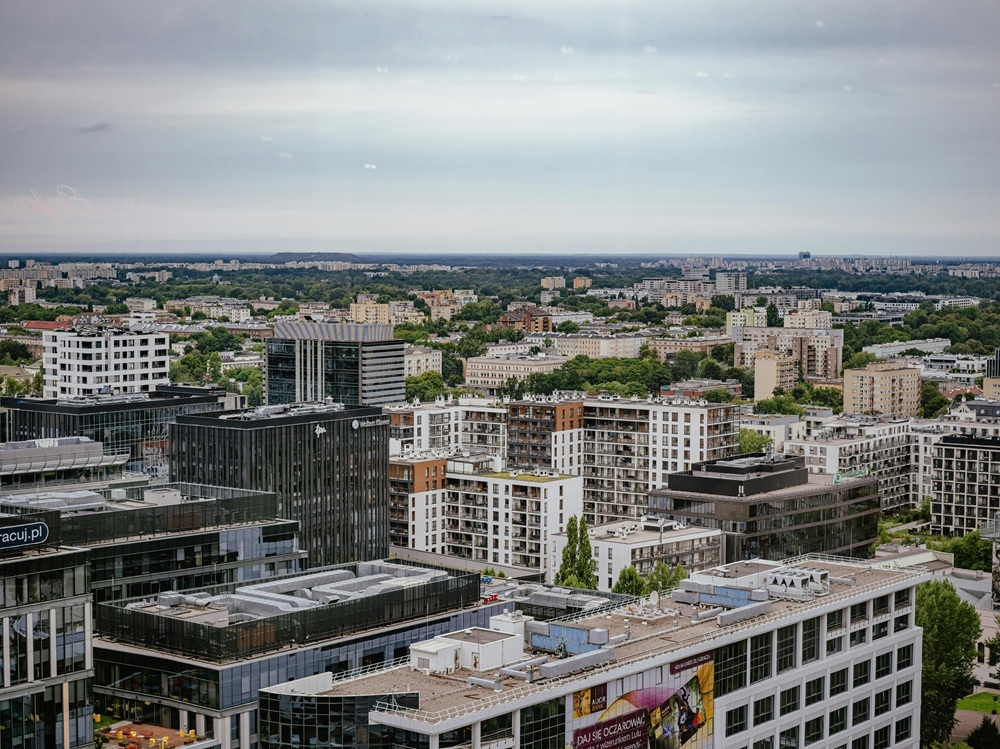
Residential atmosphere in Mokotów, Warsaw — green streets and established neighbourhood structure

Mokotów has ranked among Warsaw's top-tier residential districts for decades, and that reputation rests on structural factors rather than a single trend: direct metro access via the M1 line, a concentration of international schools and three major universities, proximity to the Służewiec office cluster, extensive green space including Pole Mokotowskie and Park Arkadia, and housing stock spanning pre-war villas, 1960s–80s buildings and modern developer product from the last 15 years.

For international investors, the breadth of that appeal matters. Mokotów attracts expat couples, corporate professionals, families with children, and long-term occupiers who value a residential environment that genuinely functions across life stages. That diversity of tenant profile gives Mokotów a more resilient demand base than districts with a narrower identity — the kind of scale-plus-momentum story that districts like Wola offer runs on a different, more office-concentrated engine.

Warsaw's rental market has been softening slightly through 2026 as new PRS supply comes online — finwire's Q2 2026 rental report projects citywide rents easing by roughly 5–8% across 2026 as private rental supply expands. Mokotów's broad tenant base, spanning corporate, academic and family demand, tends to buffer against that kind of single-segment softening better than districts with a more concentrated tenant profile.

For buyers approaching Warsaw from an investor or advisory background, Mokotów offers something less visible but strategically relevant: it is easier to exit. Resale liquidity is strong because the district's appeal spans multiple buyer types — investors, end-users, and expat families who are active buyers in their own right, not only tenants.

01 · Demand base

Warsaw's largest population base

225,149 registered residents make Mokotów the city's most populous district — a structurally different demand engine than districts driven mainly by a single office cluster.

02 · Tenant mix

Corporate, academic and family demand together

The Służewiec office cluster, three major universities and strong family infrastructure combine to diversify tenant risk across the district.

03 · Exit liquidity

Stronger resale pool than most districts

Because Mokotów appeals to investors and end-users alike, resale options are broader — an underrated structural advantage for a buy-to-hold strategy.

Mokotów vs. Wola — two different investment engines

Wola's case rests on scale that arrived recently: a dense office CBD and five in-district M2 stations driving fast price momentum. Mokotów's case rests on scale that has existed for decades: the largest population in Warsaw, established green infrastructure, and a tenant base that doesn't depend on any single employer cluster. Neither is objectively "better" — they suit different investment horizons. See our Wola property guide for the direct comparison.

Pricing data

Current market prices and Mokotów's position in Warsaw

Mokotów sits comfortably in Warsaw's upper-middle price tier — above the city average, below Śródmieście and Wola, with a wide internal spread by sub-area.

SonarHome's mid-2026 district data places Mokotów's secondary-market pricing at around 16,694 PLN/m², up 4.87% since the start of the year, with a year-end 2026 forecast near 17,740 PLN/m² — the 5th most expensive of Warsaw's 18 districts. That compares with a citywide average of 15,718 PLN/m² as of July 2026 (SonarHome), meaning Mokotów trades at roughly a 6% premium to the Warsaw median.

Śródmieście
20,692 PLN/m²
Jul 2026, SonarHome · city centre
Wola
17,572 PLN/m²
Mid-2026, SonarHome · 3rd of 18
Mokotów ★
16,694 PLN/m²
Mid-2026, SonarHome · 5th of 18
Praga-Południe
15,071 PLN/m²
Mid-2026, SonarHome · 9th of 18

Rental demand tracks the price story closely. Znajdź Najem's July 2026 rental data, aggregated from ten listing portals, puts the median asking rent in Mokotów at 3,650 PLN/month (median size 50 m²) with an average per-m² rental rate of 85 zł/m² — clearly above the citywide median of 3,500 zł. A separate Q2 2026 market report from finwire places Mokotów rental rates in the 65–75 zł/m² band, among the highest in the city alongside Śródmieście and Wola.

Product type Average purchase price Indicative monthly rent Gross yield Net yield
Studio apartment (~28 m²) 467,000 PLN 2,600 PLN 6.7% 5.3%
One-bedroom apartment (~45 m²) 751,000 PLN 3,900 PLN 6.2% 4.9%
Two-bedroom apartment (~65 m²) 1,085,000 PLN 5,300 PLN 5.9% 4.5%
What these numbers mean in practice

Mokotów is not a discount district — it trades at a real premium to the citywide average. But the combination of the district's broad tenant base, strong resale liquidity, and consistently above-average rents gives it one of the steadier cases in Warsaw for buyers who want dependable income over the fastest possible appreciation.

Investment returns

Mokotów yields — steady, and supported by genuinely diverse demand

Mokotów's yields sit slightly below Wola's, but the district's broader tenant base makes those yields more resilient to any single-segment downturn.

Gross yield · studio
6.7%
Net yield ~5.3% after costs
Gross yield · 1-bed
6.2%
Net yield ~4.9% after costs
Gross yield · 2-bed
5.9%
Net yield ~4.5% after costs

What supports these yields is not scarcity alone, but a genuinely broad tenant base: corporate professionals working around Służewiec, students at Politechnika Warszawska, SGH and SGGW, and a stable population of long-term residents. Pewny Lokal's 2026 rental market analysis places citywide rental yields for standard 40–60 m² units in Poland's largest cities at around 4.5–5.7% — Mokotów's 5.9–6.7% range sits clearly above that big-city benchmark, even as citywide rents ease slightly through 2026.

Investment example — Mokotów one-bedroom apartment

Illustrative model using district-level mid-2026 price and rent estimates.

Purchase price (~45 m²) 751,000 PLN
PCC + notary + land register + basic advisory ~34,000 PLN
Total capital deployed ~785,000 PLN
Monthly gross rent 3,900 PLN
Annual gross rental income 46,800 PLN
Operating fees / vacancy / upkeep ~7,000 PLN
Indicative net annual income ~39,800 PLN
Indicative net yield on total capital ~5.1%
District character

What living and investing in Mokotów actually feels like

Mokotów splits into a genuinely elegant, established upper half and a calmer, greener lower half along the Wisła escarpment — and both work, but for different buyers.

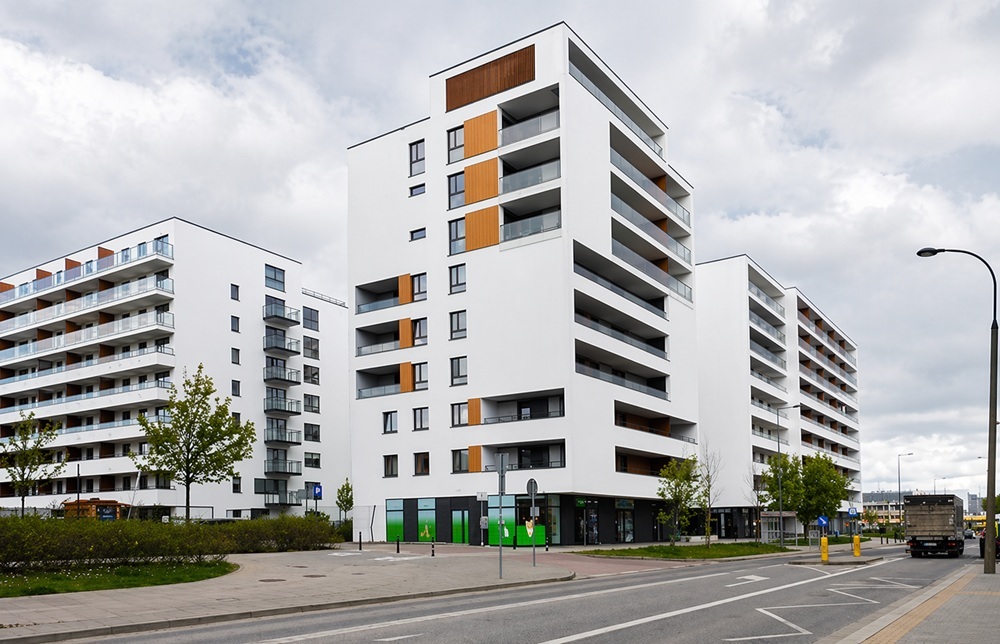
Modern residential development in Mokotów, Warsaw — high-quality new-build apartment stock
Contemporary apartment exterior in Mokotów — premium residential quality

Górny Mokotów (upper Mokotów, on the escarpment) contains the district's most classically prestigious pockets — Stary Mokotów, Wyględów, Wierzbno — where pre-war villas, embassy buildings and mature tree-lined streets sit close to Pole Mokotowskie. Prices here regularly clear 17,000–19,000+ PLN/m². This is the version of Mokotów most foreign buyers picture when the district's name comes up.

Dolny Mokotów (lower Mokotów, in the Wisła valley) — Sielce, Siekierki, Sadyba — reads differently: quieter, greener, closer to the river, with a mix of older housing stock and newer riverside development. Prices here range more widely, from Sadyba's ~14,500 PLN/m² up to Siekierki's ~18,400 PLN/m² in its strongest new-build pockets.

What ties the district together is genuine infrastructure depth. Mokotów contains a significant concentration of international schools, private medical facilities, three major universities, and the Służewiec office district along ulica Domaniewskiej — historically nicknamed "Mordor" for its density of glass office towers, now increasingly mixed with residential conversion.

Buyers who only visit Stary Mokotów and assume the rest of the district looks the same are making the district's most common evaluation mistake — Górny and Dolny Mokotów genuinely need to be judged separately, and the Służewiec office fringe is a third character again.

The practical rule for Mokotów

Which pocket of Mokotów an apartment sits in explains more about its investment case than the district label alone. A property in Stary Mokotów and a property in Sadyba can differ by 20–30% per m², with genuinely different tenant profiles and liquidity.

Buyer fit

Who Mokotów tends to fit best

Mokotów is strongest for buyers who prioritise long-term stability, tenant diversity and resale liquidity over the fastest possible price momentum.

Who Mokotów tends to fit best for Warsaw property investment

Mokotów is often a strong fit if:

  • you want a residential district with proven long-term stability and market depth
  • your target tenant could be a professional couple, expat family, or student near one of three universities
  • you value strong resale liquidity, not only rental yield in the short term
  • you are buying for own use and need complete, functional neighbourhood infrastructure
  • your investment horizon is 7+ years and capital preservation matters as much as income

Mokotów may be less suitable if:

  • you want the fastest possible price momentum a district like Wola currently offers
  • your priority is the cheapest possible entry point in the Warsaw market
  • you want a single, uniform district identity rather than distinct upper/lower pockets
  • you are not prepared to compare micro-locations and building quality carefully
  • you need direct M2 metro access rather than the M1 corridor Mokotów sits on
The Mokotów tenant profile

The Służewiec office cluster anchors a tenant pool of corporate professionals, while Politechnika Warszawska, SGH and SGGW draw a steady flow of students and academics, and the district's schools and parks attract families. That three-way tenant mix is what keeps Mokotów's vacancy low even as citywide rents soften slightly through 2026.

Location filtering

Mokotów's micro-locations — prices, character and investor logic

Mokotów works best when filtered by sub-area rather than treated as one homogeneous district — the gap between Siekierki and Sadyba is one of the widest of any Warsaw district.

Zone Approx. price (mid-2026) How it tends to read Investor logic
Siekierki 18,422 PLN/m²
SonarHome · 2nd of Mokotów
Riverside regeneration zone, strong new-build activity, greenery along the Wisła Good value entry into newer stock with medium-term upside as riverside development continues
Stary Mokotów 17,371 PLN/m²
SonarHome · 4th of Mokotów
Warsaw's most classically prestigious residential pocket; pre-war villas, embassies, mature streets Prestige owner-occupiers and premium buy-to-hold; entry price sits above the district average
Wierzbno / Służew ~14,900–16,250 PLN/m²
SonarHome · M1 corridor
Practical, metro-connected, mix of older and newer stock, close to Służewiec offices Strong combination of price, yield and corporate tenant demand — often the district's investor sweet spot
Sielce / Sadyba 14,504–15,955 PLN/m²
SonarHome · lower Mokotów
Calmer, greener, further from the centre, more affordable per m² Suits buyers prioritising price, calm and family living over metro-adjacent tenant depth
The key Mokotów mistake

Treating Mokotów as one price story is the most common error. A property in Siekierki and a property in Sadyba can differ by roughly 27% per m², with genuinely different tenant profiles and resale speed — building-level and street-level filtering matters more here than in most Warsaw districts.

Cost structure

Buying costs in Mokotów — what to budget beyond the purchase price

Mokotów is a genuine mixed market between resale and new-build, so cost logic differs materially depending on which side of the market a buyer targets.

Resale purchases in Mokotów carry the standard Polish PCC tax of 2%, plus notary, land register and legal review costs. New-build purchases avoid PCC but should be budgeted with VAT already included in the developer's headline price, along with notary and legal review fees for the reservation and developer agreements. Our full cost guide covers every line item across Warsaw.

Resale — 751,000 PLN example
PCC tax (2%) 15,020 PLN
Notary fee + land register ~4,500–6,500 PLN
Legal review ~3,500–6,000 PLN
Total additional ~23,000–27,500 PLN
New-build — 751,000 PLN example
PCC tax 0 PLN
Notary fee (developer agreement) ~4,500–6,500 PLN
Legal review ~3,500–6,000 PLN
Total additional ~8,000–12,500 PLN
Building fees

Czynsz varies sharply

Newer riverside stock in Siekierki can run considerably higher than older Sadyba or Stary Mokotów buildings — always confirm before committing.

Parking

Not always included

Underground parking in newer Służewiec-adjacent developments is frequently sold or rented separately — budget it explicitly.

Foreign buyers

No permit for apartments

EU, EEA and most non-EU nationals can purchase apartments without a permit. See our legal guide.

Due diligence

What buyers must watch carefully in Mokotów

Mokotów is not uniformly polished, and most mistakes here come from paying a district-wide premium for a weaker specific pocket.

Do not treat Mokotów as one uniform premium zone

The district's reputation is strong, but quality varies significantly by street and building. Paying a Mokotów premium for a weaker pocket is one of the most common mistakes foreign buyers make.

Older stock needs real evaluation

Mokotów contains significant volumes of pre-1990 housing alongside modern developer product. Technical standard, insulation, lift presence and building management quality vary dramatically.

Rental market is softening slightly citywide

2026 reports point to a 5–8% citywide rent correction as new PRS supply comes online. Mokotów's diversified tenant base buffers this better than single-segment districts, but it is not immune.

Listing prices run above closing prices

Warsaw listing prices typically run 6–10% above final transaction prices. Understanding true transaction benchmarks, not asking prices, is critical for accurate yield modelling.

Investor advisory

How Warsaw Investor Care helps foreign buyers buy right in Mokotów

The advisory value in Mokotów comes from precise sub-area filtering, honest building-level evaluation, and matching the property to the right tenant logic.

For foreign buyers, Mokotów often looks appealing for the right reasons: stability, greenery, established infrastructure. But because the district carries such a strong reputation, buyers sometimes become less demanding than they should be at the property and micro-location level — exactly where an experienced advisory partner makes the most practical difference. We help clients filter Mokotów by intended use: prestige owner-use in Stary Mokotów, corporate-tenant rental near Służewiec, or value-oriented purchase in Sadyba or Sielce.

We define the investment brief, budget and target tenant profile before searching — including whether the university-adjacent student rental market, the corporate rental market, or the family owner-occupier market is the right fit for a given budget.

Beyond selection, we manage the full transaction: legal and tax coordination, notary process, developer contract review on primary purchases, and true transaction-price benchmarking on secondary purchases. That connects to the wider acquisition process, including buying property in Warsaw as a foreigner and, where needed, new-build apartment guidance.

01

Clarify the tenant or owner-use brief

Mokotów works differently for a Stary Mokotów prestige buy, a Służewiec corporate rental, and a value-oriented Sadyba purchase. We start by fixing the use case.

02

Filter the right pocket of the district

We narrow by sub-area, building age, transport reality and tenant type, rather than relying on the district label alone.

03

Build a real capital model

We connect acquisition cost, any refresh budget and realistic rent so the investor sees the true return, not only the headline price.

04

Coordinate the purchase and next stage

That includes legal review, notarial process, remote buyer support and, where needed, fit-out, furnishing or ongoing rental management.

FAQ

Frequently asked questions about buying in Mokotów

The key questions about Mokotów usually concern pricing, yields, metro access and how the district compares with Wola or Śródmieście.

What is the average price per square metre in Mokotów in 2026?

District-level secondary-market pricing in mid-2026 is around 16,694 PLN/m², according to SonarHome, with a year-end forecast near 17,740 PLN/m². Prices vary widely by sub-area, from around 14,500 PLN/m² in Sadyba to 18,400 PLN/m² in Siekierki and above in Stary Mokotów.

What rental yield can I expect in Mokotów?

Current district estimates place gross yields around 6.7% for studios, 6.2% for one-bedroom units and 5.9% for two-bedroom apartments, with net yields around 5.3%, 4.9% and 4.5% respectively — above the 4.5–5.7% big-city benchmark reported by Pewny Lokal.

Does Mokotów have metro access?

Yes — the M1 line runs directly through the district, with four stations serving Mokotów: Pole Mokotowskie, Wierzbno, Służew and Wilanowska, giving a commute of typically 15–20 minutes to the centre (Mokotów24).

Is Mokotów better than Wola for investment?

Not automatically. Wola typically offers stronger price momentum and denser office-tenant concentration around Rondo Daszyńskiego. Mokotów offers broader, more diversified demand — corporate, academic and family tenants together — and Warsaw's largest resident population. See our Wola guide for the direct comparison.

Why does Mokotów span such a wide price range?

Mokotów splits into Górny Mokotów (upper, escarpment-side, more prestigious) and Dolny Mokotów (lower, riverside, calmer and more affordable), plus the Służewiec office fringe. Treating the district as a single price point is the most common evaluation mistake foreign buyers make here.

Can foreigners buy property in Mokotów?

Yes. EU and EEA citizens can buy freely, and non-EU nationals can usually buy apartments in multi-unit buildings without a permit. Houses with land require separate analysis. See our legal guide.

Do I need advisory support to buy in Mokotów?

It helps more than in most districts. The gap between Siekierki and Sadyba, or between Stary Mokotów and the Służewiec fringe, is one of the widest of any Warsaw district, and remote evaluation from listing photos alone can miss it entirely. Contact us to discuss your brief.

Key takeaways

Mokotów in three decisions

The right pocket of Mokotów depends entirely on what you're optimising for — these rarely point to the same address.

Rental income

If you're buying for rental income, choose Wierzbno or Służew.

Best combination of price, M1 metro access and proximity to the Służewiec office cluster's corporate tenant pool.

Prestige & appreciation

If you're buying for prestige and long-term hold, choose Stary Mokotów.

Warsaw's most classically established residential pocket, with the strongest resale liquidity in the district.

Family living / value

If you're buying for family living or value entry, choose Sadyba or Sielce.

Lower density, greener streets, most affordable per m² within Mokotów, without leaving the district entirely.

Next step

Considering Mokotów for your Warsaw purchase?

The strongest Mokotów purchases usually come from matching the right pocket of the district to the right tenant logic, realistic yield modelling and full transaction support.

Considering Mokotów for your Warsaw purchase

Let's assess whether Mokotów is the right fit for your brief.

We compare Górny and Dolny Mokotów micro-locations, build realistic yield models against true transaction prices, coordinate the full foreign-buyer process and activate for rental. No charge for an initial consultation.

Micro-location filtering
True transaction-price benchmarking
Legal coordination for foreign buyers
Rental and post-purchase execution

Continue reading — guides & district profiles

District guide

Wola Property Guide

Warsaw's clearest scale-plus-momentum district — dense office CBD and five M2 stations.

Legal guide

Can Foreigners Buy in Poland?

Permits, process, notarial deed and non-EU buyer rules for apartments.

Cost guide

Total Cost of Buying

Every cost itemised: PCC, notary, finishing and running costs with real figures.

Service

New Build Apartments in Warsaw

Primary market buying support: developer relationships and off-market access.

Service

Legal Coordination for Foreign Buyers

Notary process, tax structure and documentation review for non-resident buyers.

Service

Renovation & Finishing in Warsaw

From developer shell to tenant-ready apartment: our finishing and fit-out service.