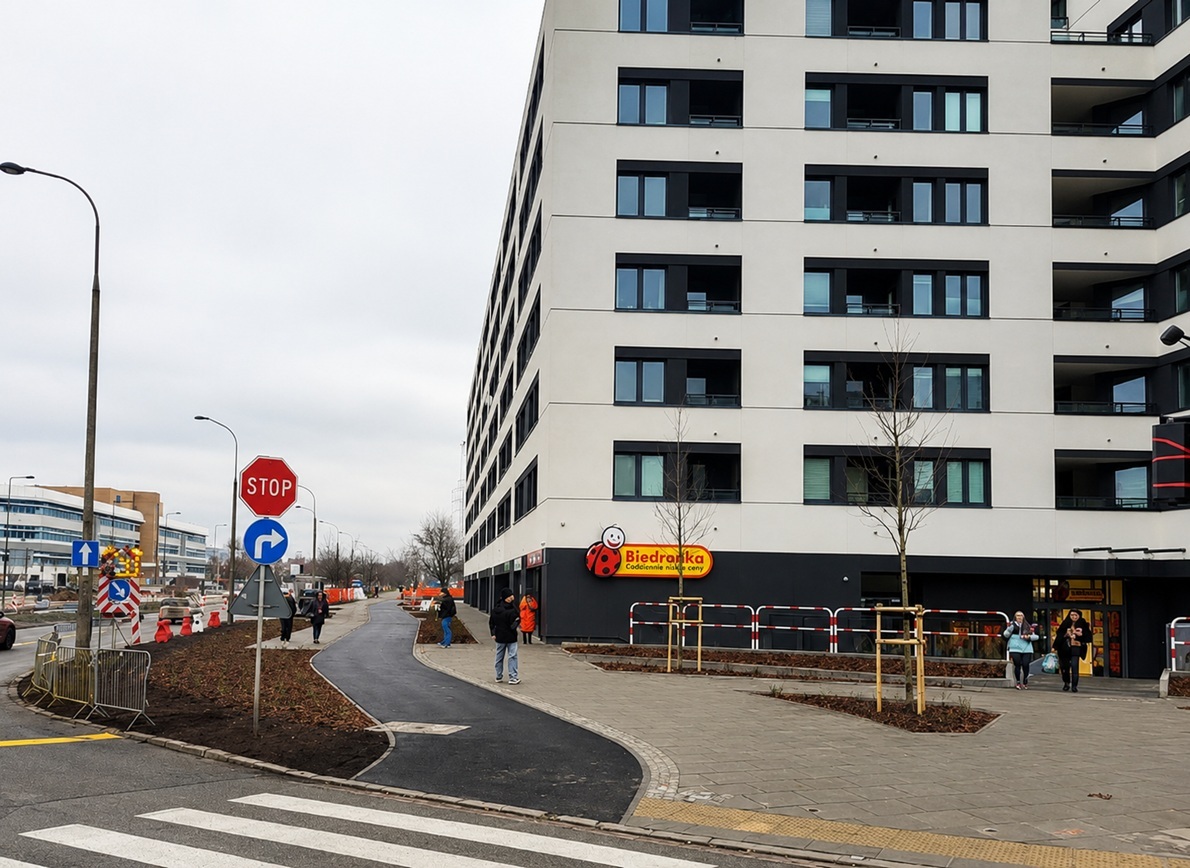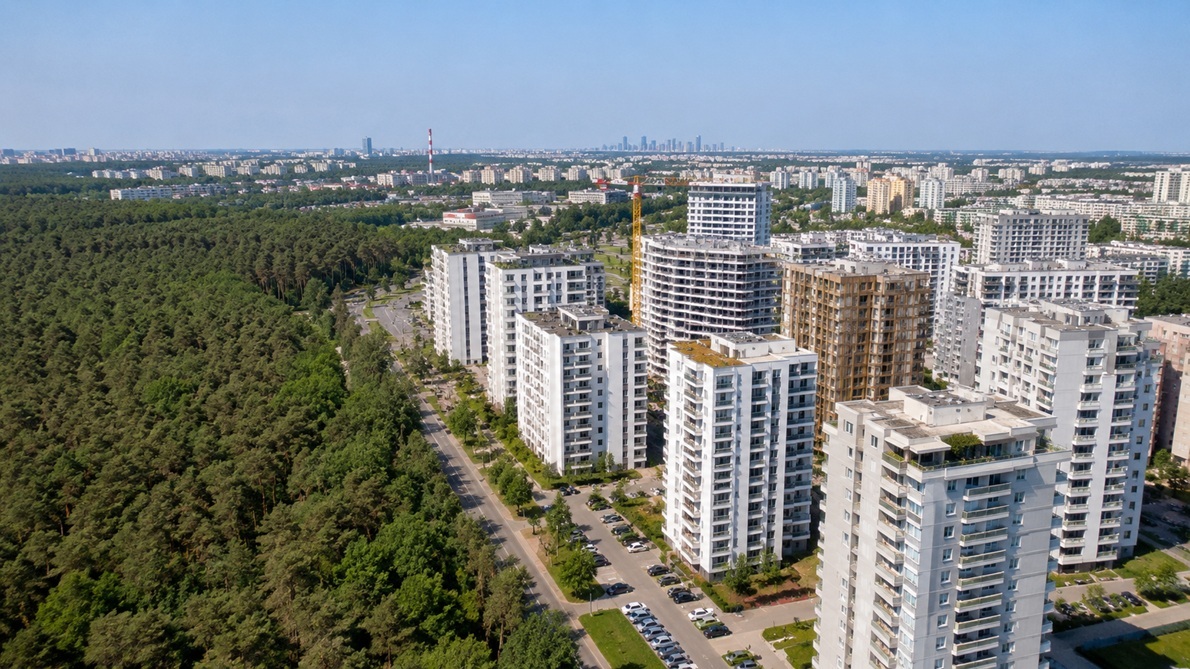
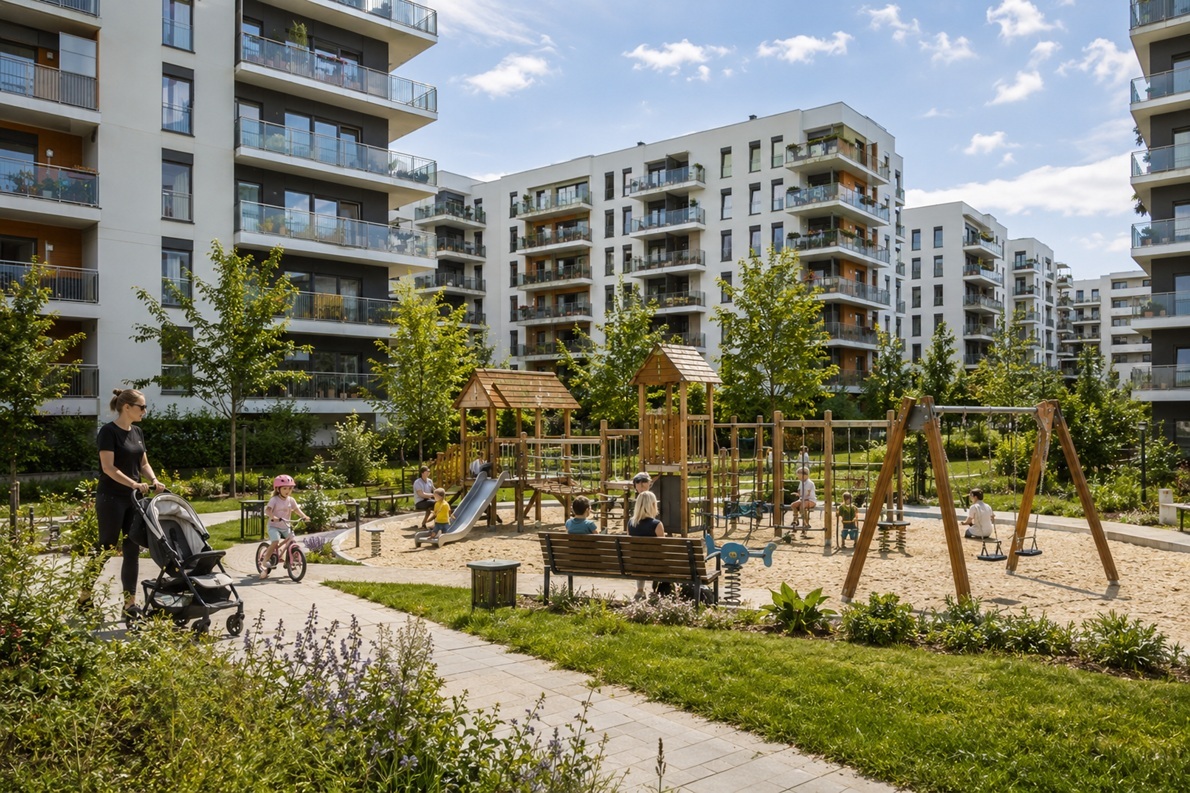
Ursynów's original identity — for decades known dismissively as Warsaw's "sypialnia" (bedroom district) — has changed materially in the past 15 years. What was once a residential-only satellite with limited local infrastructure has evolved into what most Varsovians now describe as one of the most self-contained districts in the city, with its own retail centres (Galeria Ursynów, Galeria KEN Center), a mature cultural and services base, and among the highest concentrations of schools, kindergartens, sports facilities and family-oriented amenities in Warsaw. For a foreign buyer, the practical reading is that Ursynów tenants tend to stay put — the district is complete enough that most day-to-day life happens locally, which supports longer average tenancies and lower turnover than in more transit-oriented districts.
The demographic profile reinforces that residential stickiness. Investmap notes that Ursynów's population skews notably toward residents with higher education, a legacy of the district's original development in the 1970s and 1980s around institutional and corporate housing. That professional demographic is what has kept price growth — and rental demand — structurally stable through cycles that hit less-established districts harder.
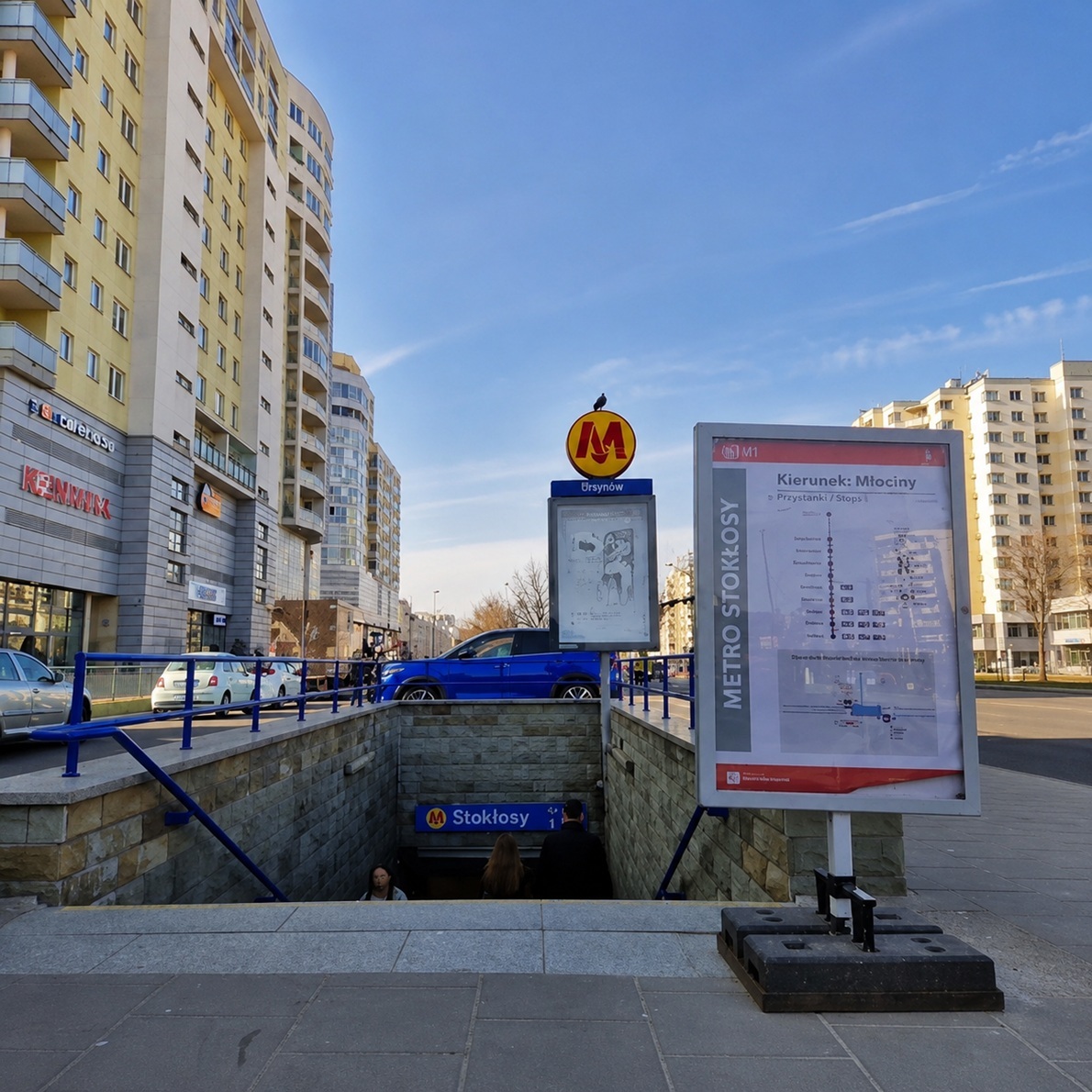
The metro is Ursynów's single most defensible asset. Five M1 stations serve the district (Ursynów, Stokłosy, Imielin, Natolin, Kabaty) — enough that virtually every residential neighbourhood in the eastern half of the district is within a 5–15 minute walk of a station. From Kabaty, the southernmost stop, journey time to Centrum is around 22–25 minutes with no transfer. That connectivity, combined with the district's own retail depth, gives Ursynów a rare positioning: it works both as a commuter address for people working in central Warsaw and as a self-sufficient neighbourhood for those who don't need to leave the district daily.
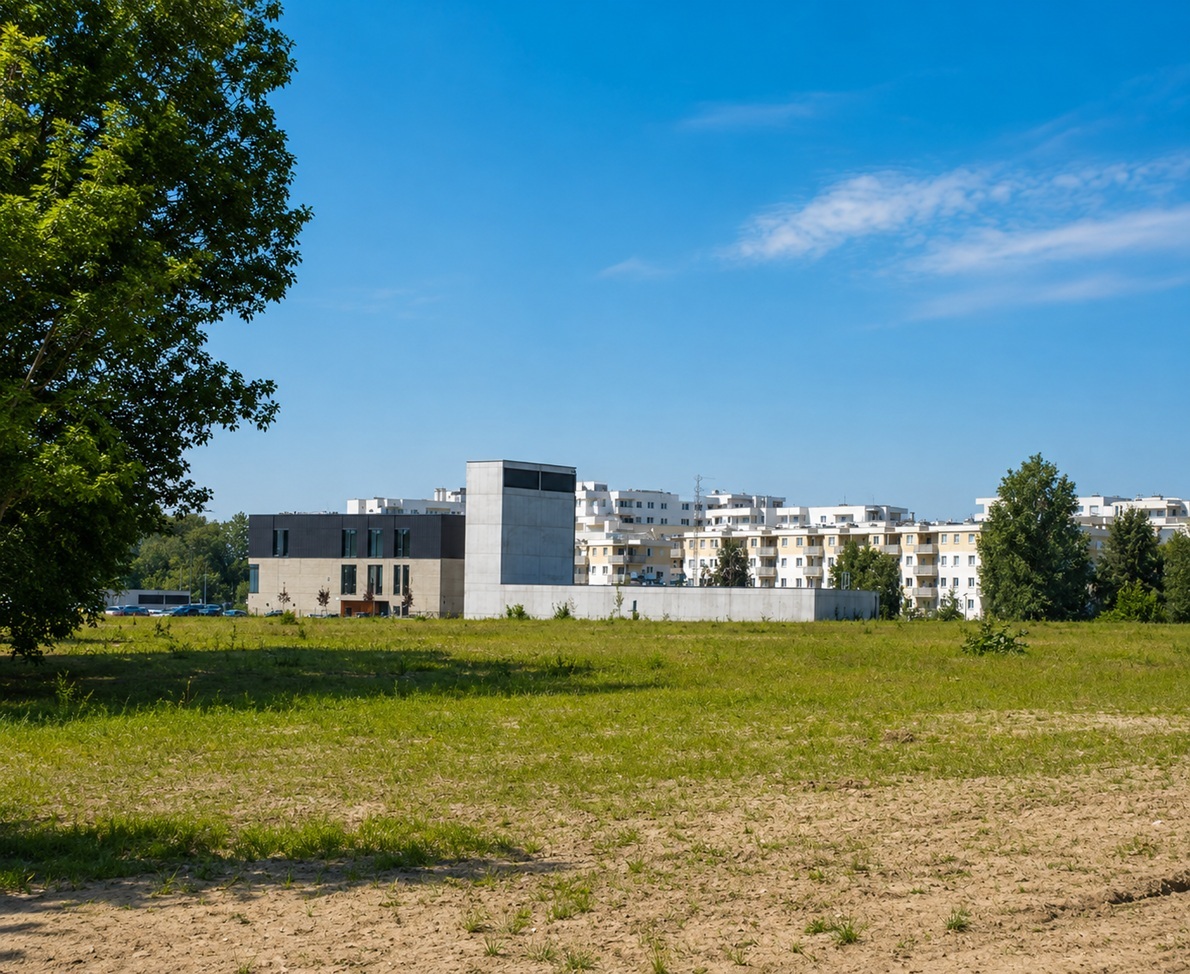
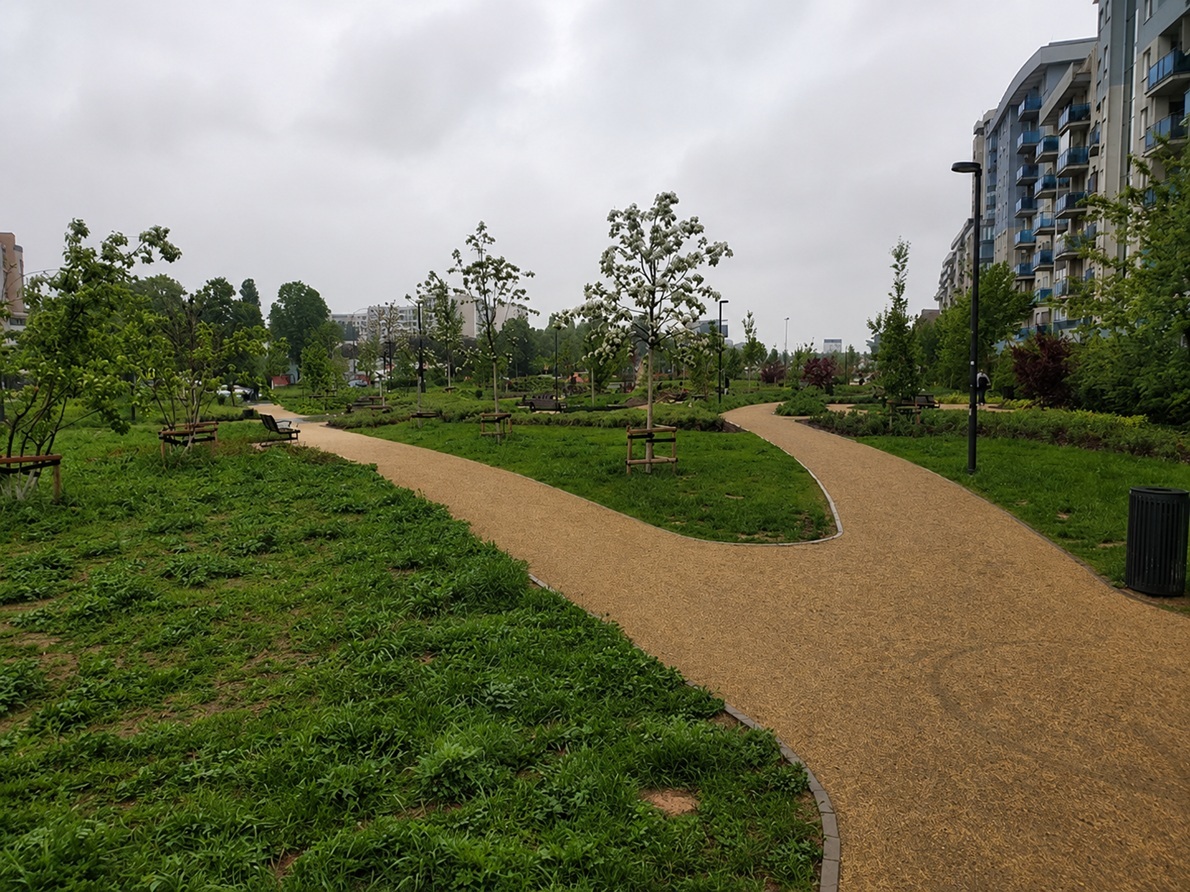
The final structural asset is green space. Las Kabacki (the Kabaty Forest) is the largest forested area in left-bank Warsaw, a formal nature reserve directly bordering the residential zones of Kabaty, Natolin and Imielin (Mapy Mieszkaniowe). Combined with Las Natoliński and Park Przy Bażantarni, this puts Ursynów in the very top tier of Warsaw districts for forest-adjacent living — a differentiator that is genuinely difficult for other districts to replicate at Ursynów's price point.
Five M1 stations serve the district
Ursynów, Stokłosy, Imielin, Natolin and Kabaty give the district the highest metro-station density outside central Warsaw. Direct commute to Centrum is 15–25 minutes with no transfer, per Metro Warszawskie.
Kabaty Forest — left-bank Warsaw's largest
Las Kabacki is a formal nature reserve directly bordering the residential zones of Kabaty, Natolin and Imielin — a green-space asset few other metro-served districts can match.
Two shopping centres, mature services base
Galeria Ursynów and Galeria KEN Center anchor a dense local retail and services base — supporting longer tenancies and lower turnover than more transit-only districts.
For overseas buyers who cannot easily assess a Warsaw district's day-to-day livability on a short visit, Ursynów's self-contained retail, schools and green space are a structural risk reducer: the district's tenant appeal does not depend on any single employer, university or lifestyle cluster, unlike Wola (office-tenant driven) or Bielany (partly UKSW-anchored). Tenant demand comes from a diversified, structurally stable base of professional families, older long-term residents and young professionals, which reduces vacancy cyclicality even in weaker rental cycles.