


Monthly Costs of Owning an Apartment in Warsaw
The purchase price is only the beginning. Understand the building bill, utilities, annual expenses and repair buffer before choosing your Warsaw apartment.
Budget for the whole property, not one monthly bill.
Your ownership budget combines the building charge, utilities not already included, annual expenses spread across the year and a separate repair reserve. Add financing and any agreed management service separately. The apartment’s documents are more useful than a citywide headline average.
Buying in Warsaw can be a long-term home decision or an investment managed from abroad. Either way, the useful question is the same: what will this particular apartment require from your bank account after the keys are handed over?
This guide focuses on recurring ownership expenses. For the acquisition itself, use our total purchase-cost guide; for groceries, transport and everyday spending, see cost of living in Warsaw. Keeping those budgets separate makes an apartment comparison much clearer.
What does “czynsz administracyjny” actually cover?
One transfer can contain several very different expenses.
For an owner, czynsz administracyjny is a convenient label for the monthly building or cooperative payment. It is not rent paid to a landlord, and it is not automatically the complete cost of owning the apartment. Ask for the itemised charge notice, called a wymiar opłat, with its effective date.
 Understand the bill before you commit
Make four columns when translating the statement: the Polish label, what it pays for, how it is calculated and whether it will be reconciled later. Record whether the quoted amount reflects one resident or a family. A seller’s recent payment is useful evidence, but it does not prove that your household will pay the same.
Building operations
Administration, shared-area services, maintenance and any other building-specific operating items.
Funds and financing
Look separately for a renovation-fund contribution, project instalment or building-loan repayment.
Consumption advances
Check whether heating, water and hot-water heating are already collected within this payment.
Other billed items
Waste, parking or storage may appear here or on a separate notice. Ask which arrangement applies.
The Ownership of Premises Act requires owners to contribute to common-property costs. For advances covered by Article 15, payment is due in advance by the tenth day of each month. Do not automatically apply that deadline to every supplier bill or cooperative account; check the relevant notices and legal arrangement.
Source: Ownership of Premises Act, 2026 consolidated text, Articles 12–15.
If a building payment of PLN 850 already includes heating, water and waste advances, do not add those same advances again under “utilities”. Add only genuinely separate bills and an explicitly identified allowance for possible underpayments.
You own a share of the building, not just the rooms.
Inspect the services you will help finance.
 Plan for the building as well as the apartment
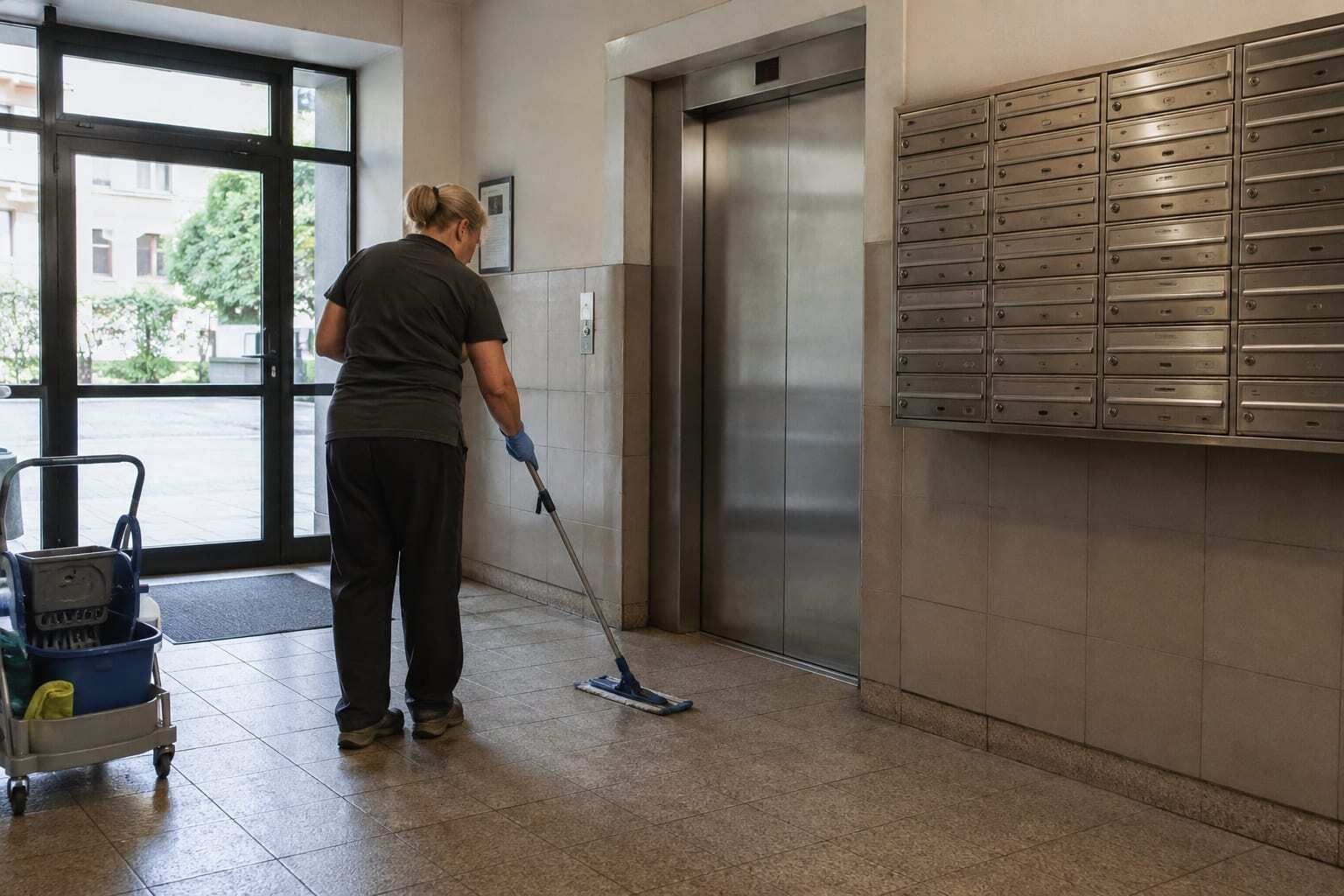
Common-property expenditure under the Act includes repairs, upkeep, shared utilities, lift costs, cleaning, management and certain insurance or public charges. The building’s actual financial plan determines what appears in its budget. A concierge, extensive grounds or complex equipment should prompt questions about the service contract and future replacement costs.
Source: Ownership of Premises Act, 2026 consolidated text, Articles 12–15.
During a viewing, look beyond the freshly painted lobby. How many lifts are there? Is the garage ventilated mechanically? Are the entrance doors, roof, drainage and shared lighting well maintained? Which services are essential, and which are amenities you would willingly pay for? The point is not to assume that more equipment is bad, but to understand the recurring commitment.
Compare two buildings using the same list of included services. A lower payment can be genuinely efficient, or it can exclude items shown elsewhere. Ask what the latest annual accounts reveal, rather than treating the lowest advertised “czynsz” as a saving without qualification.
A renovation fund is not your personal repair savings.
Look at the work planned, the money available and the funding gap.
 Check the building’s renovation plans and documents
The fundusz remontowy is a building-level contribution. It should not be confused with money you keep for a leaking dishwasher, damaged flooring or repainting your own rooms. Record it once in the building budget, then create a separate reserve for the apartment.
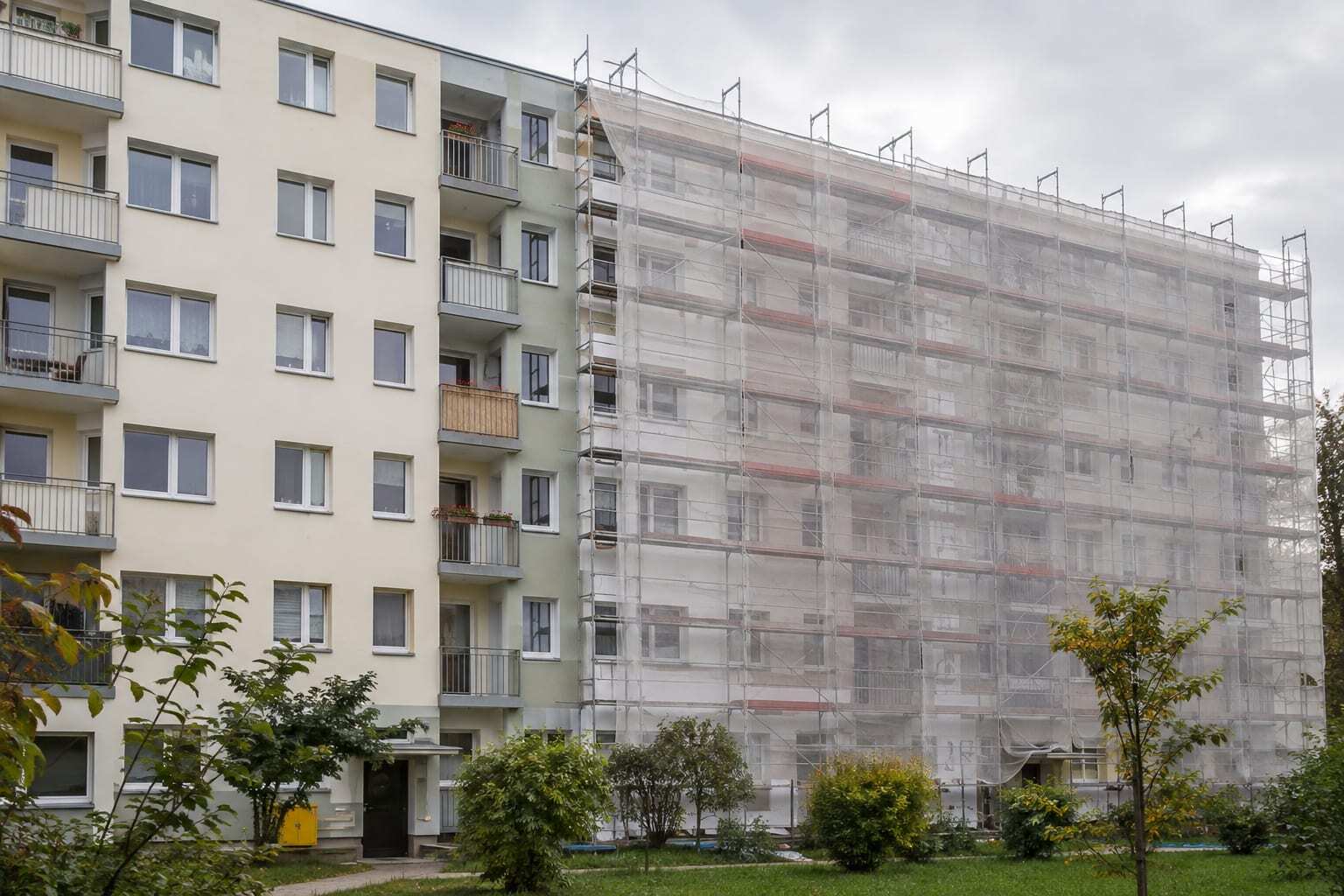
Request the current fund contribution, its balance, the planned works and any adopted financing decisions. A recently renovated facade is encouraging, but it does not tell you whether a project has been fully paid for. Conversely, a modest-looking entrance is not proof of poor finances. The documents should explain the condition you see.
Questions worth asking before an offer
- Are roof, facade, lift or pipe replacements planned or already approved?
- Will available funds cover them, or is a contribution increase, loan or extra payment expected?
- Does a current instalment continue after the planned purchase date?
- Which costs relate to the whole building and which to a particular garage or entrance?
A buyer does not need to predict every future repair. The aim is to identify known commitments and avoid comparing an apartment with fully funded works against one where the bill is still ahead. WIC can bring these questions into the property search and comparison process, with legal or technical issues referred to the relevant specialists.
The heating advance is not the final heating cost.
Read a full settlement period, not only a summer payment.
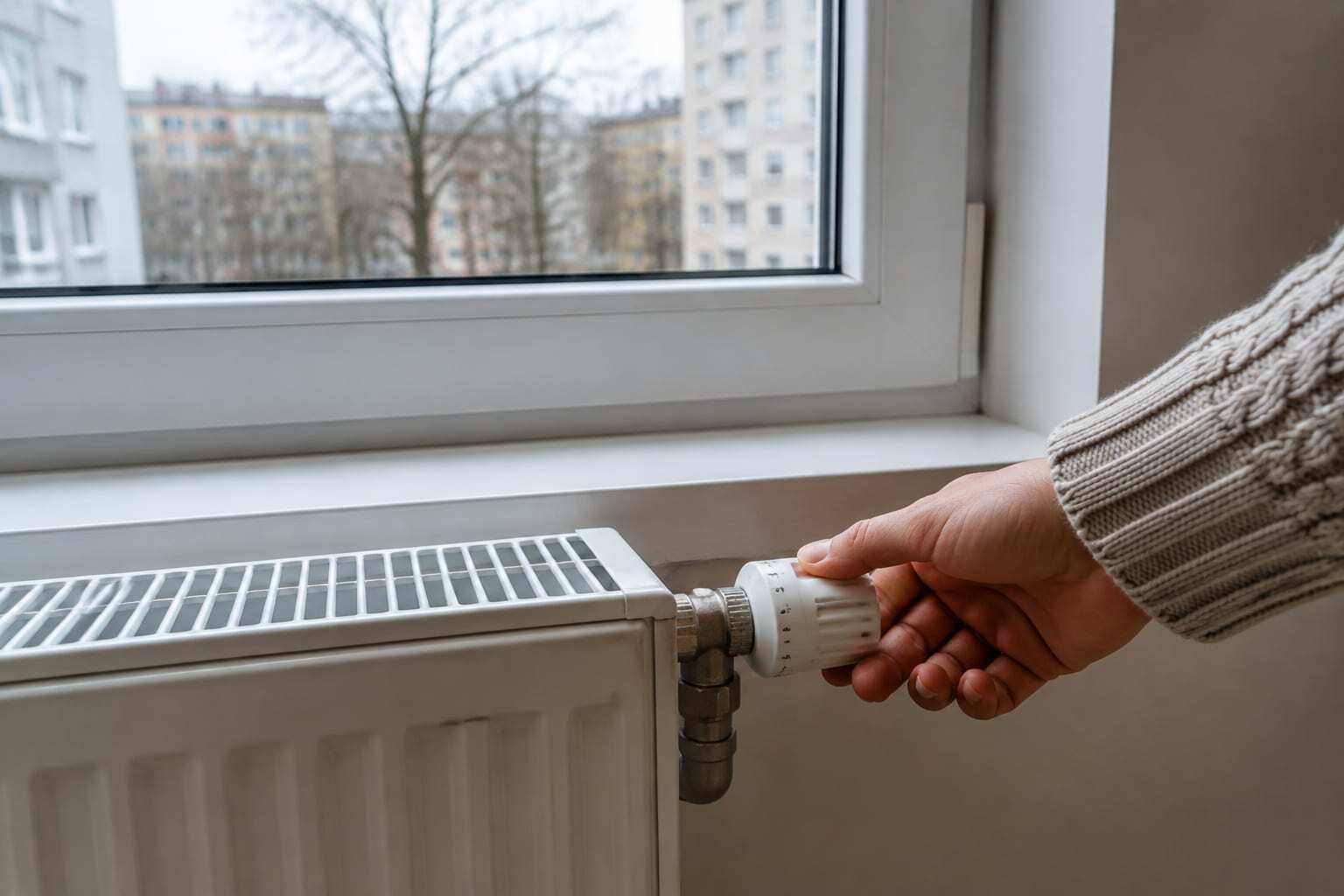 Assess heating alongside the apartment’s technical condition
For a centrally supplied building, URE explains that the heat contract is normally held by the building owner or manager, who allocates the cost to individual premises under the building’s rules. Ask for that allocation method and the latest annual reconciliation. An advance can later produce either an additional amount payable or a credit.
Source: URE: who contracts for a building’s heat supply.
Identify whether the apartment uses district heating, a building boiler, an individual gas boiler or electric heating. Then ask where each cost is billed. A small electricity estimate suitable for appliances alone is not a useful heating budget for a flat heated electrically.
The most helpful record pairs the previous consumption with the circumstances: who lived there, for how long, and whether the property was vacant or kept unusually warm. Also inspect windows, external walls, ventilation and the apartment’s position in the building. A top-floor corner apartment deserves different questions from a sheltered middle-floor one.
Keep the regular heating advance in the monthly payment plan. Keep a separately labelled settlement buffer for uncertainty. Once actual results arrive, update the estimate instead of counting both the full annual heating bill and all the advances as separate expenses.
For example, an assumed PLN 1,200 annual underpayment is equivalent to PLN 100 a month for planning. It is not evidence that every Warsaw owner needs that amount; it shows how to turn a known settlement into a manageable provision.
Meter readings explain more than the number of rooms.
Separate the water itself, wastewater and the energy used to heat water.
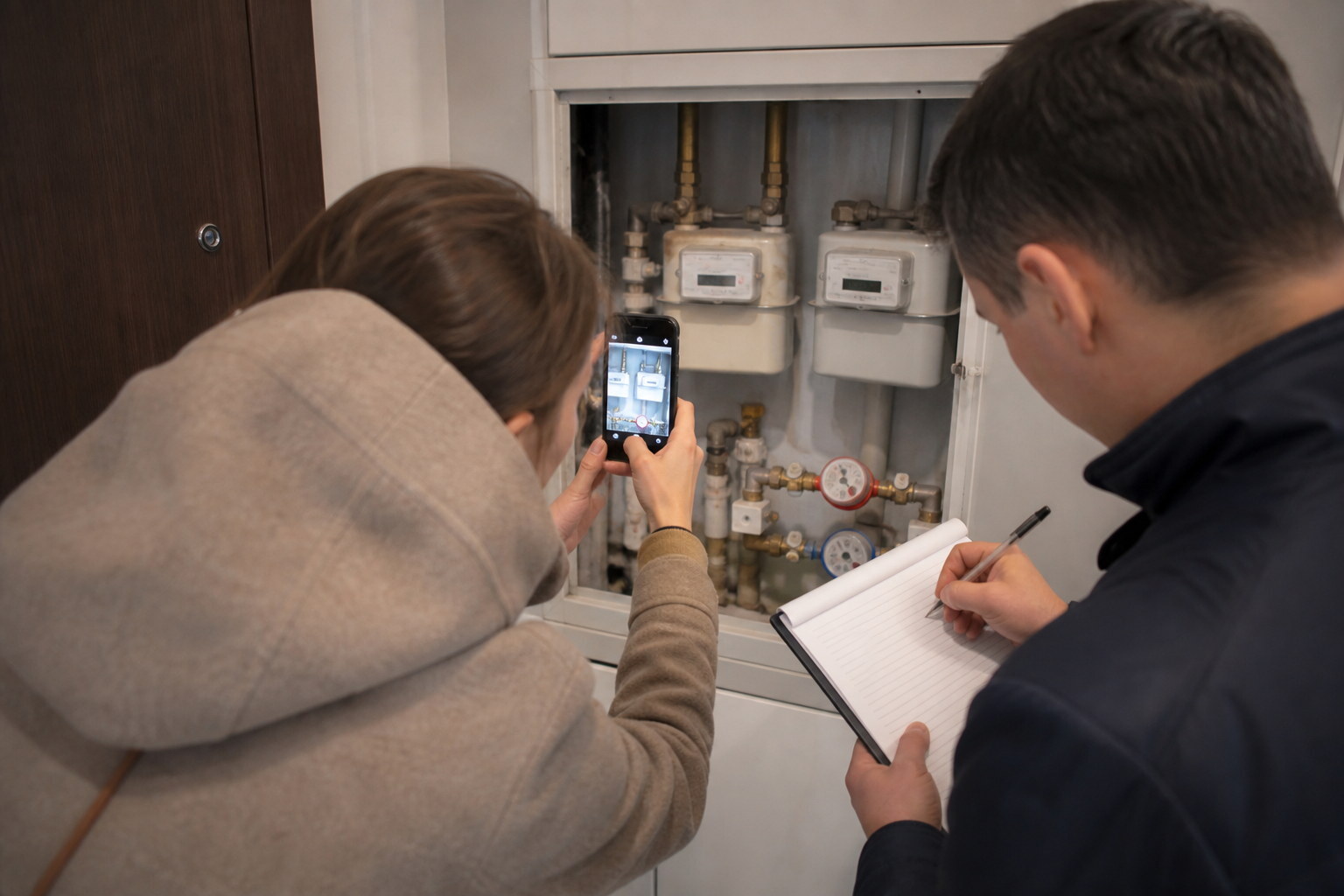 Record the meters clearly at handover
From 11 July 2026, MPWiK’s published tariff for water intended for human consumption is PLN 6.48 gross per m³, with wastewater at PLN 9.87 gross per m³. Together that is PLN 16.35 per m³ before applicable fixed subscription charges and any hot-water heating cost. These are supplier tariff components, not an all-inclusive apartment charge.
Using an explicitly assumed 4 m³ gives 4 × PLN 16.35 = PLN 65.40 for those two variable components. It does not establish normal household consumption. Check how the administrator allocates the supplier bill and what the apartment’s own readings show.
Source: MPWiK Warsaw tariff effective 11 July 2026.
Waste charges changed during 2026
Warsaw’s standard municipal waste fee for a household in a multi-unit building returned to PLN 85 per month on 1 April 2026. It is a household charge, not PLN 85 per person. Confirm whether it is already collected in the administrative payment. Older statements may reflect the temporary PLN 60 rate that ended in March.
Source: Warsaw 19115: municipal waste charges.
Keep dated meter photographs from handover and the first subsequent reading. Record the administrator’s procedure for reporting occupancy and consumption changes. Where a reading or settlement looks inconsistent, request the calculation rather than simply increasing the standing order without understanding why.
Electricity costs more than the headline kWh price.
Use the full invoice and the actual supply arrangement.
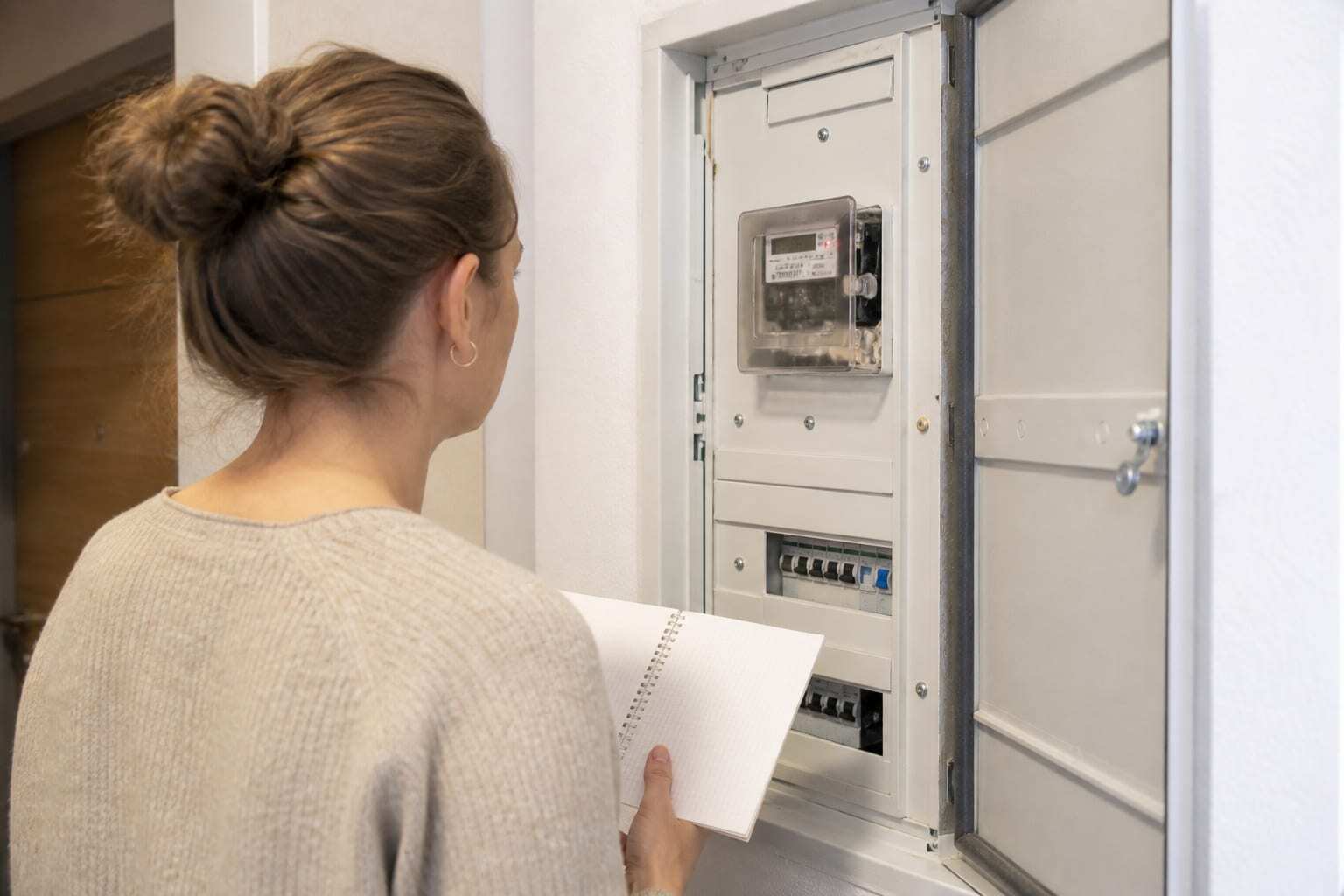 Include the complete electricity bill in your ownership plan
URE distinguishes energy-sale charges from distribution charges, including fixed and usage-related components. Some offers also include commercial or additional-service fees. A low price per kWh therefore does not establish the final monthly total. Read the settlement invoice, not only a forecast payment or advertising headline.
Source: URE: components of an electricity bill.
List the equipment that matters to your intended use: induction cooking, a dryer, air conditioning, electric water heating or electric space heating. Compare the previous owner’s usage with your own plans. An apartment used for occasional weekends is a weak basis for estimating a full-time household’s bill.
Internet, gas and subscriptions
Check whether an individual gas contract exists and whether the boiler needs a separate service budget. For internet, confirm the available connection, contract duration, installation cost, promotional period and post-promotion charge. An internet package included in a seller’s arrangements may not transfer on the same terms.
Create a short schedule of supplier, account holder, billing interval and payment method. A bill paid every two months still belongs in the monthly plan: divide a representative full-period cost by two, then check whether it includes a settlement or a one-off item.
Choose insurance for the apartment’s real use.
A modest annual premium is not the same as adequate protection.
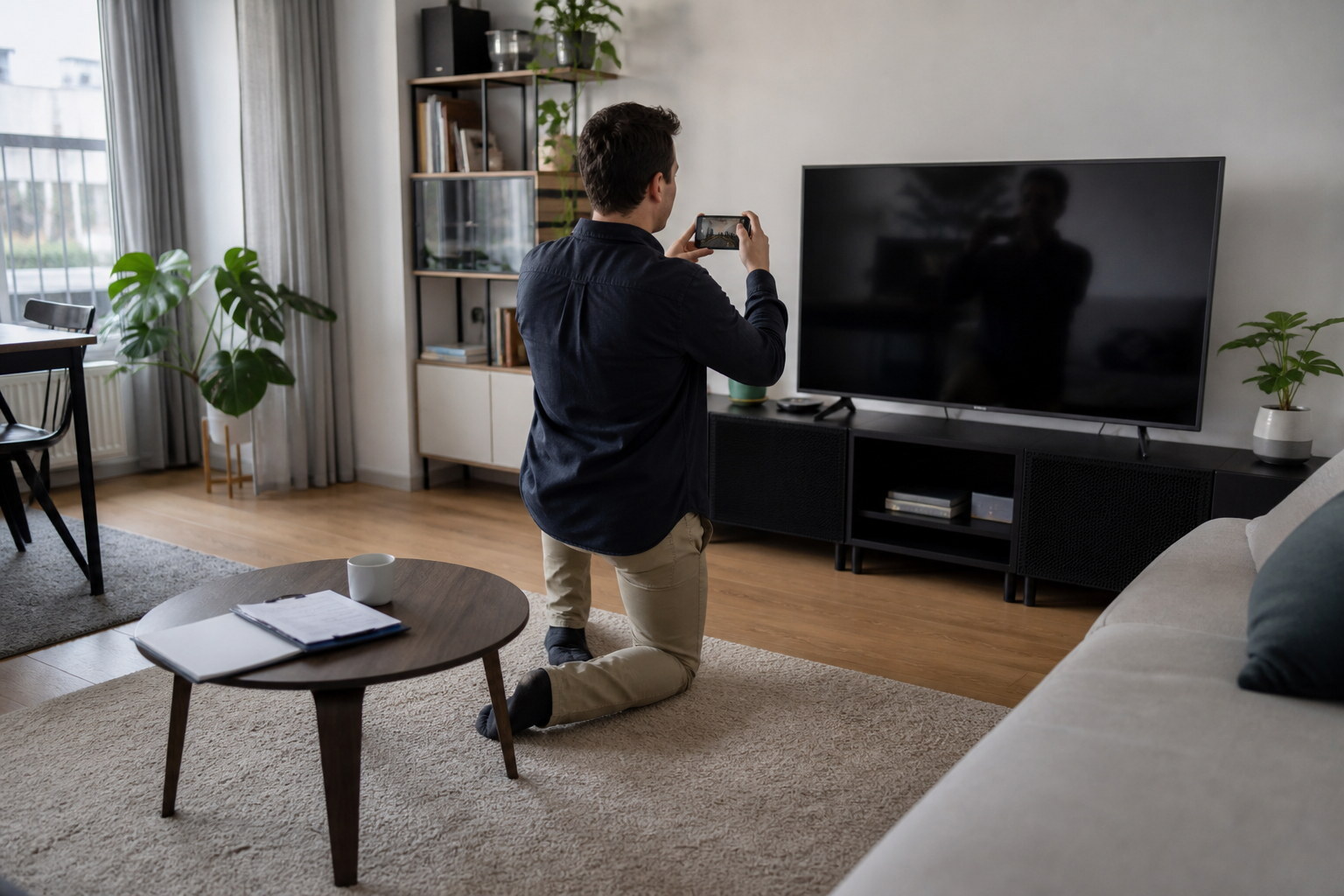 Document the apartment and its contents
The Polish Financial Ombudsman highlights underinsurance, separate contents limits and the need to read the scope and exclusions. Prepare an inventory and check that the insured amounts fit the property and belongings. Do not assume that all water damage, a flood and an appliance breakdown are treated identically.
Source: Polish Financial Ombudsman: home-insurance guidance.
Ask the insurer to confirm coverage for your intended situation: living there yourself, letting to tenants or leaving it unoccupied for extended periods. Check deductibles, relevant inspection duties, assistance limits and any vacancy conditions in the policy. A building-level policy is not a reason to assume that all your fixtures, possessions or personal liability are protected.
For monthly planning, divide the chosen annual premium by twelve. For actual payments, retain the real due date. If the premium is paid upfront in your first ownership month, the cash requirement arrives before twelve small monthly provisions have accumulated.
Property tax is annual. Your budget can still be monthly.
Use the city’s assessment, including the relevant property components.
 Check property documents and recurring tax obligations
Warsaw’s 2026 residential-building property-tax rate is PLN 1.25 per m² of usable area per year. Multiplying 50 m² by that rate produces PLN 62.50 before rounding and any other taxable components. This is only a component illustration, not a complete assessment: land, shares or associated premises may also matter, and different uses or classifications can change the treatment.
Source: Warsaw Council Resolution XXIX/1066/2025: 2026 property-tax rates.
For an individual, the city issues a tax decision with the amount and payment details. Use that decision for the actual bill, and allocate its annual total across twelve months in your budget. Warsaw’s guidance also describes the IN-1 information procedure, generally within 14 days of a relevant event. Company ownership follows a different filing and payment process.
Source: Warsaw 19115: property tax for individuals.
Check the land position too
Some properties have a remaining residential land-conversion fee. Others require a different land-title analysis. Ask for the relevant certificate, the current annual amount and evidence of any full repayment. Do not assume that every Warsaw apartment owes this fee, or that a statement of ownership alone proves it has been settled.
Source: Warsaw 19115: residential land-conversion fees.
Keep recurring property tax and any land-related payment on distinct lines from acquisition taxes and any tax on rental income. The categories answer different questions. If an item is already collected through another account, confirm that arrangement before adding it a second time.
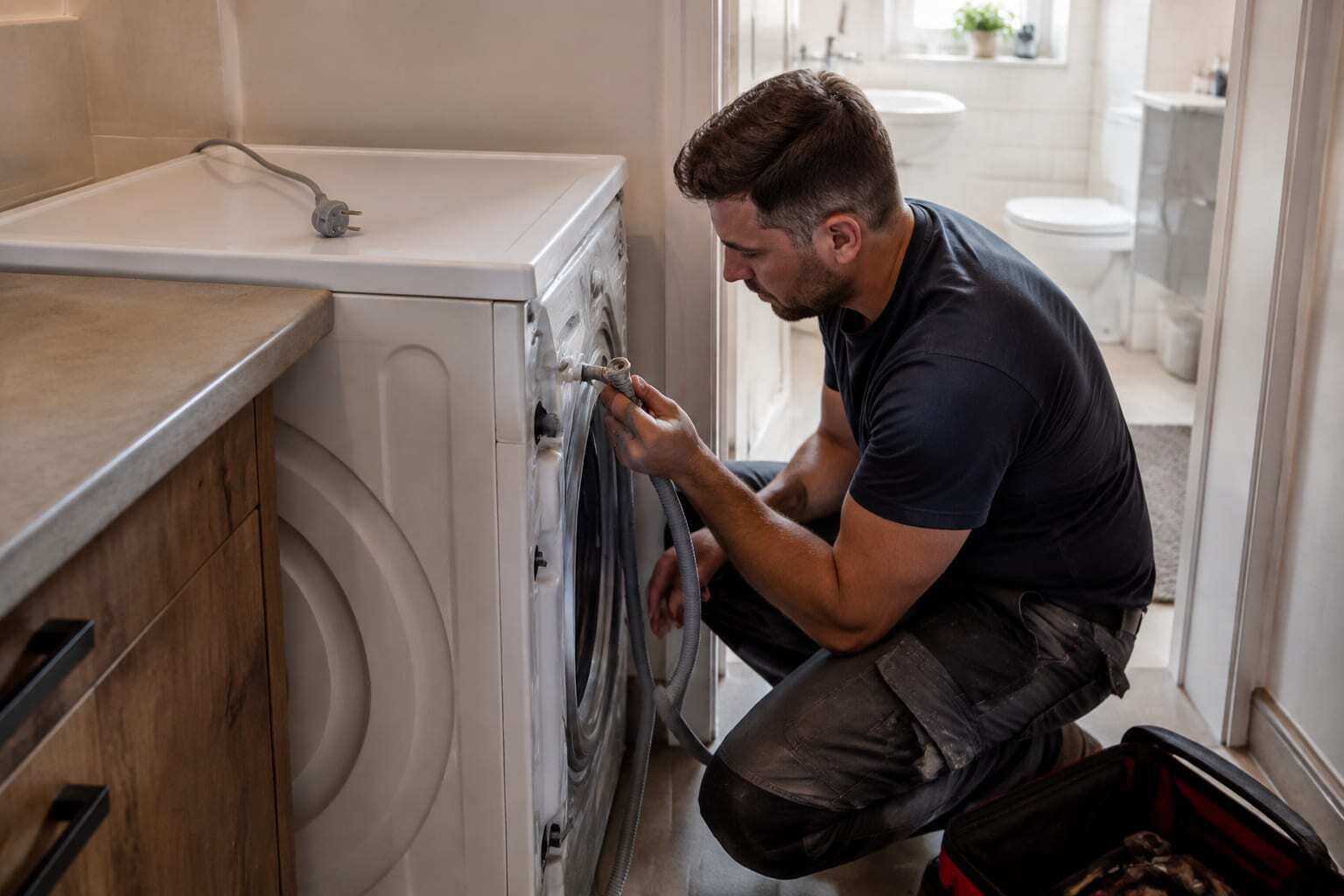
The washing machine does not wait for a convenient month.
Set money aside for the things inside your apartment.
 Consider condition and repair exposure before buying
A practical repair reserve starts with an inventory, not a universal percentage of the purchase price. List the appliances, furniture, fittings and finishes that are your responsibility. Note approximate age, condition, warranty records and which items would be disruptive or expensive to replace.
Then separate routine wear from a planned project. An allowance for appliance repairs cannot substitute for a known kitchen replacement, a bathroom problem identified at inspection or a complete renovation. Those need their own estimates and funding before you commit.
If you choose to save PLN 225 each month, that creates PLN 2,700 over a year. The assumption is yours to adjust. When a repair is paid from that pot, do not count both the provision and the same repair again when measuring the year’s actual economic costs.
Maintain a starting reserve as well as future contributions. Buying an older furnished apartment and beginning with a zero repair balance leaves a gap if equipment fails immediately. For a property needing work, compare turnkey and renovation options using the full scope, not just the apparent purchase discount.
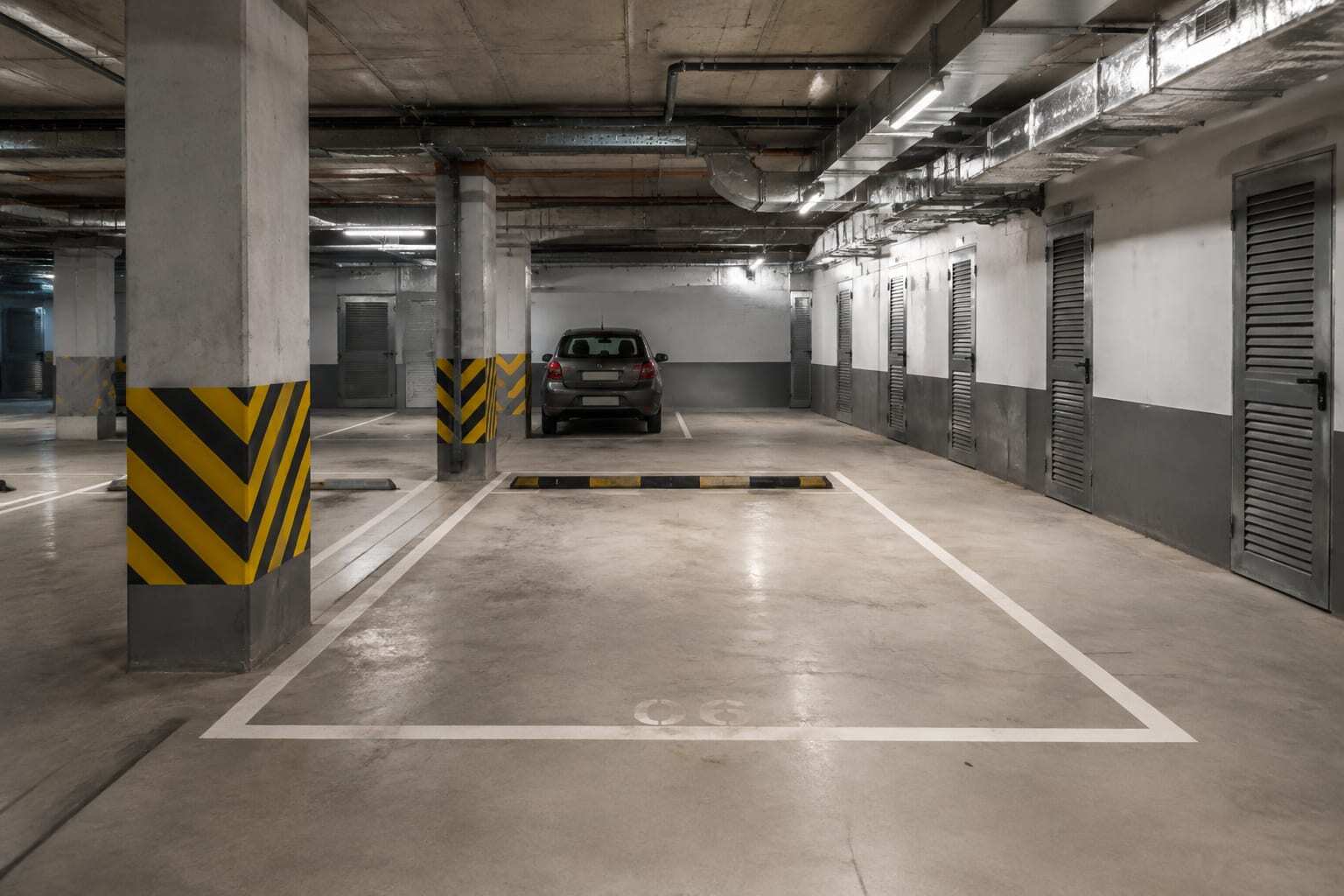
A parking space can bring a separate monthly commitment.
Purchase price and ongoing charges are two different checks.
 Review parking and storage together with the property title
Request the garage and storage statements even if they are marketed together with the apartment. Establish whether a stated amount is included in the main building payment or billed separately. Ask about access systems, cleaning, ventilation, maintenance and any project contributions relevant to those spaces.
Confirm exactly what is being acquired: a separate unit, a share with an allocation for use, an appurtenant room or another arrangement. Have the legal adviser check the documents and the resulting obligations. Do not infer the answer from a painted bay number or a listing that simply says “parking included”.
If you do not need a car, compare the total cost of the space against its practical value to your plans. If you hope to rent it out, treat that income as a separate, uncertain line rather than automatically cancelling the charge. Check the rules and likely demand before relying on the idea.
Build a budget you can replace with real numbers.
Three illustrative scenarios, not Warsaw market averages or client case studies.
 Compare a finished apartment with the complete ownership budget
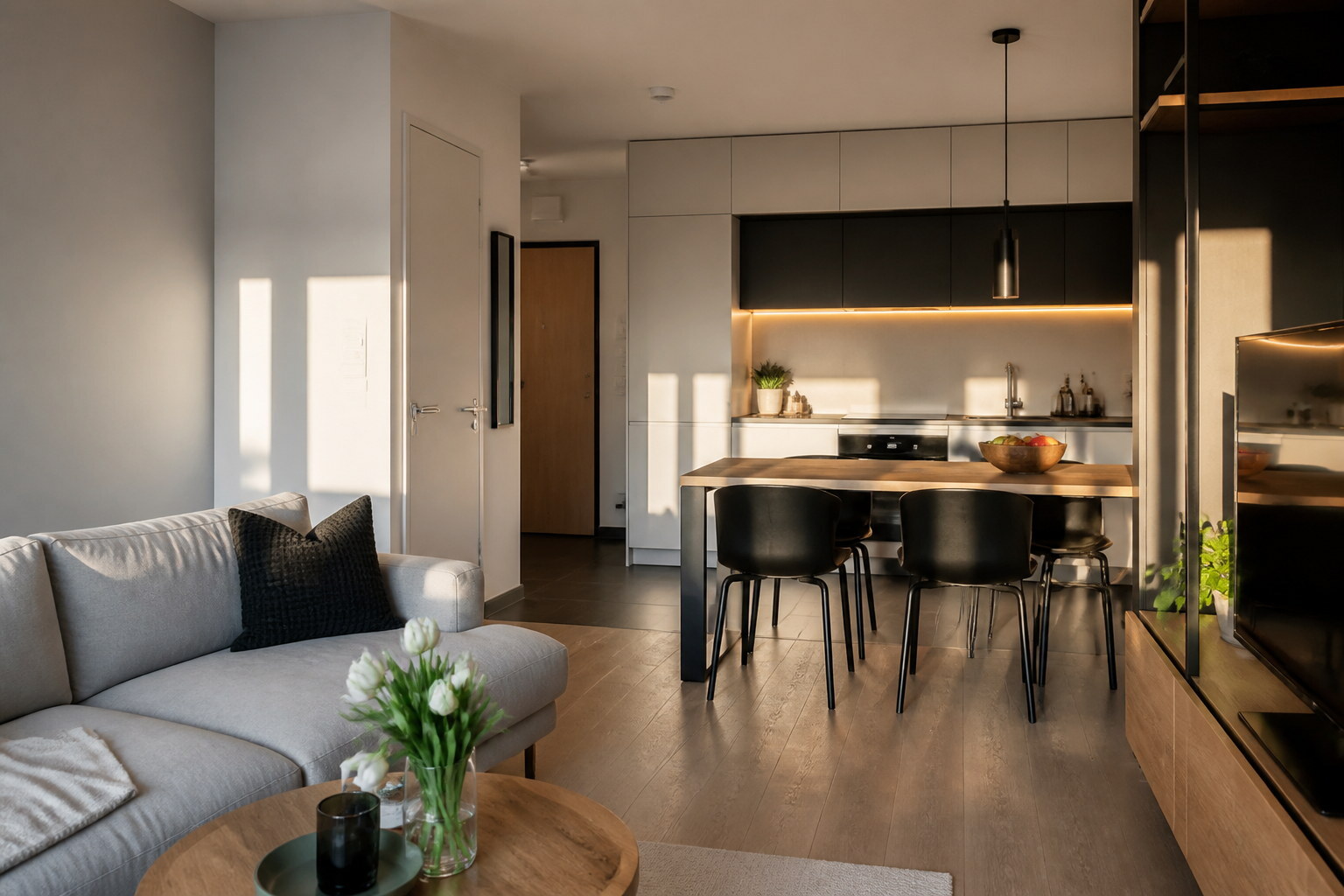
The examples below demonstrate the method. All amounts are chosen planning inputs, not measured averages, supplier quotes or verified costs of the pictured apartments. They assume owner occupation, building-supplied heating, no separately billed gas, no parking and no mortgage. The result includes provisions for uncertainty, not just transfers already due.
30 m² studio
One resident · assumed example PLN 950 Monthly budget including reserves- Building payment¹
- 550
- Separate electricity bill
- 100
- Internet
- 60
- Insurance allowance²
- 25
- Property-tax allowance²
- 5
- Private repair reserve
- 150
- Settlement buffer
- 60
50 m² one-bedroom
Two residents · assumed example PLN 1,418 Monthly budget including reserves- Building payment¹
- 850
- Separate electricity bill
- 150
- Internet
- 70
- Insurance allowance²
- 35
- Property-tax allowance²
- 8
- Private repair reserve
- 225
- Settlement buffer
- 80
75 m² family apartment
Three residents · assumed example PLN 2,082 Monthly budget including reserves- Building payment¹
- 1250
- Separate electricity bill
- 220
- Internet
- 80
- Insurance allowance²
- 50
- Property-tax allowance²
- 12
- Private repair reserve
- 350
- Settlement buffer
- 120
All figures are PLN per month. ¹ The assumed building payment already includes the renovation fund, heating and water advances and one household’s waste fee. These are not added again. ² Insurance and property-tax amounts are assumed annual budgets divided by twelve, not insurance quotations or calculated tax assessments.
Excluded: purchase and transaction costs, mortgage payments, parking and storage, any land fee, management fees, rental-income tax, initial furnishing, major works and exceptional assessments. Add any that apply. The repair reserve and settlement buffer are provisions, not guaranteed monthly expenditure.
How to use the examples for a real viewing
Replace the building payment with the current itemised notice. Replace energy assumptions with a representative bill and a sensible adjustment for your household. Use an insurance quote and the relevant tax information. Then choose a reserve based on the apartment’s condition and the uncertainty in its records.
If two candidate apartments differ by an assumed PLN 280 a month on a like-for-like basis, that is PLN 3,360 a year. At unchanged costs it would be PLN 33,600 over ten years, before inflation, discounting or changes in use. This simple comparison does not decide the purchase, but it makes a recurring difference visible alongside the price.
A mortgage changes cash flow, not the building’s bill.
Keep the loan schedule separate so the comparison remains useful.
A cash buyer and a financed buyer can face the same apartment operating costs but very different monthly cash requirements. Add the actual mortgage instalment and any separately charged loan-related products to your cash-flow plan. Check what is already included in the instalment or paid annually before adding it again.
For affordability, the full instalment matters because it leaves your account. For an economic rent-versus-buy comparison, principal repayment is different from interest: principal reduces the debt rather than being consumed in the same way as a heating bill. Keep both views clear without pretending that repaid principal is money available to spend.
If your income is in EUR, GBP, USD or another currency while costs are in PLN, test the budget under a less favourable conversion rate and include actual transfer fees. Do not make a long-term plan depend on today’s exchange rate. Our mortgage guide for foreign buyers covers the financing context; your lender or adviser should confirm the individual terms.
The tenant’s payment is not the owner’s net income.
Separate rent, reimbursed charges and costs you retain.
 Plan rental readiness and the owner’s ongoing responsibilities
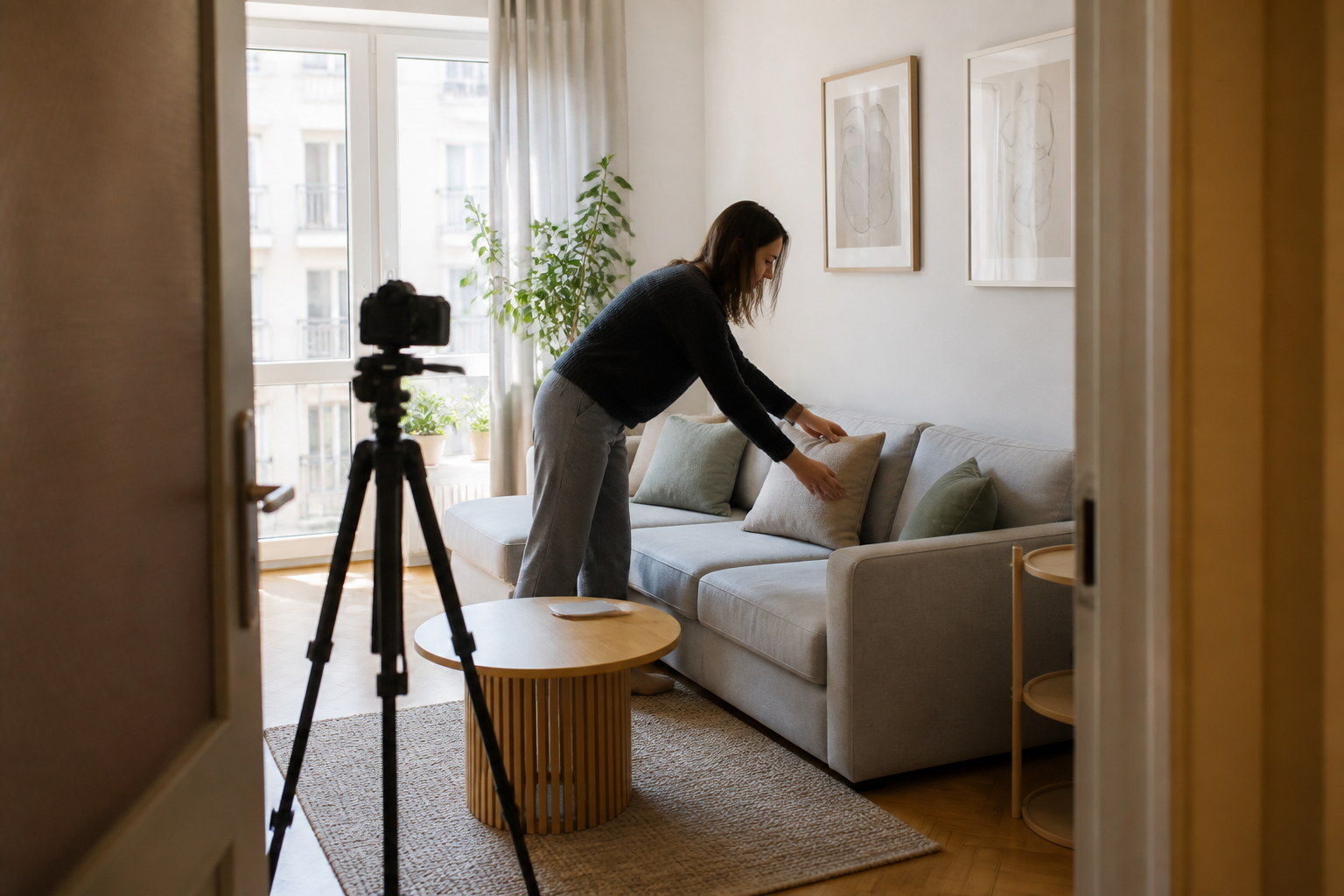
A tenant may reimburse specified building charges and utilities under the lease, but the exact allocation must be clear. Identify the rent paid for use of the apartment, advances or reimbursements for other charges, the settlement method and responsibilities for repairs. Do not present all money received as rent or assume every expense is recoverable.
For your owner model, keep insurance, retained maintenance, management, vacancy, relevant tax and financing visible. Ask who receives the administrator’s notices and how tenant payments are checked against amounts due. A transfer from a tenant is not evidence that the correct supplier or administrator has been paid.
Prepare a separate between-tenancies budget for cleaning, minor repairs, marketing or tenant-placement costs where applicable. Avoid both extremes: assuming uninterrupted rent forever, or deducting a generic management percentage without checking what the service actually includes. See our Warsaw rental-income guide for the broader return analysis.
An empty apartment does not become a free apartment.
Plan the carrying costs before relying on occasional use or a future tenant.
 Arrange property-specific support while you are away
Vacancy can reduce some usage-related costs, but it does not make building commitments, insurance, financing or every supplier charge disappear. Ask which advances can be adjusted, what declaration or evidence is needed and when the change takes effect. Do not simply stop paying a line because no one is staying there.
Keep a realistic budget for property checks, access when work is needed and dealing with a fault from abroad. Ask the insurer about conditions for unoccupied premises. Agree any heating or water precautions with the relevant professionals and building rules instead of making a blanket assumption that everything should be switched off.
A vacancy calculation should show two separate effects
One is the actual money you still have to spend. The other is rental income not received, if letting was the plan. For example, three months with an assumed PLN 900 monthly carrying cost requires PLN 2,700 in cash, before any repairs or loan payment. Forgone rent is an additional performance effect, not another PLN 2,700 cash bill.
If the property is intended for family visits, record that use honestly rather than forcing a rental-yield model onto it. You may value availability and convenience more than maximum income. The important point is that the annual carrying budget fits the reason you are buying.
Ask for the documents that make the numbers credible.
A short evidence checklist is more useful than a confident estimate.
- Current itemised charges. Obtain the effective date, all component lines and the occupancy assumption. Include parking and storage if relevant.
- A full year of settlements. Ask for heating and water reconciliations and representative separate supplier bills. Note credits, underpayments and unusual periods of vacancy.
- Building finances and works. Review available accounts, fund information, planned projects and adopted decisions that may affect contributions.
- Annual obligations. Request the tax information, relevant land documentation and an insurance quote for your intended use.
- Condition and equipment. Connect the technical inspection, appliance inventory and renovation scope to a starting reserve and future repair allowance.
- Completion arrangements. Agree dated meter readings, relevant account transfers and how seller/buyer settlements will be recorded with professional support where needed.
For a new-build with no operating history, request the estimated first-year building budget and its assumptions. Ask which services are included from the start and what happens once the building is fully occupied. Describe those figures as forecasts, not established running costs. Our new-build versus resale comparison explains why the evidence available differs.
For a resale property, an old bill is not automatically better evidence than a forecast if the occupants, tariffs or contribution level have changed. Record a confidence level for each input: confirmed current amount, historic amount needing adjustment, quotation, or unresolved estimate. Your offer decision should recognise what remains uncertain.
Make the running-cost review part of choosing the right property.
Not an unpleasant discovery after the purchase.
 See how WIC supports overseas property owners
Warsaw Investor Care helps foreign buyers organise a property search around how they will actually use the apartment. Running costs belong alongside the location, layout, condition and price in that brief. A home that photographs well should also make practical sense to own.
Depending on the agreed scope, we can coordinate the collection of available cost information, organise viewings and technical checks, support negotiations and connect the purchase process with legal, notarial and renovation specialists. Technical, legal and tax conclusions remain with the appropriate professionals; a reassuring spreadsheet is not a substitute for their assessment.
For qualifying apartments renovated or finished through WIC, the relationship may continue through tenant placement and long-term rental management. Eligibility, fees and responsibilities are agreed individually. That continuity can be useful for an overseas owner, but it should be priced and scoped explicitly rather than assumed to be included in the purchase support.
Monthly ownership costs: the practical answers.
Use these answers to organise your property-specific checks.
How much does it cost per month to own an apartment in Warsaw?
There is no single amount that reliably describes an individual apartment. Combine its current building charge, separately billed utilities, annual expenses and a repair reserve. The three scenarios in this guide are assumed budgeting examples, not market averages. Add financing and other property-specific costs separately.
What is czynsz administracyjny in Poland?
It is a common label for the administrative or building payment. For an owner it is not rent paid to a landlord. Its contents vary, so request a current itemised breakdown and identify any heating, water, waste or fund contributions already included.
Are heating and water already included in the service charge?
They may be included as advances, but the actual statement must confirm this. Advances can be reconciled later. Count an included advance once, and distinguish any settlement buffer from an additional supplier bill.
Why can the bill change after I buy?
The previous payment may reflect a different household, consumption pattern, billing period or contribution level. Planned building works, supplier price changes and reconciliations can also affect the amount. Ask which inputs are current and which still need confirmation.
Is the renovation fund the same as an apartment repair reserve?
No. A building renovation-fund contribution and your own provision for appliances, fittings and internal finishes serve different purposes. If the fund is already in the building payment, do not add it twice.
Does an empty Warsaw apartment still cost money?
Yes. Low consumption does not remove every contractual or ownership obligation. Confirm which advances may be adjusted, keep the applicable fixed commitments in the budget and check the insurer’s conditions for vacancy.
Should the mortgage be included in monthly ownership costs?
Include the full payment in your cash-flow and affordability plan, but keep it separate from apartment operating bills. In an economic comparison, distinguish interest and charges from principal repayment, which reduces the outstanding debt.
Do parking and storage always appear in the main bill?
No. Ask for their own statements and legal documents, and confirm whether any quoted amount is already included in the apartment’s administrative payment.
Are the example budgets actual WIC projects?
No. The figures are deliberately chosen planning inputs used to explain the method. The images are editorial illustrations. Neither the amounts nor the pictures document actual client properties or verified market averages.
Can WIC help compare the running costs of shortlisted apartments?
We can discuss including the available cost information in a buyer-side search and property comparison. The scope is agreed individually, with legal, technical, tax and insurance questions referred to the relevant specialists.
Find an apartment that works after completion, too.
Send us your purchase budget, preferred districts and intended use. If you already have a listing, include it. We can discuss a buyer-side search that considers the apartment’s running costs alongside its price, condition and location.